Compare commits
1 Commits
docs-hooks
...
fix/array-
| Author | SHA1 | Date | |
|---|---|---|---|

|
ccb4da475f |
34
.github/CODEOWNERS
vendored
34
.github/CODEOWNERS
vendored
@@ -1,34 +0,0 @@
|
||||
# Order matters. The last matching pattern takes precedence
|
||||
|
||||
## Package Exports
|
||||
|
||||
**/exports/ @denolfe @DanRibbens
|
||||
|
||||
## Packages
|
||||
|
||||
/packages/create-payload-app/src/ @denolfe
|
||||
/packages/email-*/src/ @denolfe
|
||||
/packages/eslint-*/ @denolfe @AlessioGr
|
||||
/packages/plugin-cloud-storage/src/ @denolfe
|
||||
/packages/plugin-multi-tenant/src/ @JarrodMFlesch
|
||||
/packages/richtext-*/src/ @AlessioGr
|
||||
/packages/storage-*/src/ @denolfe
|
||||
/packages/ui/src/ @jacobsfletch @AlessioGr @JarrodMFlesch
|
||||
|
||||
## Templates
|
||||
|
||||
/templates/_data/ @denolfe
|
||||
/templates/_template/ @denolfe
|
||||
|
||||
## Build Files
|
||||
|
||||
**/jest.config.js @denolfe @AlessioGr
|
||||
**/tsconfig*.json @denolfe @AlessioGr
|
||||
|
||||
## Root
|
||||
|
||||
/.github/ @denolfe
|
||||
/.husky/ @denolfe
|
||||
/.vscode/ @denolfe @AlessioGr
|
||||
/package.json @denolfe
|
||||
/tools/ @denolfe
|
||||
6
.github/ISSUE_TEMPLATE/1.bug_report_v3.yml
vendored
6
.github/ISSUE_TEMPLATE/1.bug_report_v3.yml
vendored
@@ -43,7 +43,6 @@ body:
|
||||
- 'plugin: cloud'
|
||||
- 'plugin: cloud-storage'
|
||||
- 'plugin: form-builder'
|
||||
- 'plugin: multi-tenant'
|
||||
- 'plugin: nested-docs'
|
||||
- 'plugin: richtext-lexical'
|
||||
- 'plugin: richtext-slate'
|
||||
@@ -60,7 +59,10 @@ body:
|
||||
label: Environment Info
|
||||
description: Paste output from `pnpm payload info` _or_ Payload, Node.js, and Next.js versions. Please avoid using "latest"—specific version numbers help us accurately diagnose and resolve issues.
|
||||
render: text
|
||||
placeholder: Run `pnpm payload info` in your terminal and paste the output here.
|
||||
placeholder: |
|
||||
Payload:
|
||||
Node.js:
|
||||
Next.js:
|
||||
validations:
|
||||
required: true
|
||||
|
||||
|
||||
63
.github/actions/setup/action.yml
vendored
63
.github/actions/setup/action.yml
vendored
@@ -4,17 +4,24 @@ description: |
|
||||
|
||||
inputs:
|
||||
node-version:
|
||||
description: Node.js version override
|
||||
description: Node.js version
|
||||
required: true
|
||||
default: 22.6.0
|
||||
pnpm-version:
|
||||
description: Pnpm version override
|
||||
description: Pnpm version
|
||||
required: true
|
||||
default: 9.7.1
|
||||
pnpm-run-install:
|
||||
description: Whether to run pnpm install
|
||||
required: false
|
||||
default: true
|
||||
pnpm-restore-cache:
|
||||
description: Whether to restore cache
|
||||
required: false
|
||||
default: true
|
||||
pnpm-install-cache-key:
|
||||
description: The cache key override for the pnpm install cache
|
||||
description: The cache key for the pnpm install cache
|
||||
default: pnpm-store-${{ hashFiles('**/pnpm-lock.yaml') }}
|
||||
|
||||
outputs:
|
||||
pnpm-store-path:
|
||||
@@ -30,44 +37,15 @@ runs:
|
||||
shell: bash
|
||||
run: sudo ethtool -K eth0 tx off rx off
|
||||
|
||||
- name: Get versions from .tool-versions or use overrides
|
||||
shell: bash
|
||||
run: |
|
||||
# if node-version input is provided, use it; otherwise, read from .tool-versions
|
||||
if [ "${{ inputs.node-version }}" ]; then
|
||||
echo "Node version override provided: ${{ inputs.node-version }}"
|
||||
echo "NODE_VERSION=${{ inputs.node-version }}" >> $GITHUB_ENV
|
||||
elif [ -f .tool-versions ]; then
|
||||
NODE_VERSION=$(grep '^nodejs ' .tool-versions | awk '{print $2}')
|
||||
echo "NODE_VERSION=$NODE_VERSION" >> $GITHUB_ENV
|
||||
echo "Node version resolved to: $NODE_VERSION"
|
||||
else
|
||||
echo "No .tool-versions file found and no node-version input provided. Invalid configuration."
|
||||
exit 1
|
||||
fi
|
||||
|
||||
# if pnpm-version input is provided, use it; otherwise, read from .tool-versions
|
||||
if [ "${{ inputs.pnpm-version }}" ]; then
|
||||
echo "Pnpm version override provided: ${{ inputs.pnpm-version }}"
|
||||
echo "PNPM_VERSION=${{ inputs.pnpm-version }}" >> $GITHUB_ENV
|
||||
elif [ -f .tool-versions ]; then
|
||||
PNPM_VERSION=$(grep '^pnpm ' .tool-versions | awk '{print $2}')
|
||||
echo "PNPM_VERSION=$PNPM_VERSION" >> $GITHUB_ENV
|
||||
echo "Pnpm version resolved to: $PNPM_VERSION"
|
||||
else
|
||||
echo "No .tool-versions file found and no pnpm-version input provided. Invalid configuration."
|
||||
exit 1
|
||||
fi
|
||||
|
||||
- name: Setup Node@${{ inputs.node-version }}
|
||||
uses: actions/setup-node@v4
|
||||
with:
|
||||
node-version: ${{ env.NODE_VERSION }}
|
||||
node-version: ${{ inputs.node-version }}
|
||||
|
||||
- name: Install pnpm
|
||||
uses: pnpm/action-setup@v4
|
||||
with:
|
||||
version: ${{ env.PNPM_VERSION }}
|
||||
version: ${{ inputs.pnpm-version }}
|
||||
run_install: false
|
||||
|
||||
- name: Get pnpm store path
|
||||
@@ -77,25 +55,14 @@ runs:
|
||||
echo "STORE_PATH=$STORE_PATH" >> $GITHUB_ENV
|
||||
echo "Pnpm store path resolved to: $STORE_PATH"
|
||||
|
||||
- name: Compute Cache Key
|
||||
shell: bash
|
||||
run: |
|
||||
if [ -n "${{ inputs.pnpm-install-cache-key }}" ]; then
|
||||
PNPM_INSTALL_CACHE_KEY="${{ inputs.pnpm-install-cache-key }}"
|
||||
else
|
||||
PNPM_INSTALL_CACHE_KEY="pnpm-store-${{ hashFiles('**/pnpm-lock.yaml') }}"
|
||||
fi
|
||||
echo "Computed PNPM_INSTALL_CACHE_KEY: $PNPM_INSTALL_CACHE_KEY"
|
||||
echo "PNPM_INSTALL_CACHE_KEY=$PNPM_INSTALL_CACHE_KEY" >> $GITHUB_ENV
|
||||
|
||||
- name: Restore pnpm install cache
|
||||
if: ${{ inputs.pnpm-restore-cache == 'true' }}
|
||||
uses: actions/cache@v4
|
||||
with:
|
||||
path: ${{ env.STORE_PATH }}
|
||||
key: ${{ env.PNPM_INSTALL_CACHE_KEY }}
|
||||
key: ${{ inputs.pnpm-install-cache-key }}
|
||||
restore-keys: |
|
||||
pnpm-store-${{ env.PNPM_VERSION }}-
|
||||
pnpm-store-${{ inputs.pnpm-version }}-
|
||||
pnpm-store-
|
||||
|
||||
- name: Run pnpm install
|
||||
@@ -105,5 +72,5 @@ runs:
|
||||
|
||||
# Set the cache key output
|
||||
- run: |
|
||||
echo "pnpm-install-cache-key=${{ env.PNPM_INSTALL_CACHE_KEY }}" >> $GITHUB_OUTPUT
|
||||
echo "pnpm-install-cache-key=${{ inputs.pnpm-install-cache-key }}" >> $GITHUB_ENV
|
||||
shell: bash
|
||||
|
||||
4
.github/reproduction-guide.md
vendored
4
.github/reproduction-guide.md
vendored
@@ -40,7 +40,7 @@ There are a couple ways run integration tests:
|
||||
|
||||
- **Granularly** - you can run individual tests in vscode by installing the Jest Runner plugin and using that to run individual tests. Clicking the `debug` button will run the test in debug mode allowing you to set break points.
|
||||
|
||||
<img src="https://raw.githubusercontent.com/payloadcms/payload/main/.github/assets/int-debug.png" />
|
||||
<img src="https://raw.githubusercontent.com/payloadcms/payload/main/packages/payload/src/assets/images/github/int-debug.png" />
|
||||
|
||||
- **Manually** - you can run all int tests in the `/test/_community/int.spec.ts` file by running the following command:
|
||||
|
||||
@@ -57,7 +57,7 @@ The easiest way to run E2E tests is to install
|
||||
|
||||
Once they are installed you can open the `testing` tab in vscode sidebar and drill down to the test you want to run, i.e. `/test/_community/e2e.spec.ts`
|
||||
|
||||
<img src="https://raw.githubusercontent.com/payloadcms/payload/main/.github/assets/e2e-debug.png" />
|
||||
<img src="https://raw.githubusercontent.com/payloadcms/payload/main/packages/payload/src/assets/images/github/e2e-debug.png" />
|
||||
|
||||
#### Notes
|
||||
|
||||
|
||||
36
.github/workflows/audit-dependencies.sh
vendored
36
.github/workflows/audit-dependencies.sh
vendored
@@ -1,36 +0,0 @@
|
||||
#!/bin/bash
|
||||
|
||||
severity=${1:-"high"}
|
||||
output_file="audit_output.json"
|
||||
|
||||
echo "Auditing for ${severity} vulnerabilities..."
|
||||
|
||||
audit_json=$(pnpm audit --prod --json)
|
||||
|
||||
echo "${audit_json}" | jq --arg severity "${severity}" '
|
||||
.advisories | to_entries |
|
||||
map(select(.value.patched_versions != "<0.0.0" and (.value.severity == $severity or ($severity == "high" and .value.severity == "critical"))) |
|
||||
{
|
||||
package: .value.module_name,
|
||||
vulnerable: .value.vulnerable_versions,
|
||||
fixed_in: .value.patched_versions,
|
||||
findings: .value.findings
|
||||
}
|
||||
)
|
||||
' >$output_file
|
||||
|
||||
audit_length=$(jq 'length' $output_file)
|
||||
|
||||
if [[ "${audit_length}" -gt "0" ]]; then
|
||||
echo "Actionable vulnerabilities found in the following packages:"
|
||||
jq -r '.[] | "\u001b[1m\(.package)\u001b[0m vulnerable in \u001b[31m\(.vulnerable)\u001b[0m fixed in \u001b[32m\(.fixed_in)\u001b[0m"' $output_file | while read -r line; do echo -e "$line"; done
|
||||
echo ""
|
||||
echo "Output written to ${output_file}"
|
||||
cat $output_file
|
||||
echo ""
|
||||
echo "This script can be rerun with: './.github/workflows/audit-dependencies.sh $severity'"
|
||||
exit 1
|
||||
else
|
||||
echo "No actionable vulnerabilities"
|
||||
exit 0
|
||||
fi
|
||||
53
.github/workflows/audit-dependencies.yml
vendored
53
.github/workflows/audit-dependencies.yml
vendored
@@ -1,53 +0,0 @@
|
||||
name: audit-dependencies
|
||||
|
||||
on:
|
||||
# Sundays at 2am EST
|
||||
schedule:
|
||||
- cron: '0 7 * * 0'
|
||||
workflow_dispatch:
|
||||
inputs:
|
||||
audit-level:
|
||||
description: The level of audit to run (low, moderate, high, critical)
|
||||
required: false
|
||||
default: high
|
||||
debug:
|
||||
description: Enable debug logging
|
||||
required: false
|
||||
default: false
|
||||
|
||||
env:
|
||||
DO_NOT_TRACK: 1 # Disable Turbopack telemetry
|
||||
NEXT_TELEMETRY_DISABLED: 1 # Disable Next telemetry
|
||||
|
||||
jobs:
|
||||
audit:
|
||||
runs-on: ubuntu-24.04
|
||||
steps:
|
||||
- name: Checkout
|
||||
uses: actions/checkout@v4
|
||||
- name: Setup
|
||||
uses: ./.github/actions/setup
|
||||
|
||||
- name: Run audit dependencies script
|
||||
id: audit_dependencies
|
||||
run: ./.github/workflows/audit-dependencies.sh ${{ inputs.audit-level }}
|
||||
|
||||
- name: Slack notification on failure
|
||||
if: failure()
|
||||
uses: slackapi/slack-github-action@v2.1.0
|
||||
with:
|
||||
webhook: ${{ inputs.debug == 'true' && secrets.SLACK_TEST_WEBHOOK_URL || secrets.SLACK_WEBHOOK_URL }}
|
||||
webhook-type: incoming-webhook
|
||||
payload: |
|
||||
{
|
||||
"username": "GitHub Actions Bot",
|
||||
"blocks": [
|
||||
{
|
||||
"type": "section",
|
||||
"text": {
|
||||
"type": "mrkdwn",
|
||||
"text": "🚨 Actionable vulnerabilities found: <https://github.com/${{ github.repository }}/actions/runs/${{ github.run_id }}|View Script Run Details>"
|
||||
}
|
||||
},
|
||||
]
|
||||
}
|
||||
293
.github/workflows/main.yml
vendored
293
.github/workflows/main.yml
vendored
@@ -1,4 +1,4 @@
|
||||
name: ci
|
||||
name: build
|
||||
|
||||
on:
|
||||
pull_request:
|
||||
@@ -16,6 +16,8 @@ concurrency:
|
||||
cancel-in-progress: true
|
||||
|
||||
env:
|
||||
NODE_VERSION: 22.6.0
|
||||
PNPM_VERSION: 9.7.1
|
||||
DO_NOT_TRACK: 1 # Disable Turbopack telemetry
|
||||
NEXT_TELEMETRY_DISABLED: 1 # Disable Next telemetry
|
||||
|
||||
@@ -60,6 +62,12 @@ jobs:
|
||||
echo "templates: ${{ steps.filter.outputs.templates }}"
|
||||
|
||||
lint:
|
||||
# Follows same github's ci skip: [skip lint], [lint skip], [no lint]
|
||||
if: >
|
||||
github.event_name == 'pull_request' &&
|
||||
!contains(github.event.pull_request.title, '[skip lint]') &&
|
||||
!contains(github.event.pull_request.title, '[lint skip]') &&
|
||||
!contains(github.event.pull_request.title, '[no lint]')
|
||||
runs-on: ubuntu-24.04
|
||||
steps:
|
||||
- uses: actions/checkout@v4
|
||||
@@ -68,9 +76,15 @@ jobs:
|
||||
|
||||
- name: Node setup
|
||||
uses: ./.github/actions/setup
|
||||
with:
|
||||
node-version: ${{ env.NODE_VERSION }}
|
||||
pnpm-version: ${{ env.PNPM_VERSION }}
|
||||
pnpm-install-cache-key: pnpm-store-${{ hashFiles('**/pnpm-lock.yaml') }}
|
||||
|
||||
- name: Lint
|
||||
run: pnpm lint -- --quiet
|
||||
- name: Lint staged
|
||||
run: |
|
||||
git diff --name-only --diff-filter=d origin/${GITHUB_BASE_REF}...${GITHUB_SHA}
|
||||
npx lint-staged --diff="origin/${GITHUB_BASE_REF}...${GITHUB_SHA}"
|
||||
|
||||
build:
|
||||
needs: changes
|
||||
@@ -82,6 +96,10 @@ jobs:
|
||||
|
||||
- name: Node setup
|
||||
uses: ./.github/actions/setup
|
||||
with:
|
||||
node-version: ${{ env.NODE_VERSION }}
|
||||
pnpm-version: ${{ env.PNPM_VERSION }}
|
||||
pnpm-install-cache-key: pnpm-store-${{ hashFiles('**/pnpm-lock.yaml') }}
|
||||
|
||||
- run: pnpm run build:all
|
||||
env:
|
||||
@@ -103,8 +121,11 @@ jobs:
|
||||
- name: Node setup
|
||||
uses: ./.github/actions/setup
|
||||
with:
|
||||
node-version: ${{ env.NODE_VERSION }}
|
||||
pnpm-version: ${{ env.PNPM_VERSION }}
|
||||
pnpm-run-install: false
|
||||
pnpm-restore-cache: false # Full build is restored below
|
||||
pnpm-install-cache-key: pnpm-store-${{ hashFiles('**/pnpm-lock.yaml') }}
|
||||
|
||||
- name: Restore build
|
||||
uses: actions/cache@v4
|
||||
@@ -127,8 +148,11 @@ jobs:
|
||||
- name: Node setup
|
||||
uses: ./.github/actions/setup
|
||||
with:
|
||||
node-version: ${{ env.NODE_VERSION }}
|
||||
pnpm-version: ${{ env.PNPM_VERSION }}
|
||||
pnpm-run-install: false
|
||||
pnpm-restore-cache: false # Full build is restored below
|
||||
pnpm-install-cache-key: pnpm-store-${{ hashFiles('**/pnpm-lock.yaml') }}
|
||||
|
||||
- name: Restore build
|
||||
uses: actions/cache@v4
|
||||
@@ -146,20 +170,17 @@ jobs:
|
||||
needs: [changes, build]
|
||||
if: ${{ needs.changes.outputs.needs_tests == 'true' }}
|
||||
name: int-${{ matrix.database }}
|
||||
timeout-minutes: 45
|
||||
strategy:
|
||||
fail-fast: false
|
||||
matrix:
|
||||
database:
|
||||
- mongodb
|
||||
- firestore
|
||||
- postgres
|
||||
- postgres-custom-schema
|
||||
- postgres-uuid
|
||||
- supabase
|
||||
- sqlite
|
||||
- sqlite-uuid
|
||||
|
||||
env:
|
||||
POSTGRES_USER: postgres
|
||||
POSTGRES_PASSWORD: postgres
|
||||
@@ -171,8 +192,7 @@ jobs:
|
||||
|
||||
services:
|
||||
postgres:
|
||||
# Custom postgres 17 docker image that supports both pg-vector and postgis: https://github.com/payloadcms/postgis-vector
|
||||
image: ${{ (startsWith(matrix.database, 'postgres') ) && 'ghcr.io/payloadcms/postgis-vector:latest' || '' }}
|
||||
image: ${{ (startsWith(matrix.database, 'postgres') ) && 'postgis/postgis:16-3.4' || '' }}
|
||||
env:
|
||||
# must specify password for PG Docker container image, see: https://registry.hub.docker.com/_/postgres?tab=description&page=1&name=10
|
||||
POSTGRES_USER: ${{ env.POSTGRES_USER }}
|
||||
@@ -189,8 +209,11 @@ jobs:
|
||||
- name: Node setup
|
||||
uses: ./.github/actions/setup
|
||||
with:
|
||||
node-version: ${{ env.NODE_VERSION }}
|
||||
pnpm-version: ${{ env.PNPM_VERSION }}
|
||||
pnpm-run-install: false
|
||||
pnpm-restore-cache: false # Full build is restored below
|
||||
pnpm-install-cache-key: pnpm-store-${{ hashFiles('**/pnpm-lock.yaml') }}
|
||||
|
||||
- name: Restore build
|
||||
uses: actions/cache@v4
|
||||
@@ -242,7 +265,6 @@ jobs:
|
||||
needs: [changes, build]
|
||||
if: ${{ needs.changes.outputs.needs_tests == 'true' }}
|
||||
name: e2e-${{ matrix.suite }}
|
||||
timeout-minutes: 45
|
||||
strategy:
|
||||
fail-fast: false
|
||||
matrix:
|
||||
@@ -272,10 +294,14 @@ jobs:
|
||||
- fields__collections__Email
|
||||
- fields__collections__Indexed
|
||||
- fields__collections__JSON
|
||||
- fields__collections__Lexical__e2e__main
|
||||
- fields__collections__Lexical__e2e__blocks
|
||||
- fields__collections__Lexical__e2e__blocks#config.blockreferences.ts
|
||||
- fields__collections__Number
|
||||
- fields__collections__Point
|
||||
- fields__collections__Radio
|
||||
- fields__collections__Relationship
|
||||
- fields__collections__RichText
|
||||
- fields__collections__Row
|
||||
- fields__collections__Select
|
||||
- fields__collections__Tabs
|
||||
@@ -283,13 +309,6 @@ jobs:
|
||||
- fields__collections__Text
|
||||
- fields__collections__UI
|
||||
- fields__collections__Upload
|
||||
- group-by
|
||||
- folders
|
||||
- hooks
|
||||
- lexical__collections__Lexical__e2e__main
|
||||
- lexical__collections__Lexical__e2e__blocks
|
||||
- lexical__collections__Lexical__e2e__blocks#config.blockreferences.ts
|
||||
- lexical__collections__RichText
|
||||
- query-presets
|
||||
- form-state
|
||||
- live-preview
|
||||
@@ -299,149 +318,8 @@ jobs:
|
||||
- plugin-cloud-storage
|
||||
- plugin-form-builder
|
||||
- plugin-import-export
|
||||
- plugin-multi-tenant
|
||||
- plugin-nested-docs
|
||||
- plugin-seo
|
||||
- sort
|
||||
- trash
|
||||
- versions
|
||||
- uploads
|
||||
env:
|
||||
SUITE_NAME: ${{ matrix.suite }}
|
||||
steps:
|
||||
- uses: actions/checkout@v4
|
||||
|
||||
- name: Node setup
|
||||
uses: ./.github/actions/setup
|
||||
with:
|
||||
pnpm-run-install: false
|
||||
pnpm-restore-cache: false # Full build is restored below
|
||||
|
||||
- name: Restore build
|
||||
uses: actions/cache@v4
|
||||
with:
|
||||
path: ./*
|
||||
key: ${{ github.sha }}-${{ github.run_number }}
|
||||
|
||||
- name: Start LocalStack
|
||||
run: pnpm docker:start
|
||||
if: ${{ matrix.suite == 'plugin-cloud-storage' }}
|
||||
|
||||
- name: Store Playwright's Version
|
||||
run: |
|
||||
# Extract the version number using a more targeted regex pattern with awk
|
||||
PLAYWRIGHT_VERSION=$(pnpm ls @playwright/test --depth=0 | awk '/@playwright\/test/ {print $2}')
|
||||
echo "Playwright's Version: $PLAYWRIGHT_VERSION"
|
||||
echo "PLAYWRIGHT_VERSION=$PLAYWRIGHT_VERSION" >> $GITHUB_ENV
|
||||
|
||||
- name: Cache Playwright Browsers for Playwright's Version
|
||||
id: cache-playwright-browsers
|
||||
uses: actions/cache@v4
|
||||
with:
|
||||
path: ~/.cache/ms-playwright
|
||||
key: playwright-browsers-${{ env.PLAYWRIGHT_VERSION }}
|
||||
|
||||
- name: Setup Playwright - Browsers and Dependencies
|
||||
if: steps.cache-playwright-browsers.outputs.cache-hit != 'true'
|
||||
run: pnpm exec playwright install --with-deps chromium
|
||||
|
||||
- name: Setup Playwright - Dependencies-only
|
||||
if: steps.cache-playwright-browsers.outputs.cache-hit == 'true'
|
||||
run: pnpm exec playwright install-deps chromium
|
||||
|
||||
- name: E2E Tests
|
||||
run: PLAYWRIGHT_JSON_OUTPUT_NAME=results_${{ matrix.suite }}.json pnpm test:e2e:prod:ci:noturbo ${{ matrix.suite }}
|
||||
env:
|
||||
PLAYWRIGHT_JSON_OUTPUT_NAME: results_${{ matrix.suite }}.json
|
||||
NEXT_TELEMETRY_DISABLED: 1
|
||||
|
||||
- uses: actions/upload-artifact@v4
|
||||
if: always()
|
||||
with:
|
||||
name: test-results-${{ matrix.suite }}
|
||||
path: test/test-results/
|
||||
if-no-files-found: ignore
|
||||
retention-days: 1
|
||||
|
||||
# Disabled until this is fixed: https://github.com/daun/playwright-report-summary/issues/156
|
||||
# - uses: daun/playwright-report-summary@v3
|
||||
# with:
|
||||
# report-file: results_${{ matrix.suite }}.json
|
||||
# report-tag: ${{ matrix.suite }}
|
||||
# job-summary: true
|
||||
|
||||
# This is unused, keeping it here for reference and possibly enabling in the future
|
||||
tests-e2e-turbo:
|
||||
runs-on: ubuntu-24.04
|
||||
needs: [changes, build]
|
||||
if: >-
|
||||
needs.changes.outputs.needs_tests == 'true' &&
|
||||
(
|
||||
contains(github.event.pull_request.labels.*.name, 'run-e2e-turbo') ||
|
||||
github.event.label.name == 'run-e2e-turbo'
|
||||
)
|
||||
name: e2e-turbo-${{ matrix.suite }}
|
||||
strategy:
|
||||
fail-fast: false
|
||||
matrix:
|
||||
# find test -type f -name 'e2e.spec.ts' | sort | xargs dirname | xargs -I {} basename {}
|
||||
suite:
|
||||
- _community
|
||||
- access-control
|
||||
- admin__e2e__general
|
||||
- admin__e2e__list-view
|
||||
- admin__e2e__document-view
|
||||
- admin-bar
|
||||
- admin-root
|
||||
- auth
|
||||
- auth-basic
|
||||
- bulk-edit
|
||||
- joins
|
||||
- field-error-states
|
||||
- fields-relationship
|
||||
- fields__collections__Array
|
||||
- fields__collections__Blocks
|
||||
- fields__collections__Blocks#config.blockreferences.ts
|
||||
- fields__collections__Checkbox
|
||||
- fields__collections__Collapsible
|
||||
- fields__collections__ConditionalLogic
|
||||
- fields__collections__CustomID
|
||||
- fields__collections__Date
|
||||
- fields__collections__Email
|
||||
- fields__collections__Indexed
|
||||
- fields__collections__JSON
|
||||
- fields__collections__Number
|
||||
- fields__collections__Point
|
||||
- fields__collections__Radio
|
||||
- fields__collections__Relationship
|
||||
- fields__collections__Row
|
||||
- fields__collections__Select
|
||||
- fields__collections__Tabs
|
||||
- fields__collections__Tabs2
|
||||
- fields__collections__Text
|
||||
- fields__collections__UI
|
||||
- fields__collections__Upload
|
||||
- group-by
|
||||
- folders
|
||||
- hooks
|
||||
- lexical__collections__Lexical__e2e__main
|
||||
- lexical__collections__Lexical__e2e__blocks
|
||||
- lexical__collections__Lexical__e2e__blocks#config.blockreferences.ts
|
||||
- lexical__collections__RichText
|
||||
- query-presets
|
||||
- form-state
|
||||
- live-preview
|
||||
- localization
|
||||
- locked-documents
|
||||
- i18n
|
||||
- plugin-cloud-storage
|
||||
- plugin-form-builder
|
||||
- plugin-import-export
|
||||
- plugin-multi-tenant
|
||||
- plugin-nested-docs
|
||||
- plugin-seo
|
||||
- sort
|
||||
- trash
|
||||
- versions
|
||||
- uploads
|
||||
env:
|
||||
@@ -452,8 +330,11 @@ jobs:
|
||||
- name: Node setup
|
||||
uses: ./.github/actions/setup
|
||||
with:
|
||||
node-version: ${{ env.NODE_VERSION }}
|
||||
pnpm-version: ${{ env.PNPM_VERSION }}
|
||||
pnpm-run-install: false
|
||||
pnpm-restore-cache: false # Full build is restored below
|
||||
pnpm-install-cache-key: pnpm-store-${{ hashFiles('**/pnpm-lock.yaml') }}
|
||||
|
||||
- name: Restore build
|
||||
uses: actions/cache@v4
|
||||
@@ -496,7 +377,7 @@ jobs:
|
||||
- uses: actions/upload-artifact@v4
|
||||
if: always()
|
||||
with:
|
||||
name: test-results-turbo${{ matrix.suite }}
|
||||
name: test-results-${{ matrix.suite }}
|
||||
path: test/test-results/
|
||||
if-no-files-found: ignore
|
||||
retention-days: 1
|
||||
@@ -508,32 +389,24 @@ jobs:
|
||||
# report-tag: ${{ matrix.suite }}
|
||||
# job-summary: true
|
||||
|
||||
# Build listed templates with packed local packages and then runs their int and e2e tests
|
||||
build-and-test-templates:
|
||||
# Build listed templates with packed local packages
|
||||
build-templates:
|
||||
runs-on: ubuntu-24.04
|
||||
needs: [changes, build]
|
||||
if: ${{ needs.changes.outputs.needs_build == 'true' }}
|
||||
name: build-template-${{ matrix.template }}-${{ matrix.database }}
|
||||
needs: build
|
||||
strategy:
|
||||
fail-fast: false
|
||||
matrix:
|
||||
include:
|
||||
- template: blank
|
||||
database: mongodb
|
||||
|
||||
- template: website
|
||||
database: mongodb
|
||||
|
||||
- template: with-payload-cloud
|
||||
database: mongodb
|
||||
|
||||
- template: with-vercel-mongodb
|
||||
database: mongodb
|
||||
|
||||
# Postgres
|
||||
- template: with-postgres
|
||||
database: postgres
|
||||
|
||||
- template: with-vercel-postgres
|
||||
database: postgres
|
||||
|
||||
@@ -543,6 +416,8 @@ jobs:
|
||||
# - template: with-vercel-website
|
||||
# database: postgres
|
||||
|
||||
name: ${{ matrix.template }}-${{ matrix.database }}
|
||||
|
||||
env:
|
||||
POSTGRES_USER: postgres
|
||||
POSTGRES_PASSWORD: postgres
|
||||
@@ -555,8 +430,11 @@ jobs:
|
||||
- name: Node setup
|
||||
uses: ./.github/actions/setup
|
||||
with:
|
||||
node-version: ${{ env.NODE_VERSION }}
|
||||
pnpm-version: ${{ env.PNPM_VERSION }}
|
||||
pnpm-run-install: false
|
||||
pnpm-restore-cache: false # Full build is restored below
|
||||
pnpm-install-cache-key: pnpm-store-${{ hashFiles('**/pnpm-lock.yaml') }}
|
||||
|
||||
- name: Restore build
|
||||
uses: actions/cache@v4
|
||||
@@ -603,45 +481,6 @@ jobs:
|
||||
env:
|
||||
NODE_OPTIONS: --max-old-space-size=8096
|
||||
|
||||
- name: Store Playwright's Version
|
||||
run: |
|
||||
# Extract the version number using a more targeted regex pattern with awk
|
||||
PLAYWRIGHT_VERSION=$(pnpm ls @playwright/test --depth=0 | awk '/@playwright\/test/ {print $2}')
|
||||
echo "Playwright's Version: $PLAYWRIGHT_VERSION"
|
||||
echo "PLAYWRIGHT_VERSION=$PLAYWRIGHT_VERSION" >> $GITHUB_ENV
|
||||
|
||||
- name: Cache Playwright Browsers for Playwright's Version
|
||||
id: cache-playwright-browsers
|
||||
uses: actions/cache@v4
|
||||
with:
|
||||
path: ~/.cache/ms-playwright
|
||||
key: playwright-browsers-${{ env.PLAYWRIGHT_VERSION }}
|
||||
|
||||
- name: Setup Playwright - Browsers and Dependencies
|
||||
if: steps.cache-playwright-browsers.outputs.cache-hit != 'true'
|
||||
run: pnpm exec playwright install --with-deps chromium
|
||||
|
||||
- name: Setup Playwright - Dependencies-only
|
||||
if: steps.cache-playwright-browsers.outputs.cache-hit == 'true'
|
||||
run: pnpm exec playwright install-deps chromium
|
||||
|
||||
- name: Runs Template Int Tests
|
||||
run: pnpm --filter ${{ matrix.template }} run test:int
|
||||
env:
|
||||
NODE_OPTIONS: --max-old-space-size=8096
|
||||
PAYLOAD_DATABASE: ${{ matrix.database }}
|
||||
POSTGRES_URL: ${{ env.POSTGRES_URL }}
|
||||
MONGODB_URL: mongodb://localhost:27017/payloadtests
|
||||
|
||||
- name: Runs Template E2E Tests
|
||||
run: PLAYWRIGHT_JSON_OUTPUT_NAME=results_${{ matrix.template }}.json pnpm --filter ${{ matrix.template }} test:e2e
|
||||
env:
|
||||
NODE_OPTIONS: --max-old-space-size=8096
|
||||
PAYLOAD_DATABASE: ${{ matrix.database }}
|
||||
POSTGRES_URL: ${{ env.POSTGRES_URL }}
|
||||
MONGODB_URL: mongodb://localhost:27017/payloadtests
|
||||
NEXT_TELEMETRY_DISABLED: 1
|
||||
|
||||
tests-type-generation:
|
||||
runs-on: ubuntu-24.04
|
||||
needs: [changes, build]
|
||||
@@ -652,8 +491,11 @@ jobs:
|
||||
- name: Node setup
|
||||
uses: ./.github/actions/setup
|
||||
with:
|
||||
node-version: ${{ env.NODE_VERSION }}
|
||||
pnpm-version: ${{ env.PNPM_VERSION }}
|
||||
pnpm-run-install: false
|
||||
pnpm-restore-cache: false # Full build is restored below
|
||||
pnpm-install-cache-key: pnpm-store-${{ hashFiles('**/pnpm-lock.yaml') }}
|
||||
|
||||
- name: Restore build
|
||||
uses: actions/cache@v4
|
||||
@@ -674,7 +516,7 @@ jobs:
|
||||
needs:
|
||||
- lint
|
||||
- build
|
||||
- build-and-test-templates
|
||||
- build-templates
|
||||
- tests-unit
|
||||
- tests-int
|
||||
- tests-e2e
|
||||
@@ -697,36 +539,3 @@ jobs:
|
||||
- run: |
|
||||
echo github.ref: ${{ github.ref }}
|
||||
echo isV3: ${{ github.ref == 'refs/heads/main' }}
|
||||
analyze:
|
||||
runs-on: ubuntu-latest
|
||||
needs: [changes, build]
|
||||
timeout-minutes: 5
|
||||
permissions:
|
||||
contents: read # for checkout repository
|
||||
actions: read # for fetching base branch bundle stats
|
||||
pull-requests: write # for comments
|
||||
steps:
|
||||
- uses: actions/checkout@v4
|
||||
|
||||
- name: Node setup
|
||||
uses: ./.github/actions/setup
|
||||
with:
|
||||
pnpm-run-install: false
|
||||
pnpm-restore-cache: false # Full build is restored below
|
||||
|
||||
- name: Restore build
|
||||
uses: actions/cache@v4
|
||||
with:
|
||||
path: ./*
|
||||
key: ${{ github.sha }}-${{ github.run_number }}
|
||||
|
||||
- run: pnpm run build:bundle-for-analysis # Esbuild packages that haven't already been built in the build step for the purpose of analyzing bundle size
|
||||
env:
|
||||
DO_NOT_TRACK: 1 # Disable Turbopack telemetry
|
||||
|
||||
- name: Analyze esbuild bundle size
|
||||
# Temporarily disable this for community PRs until this can be implemented in a separate workflow
|
||||
if: github.event.pull_request.head.repo.fork == false
|
||||
uses: exoego/esbuild-bundle-analyzer@v1
|
||||
with:
|
||||
metafiles: 'packages/payload/meta_index.json,packages/payload/meta_shared.json,packages/ui/meta_client.json,packages/ui/meta_shared.json,packages/next/meta_index.json,packages/richtext-lexical/meta_client.json'
|
||||
|
||||
10
.github/workflows/post-release-templates.yml
vendored
10
.github/workflows/post-release-templates.yml
vendored
@@ -7,6 +7,8 @@ on:
|
||||
workflow_dispatch:
|
||||
|
||||
env:
|
||||
NODE_VERSION: 22.6.0
|
||||
PNPM_VERSION: 9.7.1
|
||||
DO_NOT_TRACK: 1 # Disable Turbopack telemetry
|
||||
NEXT_TELEMETRY_DISABLED: 1 # Disable Next telemetry
|
||||
|
||||
@@ -58,6 +60,9 @@ jobs:
|
||||
|
||||
- name: Setup
|
||||
uses: ./.github/actions/setup
|
||||
with:
|
||||
node-version: ${{ env.NODE_VERSION }}
|
||||
pnpm-version: ${{ env.PNPM_VERSION }}
|
||||
|
||||
- name: Start PostgreSQL
|
||||
uses: CasperWA/postgresql-action@v1.2
|
||||
@@ -82,11 +87,6 @@ jobs:
|
||||
with:
|
||||
mongodb-version: 6.0
|
||||
|
||||
# The template generation script runs import map generation which needs the built payload bin scripts
|
||||
- run: pnpm run build:all
|
||||
env:
|
||||
DO_NOT_TRACK: 1 # Disable Turbopack telemetry
|
||||
|
||||
- name: Update template lockfiles and migrations
|
||||
run: pnpm script:gen-templates
|
||||
|
||||
|
||||
5
.github/workflows/post-release.yml
vendored
5
.github/workflows/post-release.yml
vendored
@@ -12,14 +12,13 @@ on:
|
||||
default: ''
|
||||
|
||||
env:
|
||||
NODE_VERSION: 22.6.0
|
||||
PNPM_VERSION: 9.7.1
|
||||
DO_NOT_TRACK: 1 # Disable Turbopack telemetry
|
||||
NEXT_TELEMETRY_DISABLED: 1 # Disable Next telemetry
|
||||
|
||||
jobs:
|
||||
post_release:
|
||||
permissions:
|
||||
issues: write
|
||||
pull-requests: write
|
||||
runs-on: ubuntu-24.04
|
||||
if: ${{ github.event_name != 'workflow_dispatch' }}
|
||||
steps:
|
||||
|
||||
5
.github/workflows/publish-prerelease.yml
vendored
5
.github/workflows/publish-prerelease.yml
vendored
@@ -7,6 +7,8 @@ on:
|
||||
workflow_dispatch:
|
||||
|
||||
env:
|
||||
NODE_VERSION: 22.6.0
|
||||
PNPM_VERSION: 9.7.1
|
||||
DO_NOT_TRACK: 1 # Disable Turbopack telemetry
|
||||
NEXT_TELEMETRY_DISABLED: 1 # Disable Next telemetry
|
||||
|
||||
@@ -21,6 +23,9 @@ jobs:
|
||||
uses: actions/checkout@v4
|
||||
- name: Setup
|
||||
uses: ./.github/actions/setup
|
||||
with:
|
||||
node-version: ${{ env.NODE_VERSION }}
|
||||
pnpm-version: ${{ env.PNPM_VERSION }}
|
||||
- name: Load npm token
|
||||
run: echo "//registry.npmjs.org/:_authToken=$NPM_TOKEN" >> ~/.npmrc
|
||||
env:
|
||||
|
||||
10
.gitignore
vendored
10
.gitignore
vendored
@@ -3,7 +3,6 @@ package-lock.json
|
||||
dist
|
||||
/.idea/*
|
||||
!/.idea/runConfigurations
|
||||
/.idea/runConfigurations/_template*
|
||||
!/.idea/payload.iml
|
||||
|
||||
# Custom actions
|
||||
@@ -22,13 +21,6 @@ meta_server.json
|
||||
meta_index.json
|
||||
meta_shared.json
|
||||
|
||||
packages/payload/esbuild
|
||||
packages/ui/esbuild
|
||||
packages/next/esbuild
|
||||
packages/richtext-lexical/esbuild
|
||||
|
||||
audit_output.json
|
||||
|
||||
.turbo
|
||||
|
||||
# Ignore test directory media folder/files
|
||||
@@ -331,7 +323,5 @@ test/databaseAdapter.js
|
||||
test/.localstack
|
||||
test/google-cloud-storage
|
||||
test/azurestoragedata/
|
||||
/media-without-delete-access
|
||||
|
||||
|
||||
licenses.csv
|
||||
|
||||
9
.idea/runConfigurations/_template__of_JavaScriptTestRunnerJest.xml
generated
Normal file
9
.idea/runConfigurations/_template__of_JavaScriptTestRunnerJest.xml
generated
Normal file
@@ -0,0 +1,9 @@
|
||||
<component name="ProjectRunConfigurationManager">
|
||||
<configuration default="true" type="JavaScriptTestRunnerJest">
|
||||
<node-interpreter value="project" />
|
||||
<node-options value="--no-deprecation" />
|
||||
<envs />
|
||||
<scope-kind value="ALL" />
|
||||
<method v="2" />
|
||||
</configuration>
|
||||
</component>
|
||||
@@ -1 +1 @@
|
||||
v23.11.0
|
||||
v22.6.0
|
||||
|
||||
@@ -1,2 +1,2 @@
|
||||
pnpm 9.7.1
|
||||
nodejs 23.11.0
|
||||
nodejs 22.6.0
|
||||
|
||||
21
.vscode/launch.json
vendored
21
.vscode/launch.json
vendored
@@ -63,13 +63,6 @@
|
||||
"request": "launch",
|
||||
"type": "node-terminal"
|
||||
},
|
||||
{
|
||||
"command": "pnpm tsx --no-deprecation test/dev.ts query-presets",
|
||||
"cwd": "${workspaceFolder}",
|
||||
"name": "Run Dev Query Presets",
|
||||
"request": "launch",
|
||||
"type": "node-terminal"
|
||||
},
|
||||
{
|
||||
"command": "pnpm tsx --no-deprecation test/dev.ts login-with-username",
|
||||
"cwd": "${workspaceFolder}",
|
||||
@@ -118,13 +111,6 @@
|
||||
"request": "launch",
|
||||
"type": "node-terminal"
|
||||
},
|
||||
{
|
||||
"command": "pnpm tsx --no-deprecation test/dev.ts folder-view",
|
||||
"cwd": "${workspaceFolder}",
|
||||
"name": "Run Dev Folder View",
|
||||
"request": "launch",
|
||||
"type": "node-terminal"
|
||||
},
|
||||
{
|
||||
"command": "pnpm tsx --no-deprecation test/dev.ts localization",
|
||||
"cwd": "${workspaceFolder}",
|
||||
@@ -139,13 +125,6 @@
|
||||
"request": "launch",
|
||||
"type": "node-terminal"
|
||||
},
|
||||
{
|
||||
"command": "pnpm tsx --no-deprecation test/dev.ts trash",
|
||||
"cwd": "${workspaceFolder}",
|
||||
"name": "Run Dev Trash",
|
||||
"request": "launch",
|
||||
"type": "node-terminal"
|
||||
},
|
||||
{
|
||||
"command": "pnpm tsx --no-deprecation test/dev.ts uploads",
|
||||
"cwd": "${workspaceFolder}",
|
||||
|
||||
10
.vscode/settings.json
vendored
10
.vscode/settings.json
vendored
@@ -6,9 +6,10 @@
|
||||
"source.fixAll.eslint": "explicit"
|
||||
},
|
||||
"editor.formatOnSaveMode": "file",
|
||||
"files.insertFinalNewline": true,
|
||||
"files.trimTrailingWhitespace": true,
|
||||
"eslint.rules.customizations": [
|
||||
// Defaultt all ESLint errors to 'warn' to differentate from TypeScript's 'error' level
|
||||
{ "rule": "*", "severity": "warn" },
|
||||
|
||||
// Silence some warnings that will get auto-fixed
|
||||
{ "rule": "perfectionist/*", "severity": "off", "fixable": true },
|
||||
{ "rule": "curly", "severity": "off", "fixable": true },
|
||||
@@ -23,8 +24,5 @@
|
||||
"runtimeArgs": ["--no-deprecation"]
|
||||
},
|
||||
// Essentially disables bun test buttons
|
||||
"bun.test.filePattern": "bun.test.ts",
|
||||
"playwright.env": {
|
||||
"NODE_OPTIONS": "--no-deprecation --no-experimental-strip-types"
|
||||
}
|
||||
"bun.test.filePattern": "bun.test.ts"
|
||||
}
|
||||
|
||||
@@ -87,43 +87,41 @@ You can run the entire test suite using `pnpm test`. If you wish to only run e2e
|
||||
|
||||
By default, `pnpm test:int` will only run int test against MongoDB. To run int tests against postgres, you can use `pnpm test:int:postgres`. You will have to have postgres installed on your system for this to work.
|
||||
|
||||
### Pull Requests
|
||||
### Commits
|
||||
|
||||
For all Pull Requests, you should be extremely descriptive about both your problem and proposed solution. If there are any affected open or closed issues, please leave the issue number in your PR description.
|
||||
We use [Conventional Commits](https://www.conventionalcommits.org/en/v1.0.0/) for our commit messages. Please follow this format when creating commits. Here are some examples:
|
||||
|
||||
All commits within a PR are squashed when merged, using the PR title as the commit message. For that reason, please use [Conventional Commits](https://www.conventionalcommits.org/en/v1.0.0/) for your PR titles.
|
||||
- `feat: adds new feature`
|
||||
- `fix: fixes bug`
|
||||
- `docs: adds documentation`
|
||||
- `chore: does chore`
|
||||
|
||||
Here are some examples:
|
||||
Here's a breakdown of the format. At the top-level, we use the following types to categorize our commits:
|
||||
|
||||
- `feat: add new feature`
|
||||
- `fix: fix bug`
|
||||
- `docs: add documentation`
|
||||
- `test: add/fix tests`
|
||||
- `refactor: refactor code`
|
||||
- `chore: anything that does not fit into the above categories`
|
||||
|
||||
If applicable, you must indicate the affected packages in parentheses to "scope" the changes. Changes to the payload chore package do not require scoping.
|
||||
|
||||
Here are some examples:
|
||||
|
||||
- `feat(ui): add new feature`
|
||||
- `fix(richtext-lexical): fix bug`
|
||||
- `feat`: new feature that adds functionality. These are automatically added to the changelog when creating new releases.
|
||||
- `fix`: a fix to an existing feature. These are automatically added to the changelog when creating new releases.
|
||||
- `docs`: changes to [docs](./docs) only. These do not appear in the changelog.
|
||||
- `chore`: changes to code that is neither a fix nor a feature (e.g. refactoring, adding tests, etc.). These do not appear in the changelog.
|
||||
|
||||
If you are committing to [templates](./templates) or [examples](./examples), use the `chore` type with the proper scope, like this:
|
||||
|
||||
- `chore(templates): adds feature to template`
|
||||
- `chore(examples): fixes bug in example`
|
||||
|
||||
## Pull Requests
|
||||
|
||||
For all Pull Requests, you should be extremely descriptive about both your problem and proposed solution. If there are any affected open or closed issues, please leave the issue number in your PR message.
|
||||
|
||||
## Previewing docs
|
||||
|
||||
This is how you can preview changes you made locally to the docs:
|
||||
|
||||
1. Clone our [website repository](https://github.com/payloadcms/website)
|
||||
2. Run `pnpm install`
|
||||
2. Run `yarn install`
|
||||
3. Duplicate the `.env.example` file and rename it to `.env`
|
||||
4. Add a `DOCS_DIR` environment variable to the `.env` file which points to the absolute path of your modified docs folder. For example `DOCS_DIR=/Users/yourname/Documents/GitHub/payload/docs`
|
||||
5. Run `pnpm fetchDocs:local`. If this was successful, you should see no error messages and the following output: _Docs successfully written to /.../website/src/app/docs.json_. There could be error messages if you have incorrect markdown in your local docs folder. In this case, it will tell you how you can fix it
|
||||
6. You're done! Now you can start the website locally using `pnpm dev` and preview the docs under [http://localhost:3000/docs/local](http://localhost:3000/docs/local)
|
||||
5. Run `yarn run fetchDocs:local`. If this was successful, you should see no error messages and the following output: _Docs successfully written to /.../website/src/app/docs.json_. There could be error messages if you have incorrect markdown in your local docs folder. In this case, it will tell you how you can fix it
|
||||
6. You're done! Now you can start the website locally using `yarn run dev` and preview the docs under [http://localhost:3000/docs/](http://localhost:3000/docs/)
|
||||
|
||||
## Internationalization (i18n)
|
||||
|
||||
|
||||
@@ -45,7 +45,7 @@ There are a couple ways to do this:
|
||||
|
||||
- **Granularly** - you can run individual tests in vscode by installing the Jest Runner plugin and using that to run individual tests. Clicking the `debug` button will run the test in debug mode allowing you to set break points.
|
||||
|
||||
<img src="https://raw.githubusercontent.com/payloadcms/payload/main/.github/assets/int-debug.png" />
|
||||
<img src="https://raw.githubusercontent.com/payloadcms/payload/main/packages/payload/src/assets/images/github/int-debug.png" />
|
||||
|
||||
- **Manually** - you can run all int tests in the `/test/_community/int.spec.ts` file by running the following command:
|
||||
|
||||
@@ -62,7 +62,7 @@ The easiest way to run E2E tests is to install
|
||||
|
||||
Once they are installed you can open the `testing` tab in vscode sidebar and drill down to the test you want to run, i.e. `/test/_community/e2e.spec.ts`
|
||||
|
||||
<img src="https://raw.githubusercontent.com/payloadcms/payload/main/.github/assets/e2e-debug.png" />
|
||||
<img src="https://raw.githubusercontent.com/payloadcms/payload/main/packages/payload/src/assets/images/github/e2e-debug.png" />
|
||||
|
||||
#### Notes
|
||||
|
||||
|
||||
@@ -39,7 +39,7 @@ const GlobalWithAccessControl: GlobalConfig = {
|
||||
update: ({ req: { user } }) => {...},
|
||||
|
||||
// Version-enabled Globals only
|
||||
readVersions: () => {...},
|
||||
readVersion: () => {...},
|
||||
},
|
||||
// highlight-end
|
||||
}
|
||||
@@ -64,7 +64,7 @@ If a Global supports [Versions](../versions/overview), the following additional
|
||||
|
||||
Returns a boolean result or optionally a [query constraint](../queries/overview) which limits who can read this global based on its current properties.
|
||||
|
||||
To add read Access Control to a [Global](../configuration/globals), use the `access` property in the [Global Config](../configuration/globals):
|
||||
To add read Access Control to a [Global](../configuration/globals), use the `read` property in the [Global Config](../configuration/globals):
|
||||
|
||||
```ts
|
||||
import { GlobalConfig } from 'payload'
|
||||
@@ -72,7 +72,7 @@ import { GlobalConfig } from 'payload'
|
||||
const Header: GlobalConfig = {
|
||||
// ...
|
||||
// highlight-start
|
||||
access: {
|
||||
read: {
|
||||
read: ({ req: { user } }) => {
|
||||
return Boolean(user)
|
||||
},
|
||||
|
||||
@@ -21,9 +21,10 @@ When a user starts editing a document, Payload locks it for that user. If anothe
|
||||
The lock will automatically expire after a set period of inactivity, configurable using the `duration` property in the `lockDocuments` configuration, after which others can resume editing.
|
||||
|
||||
<Banner type="info">
|
||||
{' '}
|
||||
**Note:** If your application does not require document locking, you can
|
||||
disable this feature for any collection or global by setting the
|
||||
`lockDocuments` property to `false`.
|
||||
`lockDocuments` property to `false`.{' '}
|
||||
</Banner>
|
||||
|
||||
### Config Options
|
||||
|
||||
@@ -32,18 +32,18 @@ The Admin Panel serves as the entire HTTP layer for Payload, providing a full CR
|
||||
Once you [install Payload](../getting-started/installation), the following files and directories will be created in your app:
|
||||
|
||||
```plaintext
|
||||
app
|
||||
├─ (payload)
|
||||
├── admin
|
||||
├─── [[...segments]]
|
||||
app/
|
||||
├─ (payload)/
|
||||
├── admin/
|
||||
├─── [[...segments]]/
|
||||
├──── page.tsx
|
||||
├──── not-found.tsx
|
||||
├── api
|
||||
├─── [...slug]
|
||||
├── api/
|
||||
├─── [...slug]/
|
||||
├──── route.ts
|
||||
├── graphql
|
||||
├── graphql/
|
||||
├──── route.ts
|
||||
├── graphql-playground
|
||||
├── graphql-playground/
|
||||
├──── route.ts
|
||||
├── custom.scss
|
||||
├── layout.tsx
|
||||
@@ -77,38 +77,37 @@ All auto-generated files will contain the following comments at the top of each
|
||||
|
||||
## Admin Options
|
||||
|
||||
All root-level options for the Admin Panel are defined in your [Payload Config](../configuration/overview) under the `admin` property:
|
||||
All options for the Admin Panel are defined in your [Payload Config](../configuration/overview) under the `admin` property:
|
||||
|
||||
```ts
|
||||
import { buildConfig } from 'payload'
|
||||
|
||||
const config = buildConfig({
|
||||
// ...
|
||||
// highlight-start
|
||||
admin: {
|
||||
// highlight-line
|
||||
// ...
|
||||
},
|
||||
// highlight-end
|
||||
})
|
||||
```
|
||||
|
||||
The following options are available:
|
||||
|
||||
| Option | Description |
|
||||
| -------------------------- | ----------------------------------------------------------------------------------------------------------------------------------------------- |
|
||||
| `avatar` | Set account profile picture. Options: `gravatar`, `default` or a custom React component. |
|
||||
| `autoLogin` | Used to automate log-in for dev and demonstration convenience. [More details](../authentication/overview). |
|
||||
| `components` | Component overrides that affect the entirety of the Admin Panel. [More details](../custom-components/overview). |
|
||||
| `custom` | Any custom properties you wish to pass to the Admin Panel. |
|
||||
| `dateFormat` | The date format that will be used for all dates within the Admin Panel. Any valid [date-fns](https://date-fns.org/) format pattern can be used. |
|
||||
| `livePreview` | Enable real-time editing for instant visual feedback of your front-end application. [More details](../live-preview/overview). |
|
||||
| `meta` | Base metadata to use for the Admin Panel. [More details](./metadata). |
|
||||
| `routes` | Replace built-in Admin Panel routes with your own custom routes. [More details](#customizing-routes). |
|
||||
| `suppressHydrationWarning` | If set to `true`, suppresses React hydration mismatch warnings during the hydration of the root `<html>` tag. Defaults to `false`. |
|
||||
| `theme` | Restrict the Admin Panel theme to use only one of your choice. Default is `all`. |
|
||||
| `timezones` | Configure the timezone settings for the admin panel. [More details](#timezones) |
|
||||
| `toast` | Customize the handling of toast messages within the Admin Panel. [More details](#toasts) |
|
||||
| `user` | The `slug` of the Collection that you want to allow to login to the Admin Panel. [More details](#the-admin-user-collection). |
|
||||
| Option | Description |
|
||||
| ------------------------------ | ----------------------------------------------------------------------------------------------------------------------------------------------- |
|
||||
| **`avatar`** | Set account profile picture. Options: `gravatar`, `default` or a custom React component. |
|
||||
| **`autoLogin`** | Used to automate log-in for dev and demonstration convenience. [More details](../authentication/overview). |
|
||||
| **`buildPath`** | Specify an absolute path for where to store the built Admin bundle used in production. Defaults to `path.resolve(process.cwd(), 'build')`. |
|
||||
| **`components`** | Component overrides that affect the entirety of the Admin Panel. [More details](../custom-components/overview). |
|
||||
| **`custom`** | Any custom properties you wish to pass to the Admin Panel. |
|
||||
| **`dateFormat`** | The date format that will be used for all dates within the Admin Panel. Any valid [date-fns](https://date-fns.org/) format pattern can be used. |
|
||||
| **`livePreview`** | Enable real-time editing for instant visual feedback of your front-end application. [More details](../live-preview/overview). |
|
||||
| **`meta`** | Base metadata to use for the Admin Panel. [More details](./metadata). |
|
||||
| **`routes`** | Replace built-in Admin Panel routes with your own custom routes. [More details](#customizing-routes). |
|
||||
| **`suppressHydrationWarning`** | If set to `true`, suppresses React hydration mismatch warnings during the hydration of the root `<html>` tag. Defaults to `false`. |
|
||||
| **`theme`** | Restrict the Admin Panel theme to use only one of your choice. Default is `all`. |
|
||||
| **`timezones`** | Configure the timezone settings for the admin panel. [More details](#timezones) |
|
||||
| **`user`** | The `slug` of the Collection that you want to allow to login to the Admin Panel. [More details](#the-admin-user-collection). |
|
||||
|
||||
<Banner type="success">
|
||||
**Reminder:** These are the _root-level_ options for the Admin Panel. You can
|
||||
@@ -188,12 +187,6 @@ The following options are available:
|
||||
| `graphQL` | `/graphql` | The [GraphQL API](../graphql/overview) base path. |
|
||||
| `graphQLPlayground` | `/graphql-playground` | The GraphQL Playground. |
|
||||
|
||||
<Banner type="warning">
|
||||
**Important:** Changing Root-level Routes also requires a change to [Project
|
||||
Structure](#project-structure) to match the new route. [More
|
||||
details](#customizing-root-level-routes).
|
||||
</Banner>
|
||||
|
||||
<Banner type="success">
|
||||
**Tip:** You can easily add _new_ routes to the Admin Panel through [Custom
|
||||
Endpoints](../rest-api/overview#custom-endpoints) and [Custom
|
||||
@@ -204,29 +197,13 @@ The following options are available:
|
||||
|
||||
You can change the Root-level Routes as needed, such as to mount the Admin Panel at the root of your application.
|
||||
|
||||
This change, however, also requires a change to your [Project Structure](#project-structure) to match the new route.
|
||||
|
||||
For example, if you set `routes.admin` to `/`:
|
||||
|
||||
```ts
|
||||
import { buildConfig } from 'payload'
|
||||
|
||||
const config = buildConfig({
|
||||
// ...
|
||||
routes: {
|
||||
admin: '/', // highlight-line
|
||||
},
|
||||
})
|
||||
```
|
||||
|
||||
Then you would need to completely remove the `admin` directory from the project structure:
|
||||
Changing Root-level Routes also requires a change to [Project Structure](#project-structure) to match the new route. For example, if you set `routes.admin` to `/`, you would need to completely remove the `admin` directory from the project structure:
|
||||
|
||||
```plaintext
|
||||
app
|
||||
├─ (payload)
|
||||
├── [[...segments]]
|
||||
app/
|
||||
├─ (payload)/
|
||||
├── [[...segments]]/
|
||||
├──── ...
|
||||
├── layout.tsx
|
||||
```
|
||||
|
||||
<Banner type="warning">
|
||||
@@ -299,20 +276,3 @@ We validate the supported timezones array by checking the value against the list
|
||||
`timezone: true`. See [Date Fields](../fields/overview#date) for more
|
||||
information.
|
||||
</Banner>
|
||||
|
||||
## Toast
|
||||
|
||||
The `admin.toast` configuration allows you to customize the handling of toast messages within the Admin Panel, such as increasing the duration they are displayed and limiting the number of visible toasts at once.
|
||||
|
||||
<Banner type="info">
|
||||
**Note:** The Admin Panel currently uses the
|
||||
[Sonner](https://sonner.emilkowal.ski) library for toast notifications.
|
||||
</Banner>
|
||||
|
||||
The following options are available for the `admin.toast` configuration:
|
||||
|
||||
| Option | Description | Default |
|
||||
| ---------- | ---------------------------------------------------------------------------------------------------------------- | ------- |
|
||||
| `duration` | The length of time (in milliseconds) that a toast message is displayed. | `4000` |
|
||||
| `expand` | If `true`, will expand the message stack so that all messages are shown simultaneously without user interaction. | `false` |
|
||||
| `limit` | The maximum number of toasts that can be visible on the screen at once. | `5` |
|
||||
|
||||
@@ -65,7 +65,7 @@ preview: (doc, { req }) => `${req.protocol}//${req.host}/${doc.slug}` // highlig
|
||||
|
||||
The Preview feature can be used to achieve "Draft Preview". After clicking the preview button from the Admin Panel, you can enter into "draft mode" within your front-end application. This will allow you to adjust your page queries to include the `draft: true` param. When this param is present on the request, Payload will send back a draft document as opposed to a published one based on the document's `_status` field.
|
||||
|
||||
To enter draft mode, the URL provided to the `preview` function can point to a custom endpoint in your front-end application that sets a cookie or session variable to indicate that draft mode is enabled. This is framework specific, so the mechanisms here vary from framework to framework although the underlying concept is the same.
|
||||
To enter draft mode, the URL provided to the `preview` function can point to a custom endpoint in your front-end application that sets a cookie or session variable to indicate that draft mode is enabled. This is framework specific, so the mechanisms here very from framework to framework although the underlying concept is the same.
|
||||
|
||||
### Next.js
|
||||
|
||||
|
||||
@@ -114,12 +114,7 @@ const MyComponent: React.FC = () => {
|
||||
|
||||
## useAllFormFields
|
||||
|
||||
**To retrieve more than one field**, you can use the `useAllFormFields` hook. Unlike the `useFormFields` hook, this hook does not accept a "selector", and it always returns an array with type of `[fields: Fields, dispatch: React.Dispatch<Action>]]`.
|
||||
|
||||
<Banner type="warning">
|
||||
**Warning:** Your component will re-render when _any_ field changes, so use
|
||||
this hook only if you absolutely need to.
|
||||
</Banner>
|
||||
**To retrieve more than one field**, you can use the `useAllFormFields` hook. Your component will re-render when _any_ field changes, so use this hook only if you absolutely need to. Unlike the `useFormFields` hook, this hook does not accept a "selector", and it always returns an array with type of `[fields: Fields, dispatch: React.Dispatch<Action>]]`.
|
||||
|
||||
You can do lots of powerful stuff by retrieving the full form state, like using built-in helper functions to reduce field state to values only, or to retrieve sibling data by path.
|
||||
|
||||
@@ -610,7 +605,7 @@ return (
|
||||
textField: {
|
||||
initialValue: 'Updated text',
|
||||
valid: true,
|
||||
value: 'Updated text',
|
||||
value: 'Upddated text',
|
||||
},
|
||||
},
|
||||
// blockType: "yourBlockSlug",
|
||||
@@ -739,7 +734,7 @@ The `useDocumentInfo` hook provides information about the current document being
|
||||
| **`lastUpdateTime`** | Timestamp of the last update to the document. |
|
||||
| **`mostRecentVersionIsAutosaved`** | Whether the most recent version is an autosaved version. |
|
||||
| **`preferencesKey`** | The `preferences` key to use when interacting with document-level user preferences. [More details](./preferences). |
|
||||
| **`data`** | The saved data of the document. |
|
||||
| **`savedDocumentData`** | The saved data of the document. |
|
||||
| **`setDocFieldPreferences`** | Method to set preferences for a specific field. [More details](./preferences). |
|
||||
| **`setDocumentTitle`** | Method to set the document title. |
|
||||
| **`setHasPublishedDoc`** | Method to update whether the document has been published. |
|
||||
@@ -880,7 +875,7 @@ Useful to retrieve info about the currently logged in user as well as methods fo
|
||||
| **`refreshCookie`** | A method to trigger the silent refreshing of a user's auth token |
|
||||
| **`setToken`** | Set the token of the user, to be decoded and used to reset the user and token in memory |
|
||||
| **`token`** | The logged in user's token (useful for creating preview links, etc.) |
|
||||
| **`refreshPermissions`** | Load new permissions (useful when content that affects permissions has been changed) |
|
||||
| **`refreshPermissions`** | Load new permissions (useful when content that effects permissions has been changed) |
|
||||
| **`permissions`** | The permissions of the current user |
|
||||
|
||||
```tsx
|
||||
@@ -986,15 +981,7 @@ const MyComponent: React.FC = () => {
|
||||
|
||||
## useTableColumns
|
||||
|
||||
Returns properties and methods to manipulate table columns:
|
||||
| Property | Description |
|
||||
| ------------------------ | ------------------------------------------------------------------------------------------ |
|
||||
| **`columns`** | The current state of columns including their active status and configuration |
|
||||
| **`LinkedCellOverride`** | A component override for linked cells in the table |
|
||||
| **`moveColumn`** | A method to reorder columns. Accepts `{ fromIndex: number, toIndex: number }` as arguments |
|
||||
| **`resetColumnsState`** | A method to reset columns back to their default configuration as defined in the collection config |
|
||||
| **`setActiveColumns`** | A method to set specific columns to active state while preserving the existing column order. Accepts an array of column names to activate |
|
||||
| **`toggleColumn`** | A method to toggle a single column's visibility. Accepts a column name as string |
|
||||
Returns methods to manipulate table columns
|
||||
|
||||
```tsx
|
||||
'use client'
|
||||
@@ -1002,30 +989,17 @@ import { useTableColumns } from '@payloadcms/ui'
|
||||
|
||||
const MyComponent: React.FC = () => {
|
||||
// highlight-start
|
||||
const { setActiveColumns, resetColumnsState } = useTableColumns()
|
||||
const { setActiveColumns } = useTableColumns()
|
||||
|
||||
const activateSpecificColumns = () => {
|
||||
// Only activates the id and createdAt columns
|
||||
// Other columns retain their current active/inactive state
|
||||
// The original column order is preserved
|
||||
setActiveColumns(['id', 'createdAt'])
|
||||
}
|
||||
|
||||
const resetToDefaults = () => {
|
||||
// Resets to the default columns defined in the collection config
|
||||
resetColumnsState()
|
||||
const resetColumns = () => {
|
||||
setActiveColumns(['id', 'createdAt', 'updatedAt'])
|
||||
}
|
||||
// highlight-end
|
||||
|
||||
return (
|
||||
<div>
|
||||
<button type="button" onClick={activateSpecificColumns}>
|
||||
Activate Specific Columns
|
||||
</button>
|
||||
<button type="button" onClick={resetToDefaults}>
|
||||
Reset To Defaults
|
||||
</button>
|
||||
</div>
|
||||
<button type="button" onClick={resetColumns}>
|
||||
Reset columns
|
||||
</button>
|
||||
)
|
||||
}
|
||||
```
|
||||
@@ -1169,7 +1143,7 @@ This is useful for scenarios where you need to trigger another fetch regardless
|
||||
|
||||
Route transitions are useful in showing immediate visual feedback to the user when navigating between pages. This is especially useful on slow networks when navigating to data heavy or process intensive pages.
|
||||
|
||||
By default, any instances of `Link` from `@payloadcms/ui` will trigger route transitions by default.
|
||||
By default, any instances of `Link` from `@payloadcms/ui` will trigger route transitions dy default.
|
||||
|
||||
```tsx
|
||||
import { Link } from '@payloadcms/ui'
|
||||
|
||||
@@ -62,7 +62,7 @@ In this scenario, if your cookie was still valid, malicious-intent.com would be
|
||||
|
||||
### CSRF Prevention
|
||||
|
||||
Define domains that you trust and are willing to accept Payload HTTP-only cookie based requests from. Use the `csrf` option on the base Payload Config to do this:
|
||||
Define domains that your trust and are willing to accept Payload HTTP-only cookie based requests from. Use the `csrf` option on the base Payload Config to do this:
|
||||
|
||||
```ts
|
||||
// payload.config.ts
|
||||
@@ -102,8 +102,8 @@ If option 1 isn't possible, then you can get around this limitation by [configur
|
||||
|
||||
```
|
||||
SameSite: None // allows the cookie to cross domains
|
||||
Secure: true // ensures it's sent over HTTPS only
|
||||
HttpOnly: true // ensures it's not accessible via client side JavaScript
|
||||
Secure: true // ensures its sent over HTTPS only
|
||||
HttpOnly: true // ensures its not accessible via client side JavaScript
|
||||
```
|
||||
|
||||
Configuration example:
|
||||
|
||||
@@ -25,12 +25,11 @@ A strategy is made up of the following:
|
||||
|
||||
The `authenticate` function is passed the following arguments:
|
||||
|
||||
| Argument | Description |
|
||||
| ---------------------- | ------------------------------------------------------------------------------------------------------------------- |
|
||||
| **`canSetHeaders`** \* | Whether or not the strategy is being executed from a context where response headers can be set. Default is `false`. |
|
||||
| **`headers`** \* | The headers on the incoming request. Useful for retrieving identifiable information on a request. |
|
||||
| **`payload`** \* | The Payload class. Useful for authenticating the identifiable information against Payload. |
|
||||
| **`isGraphQL`** | Whether or not the strategy is being executed within the GraphQL endpoint. Default is `false`. |
|
||||
| Argument | Description |
|
||||
| ---------------- | ------------------------------------------------------------------------------------------------- |
|
||||
| **`headers`** \* | The headers on the incoming request. Useful for retrieving identifiable information on a request. |
|
||||
| **`payload`** \* | The Payload class. Useful for authenticating the identifiable information against Payload. |
|
||||
| **`isGraphQL`** | Whether or not the request was made from a GraphQL endpoint. Default is `false`. |
|
||||
|
||||
### Example Strategy
|
||||
|
||||
|
||||
@@ -71,7 +71,7 @@ export const Customers: CollectionConfig = {
|
||||
|
||||
#### generateEmailSubject
|
||||
|
||||
Similarly to the above `generateEmailHTML`, you can also customize the subject of the email. The function arguments are the same but you can only return a string - not HTML.
|
||||
Similarly to the above `generateEmailHTML`, you can also customize the subject of the email. The function argument are the same but you can only return a string - not HTML.
|
||||
|
||||
```ts
|
||||
import type { CollectionConfig } from 'payload'
|
||||
@@ -178,7 +178,7 @@ The following arguments are passed to the `generateEmailHTML` function:
|
||||
|
||||
#### generateEmailSubject
|
||||
|
||||
Similarly to the above `generateEmailHTML`, you can also customize the subject of the email. The function arguments are the same but you can only return a string - not HTML.
|
||||
Similarly to the above `generateEmailHTML`, you can also customize the subject of the email. The function argument are the same but you can only return a string - not HTML.
|
||||
|
||||
```ts
|
||||
import type { CollectionConfig } from 'payload'
|
||||
|
||||
@@ -23,9 +23,6 @@ Example:
|
||||
```ts
|
||||
const user = await fetch('http://localhost:3000/api/users/login', {
|
||||
method: 'POST',
|
||||
headers: {
|
||||
'Content-Type': 'application/json',
|
||||
},
|
||||
body: JSON.stringify({
|
||||
email: 'dev@payloadcms.com',
|
||||
password: 'password',
|
||||
@@ -41,7 +38,7 @@ const request = await fetch('http://localhost:3000', {
|
||||
|
||||
### Omitting The Token
|
||||
|
||||
In some cases you may want to prevent the token from being returned from the auth operations. You can do that by setting `removeTokenFromResponses` to `true` like so:
|
||||
In some cases you may want to prevent the token from being returned from the auth operations. You can do that by setting `removeTokenFromResponse` to `true` like so:
|
||||
|
||||
```ts
|
||||
import type { CollectionConfig } from 'payload'
|
||||
@@ -49,7 +46,7 @@ import type { CollectionConfig } from 'payload'
|
||||
export const UsersWithoutJWTs: CollectionConfig = {
|
||||
slug: 'users-without-jwts',
|
||||
auth: {
|
||||
removeTokenFromResponses: true, // highlight-line
|
||||
removeTokenFromResponse: true, // highlight-line
|
||||
},
|
||||
}
|
||||
```
|
||||
|
||||
@@ -67,7 +67,7 @@ query {
|
||||
}
|
||||
```
|
||||
|
||||
Document access can also be queried on a collection/global basis. Access on a global can be queried like `http://localhost:3000/api/global-slug/access`, Collection document access can be queried like `http://localhost:3000/api/collection-slug/access/:id`.
|
||||
Document access can also be queried on a collection/global basis. Access on a global can queried like `http://localhost:3000/api/global-slug/access`, Collection document access can be queried like `http://localhost:3000/api/collection-slug/access/:id`.
|
||||
|
||||
## Me
|
||||
|
||||
@@ -158,7 +158,7 @@ mutation {
|
||||
|
||||
```ts
|
||||
const result = await payload.login({
|
||||
collection: 'collection-slug',
|
||||
collection: '[collection-slug]',
|
||||
data: {
|
||||
email: 'dev@payloadcms.com',
|
||||
password: 'get-out',
|
||||
@@ -166,13 +166,6 @@ const result = await payload.login({
|
||||
})
|
||||
```
|
||||
|
||||
<Banner type="success">
|
||||
**Server Functions:** Payload offers a ready-to-use `login` server function
|
||||
that utilizes the Local API. For integration details and examples, check out
|
||||
the [Server Function
|
||||
docs](../local-api/server-functions#reusable-payload-server-functions).
|
||||
</Banner>
|
||||
|
||||
## Logout
|
||||
|
||||
As Payload sets HTTP-only cookies, logging out cannot be done by just removing a cookie in JavaScript, as HTTP-only cookies are inaccessible by JS within the browser. So, Payload exposes a `logout` operation to delete the token in a safe way.
|
||||
@@ -180,36 +173,22 @@ As Payload sets HTTP-only cookies, logging out cannot be done by just removing a
|
||||
**Example REST API logout**:
|
||||
|
||||
```ts
|
||||
const res = await fetch(
|
||||
'http://localhost:3000/api/[collection-slug]/logout?allSessions=false',
|
||||
{
|
||||
method: 'POST',
|
||||
headers: {
|
||||
'Content-Type': 'application/json',
|
||||
},
|
||||
const res = await fetch('http://localhost:3000/api/[collection-slug]/logout', {
|
||||
method: 'POST',
|
||||
headers: {
|
||||
'Content-Type': 'application/json',
|
||||
},
|
||||
)
|
||||
})
|
||||
```
|
||||
|
||||
**Example GraphQL Mutation**:
|
||||
|
||||
```
|
||||
mutation {
|
||||
logoutUser(allSessions: false)
|
||||
logout[collection-singular-label]
|
||||
}
|
||||
```
|
||||
|
||||
<Banner type="success">
|
||||
**Server Functions:** Payload provides a ready-to-use `logout` server function
|
||||
that manages the user's cookie for a seamless logout. For integration details
|
||||
and examples, check out the [Server Function
|
||||
docs](../local-api/server-functions#reusable-payload-server-functions).
|
||||
</Banner>
|
||||
|
||||
#### Logging out with sessions enabled
|
||||
|
||||
By default, logging out will only end the session pertaining to the JWT that was used to log out with. However, you can pass `allSessions: true` to the logout operation in order to end all sessions for the user logging out.
|
||||
|
||||
## Refresh
|
||||
|
||||
Allows for "refreshing" JWTs. If your user has a token that is about to expire, but the user is still active and using the app, you might want to use the `refresh` operation to receive a new token by executing this operation via the authenticated user.
|
||||
@@ -261,13 +240,6 @@ mutation {
|
||||
}
|
||||
```
|
||||
|
||||
<Banner type="success">
|
||||
**Server Functions:** Payload exports a ready-to-use `refresh` server function
|
||||
that automatically renews the user's token and updates the associated cookie.
|
||||
For integration details and examples, check out the [Server Function
|
||||
docs](../local-api/server-functions#reusable-payload-server-functions).
|
||||
</Banner>
|
||||
|
||||
## Verify by Email
|
||||
|
||||
If your collection supports email verification, the Verify operation will be exposed which accepts a verification token and sets the user's `_verified` property to `true`, thereby allowing the user to authenticate with the Payload API.
|
||||
@@ -298,7 +270,7 @@ mutation {
|
||||
|
||||
```ts
|
||||
const result = await payload.verifyEmail({
|
||||
collection: 'collection-slug',
|
||||
collection: '[collection-slug]',
|
||||
token: 'TOKEN_HERE',
|
||||
})
|
||||
```
|
||||
@@ -336,7 +308,7 @@ mutation {
|
||||
|
||||
```ts
|
||||
const result = await payload.unlock({
|
||||
collection: 'collection-slug',
|
||||
collection: '[collection-slug]',
|
||||
})
|
||||
```
|
||||
|
||||
@@ -377,7 +349,7 @@ mutation {
|
||||
|
||||
```ts
|
||||
const token = await payload.forgotPassword({
|
||||
collection: 'collection-slug',
|
||||
collection: '[collection-slug]',
|
||||
data: {
|
||||
email: 'dev@payloadcms.com',
|
||||
},
|
||||
|
||||
@@ -11,7 +11,7 @@ keywords: authentication, config, configuration, overview, documentation, Conten
|
||||
title="Simplified Authentication for Headless CMS: Unlocking Reusability in One Line"
|
||||
/>
|
||||
|
||||
Authentication is a critical part of any application. Payload provides a secure, portable way to manage user accounts out of the box. Payload Authentication is designed to be used in both the [Admin Panel](../admin/overview), as well as your own external applications, completely eliminating the need for paid, third-party platforms and services.
|
||||
Authentication is a critical part of any application. Payload provides a secure, portable way to manage user accounts out of the box. Payload Authentication is designed to be used in both the [Admin Panel](../admin/overview), all well as your own external applications, completely eliminating the need for paid, third-party platforms and services.
|
||||
|
||||
Here are some common use cases of Authentication in your own applications:
|
||||
|
||||
@@ -33,7 +33,7 @@ export const Users: CollectionConfig = {
|
||||
}
|
||||
```
|
||||
|
||||
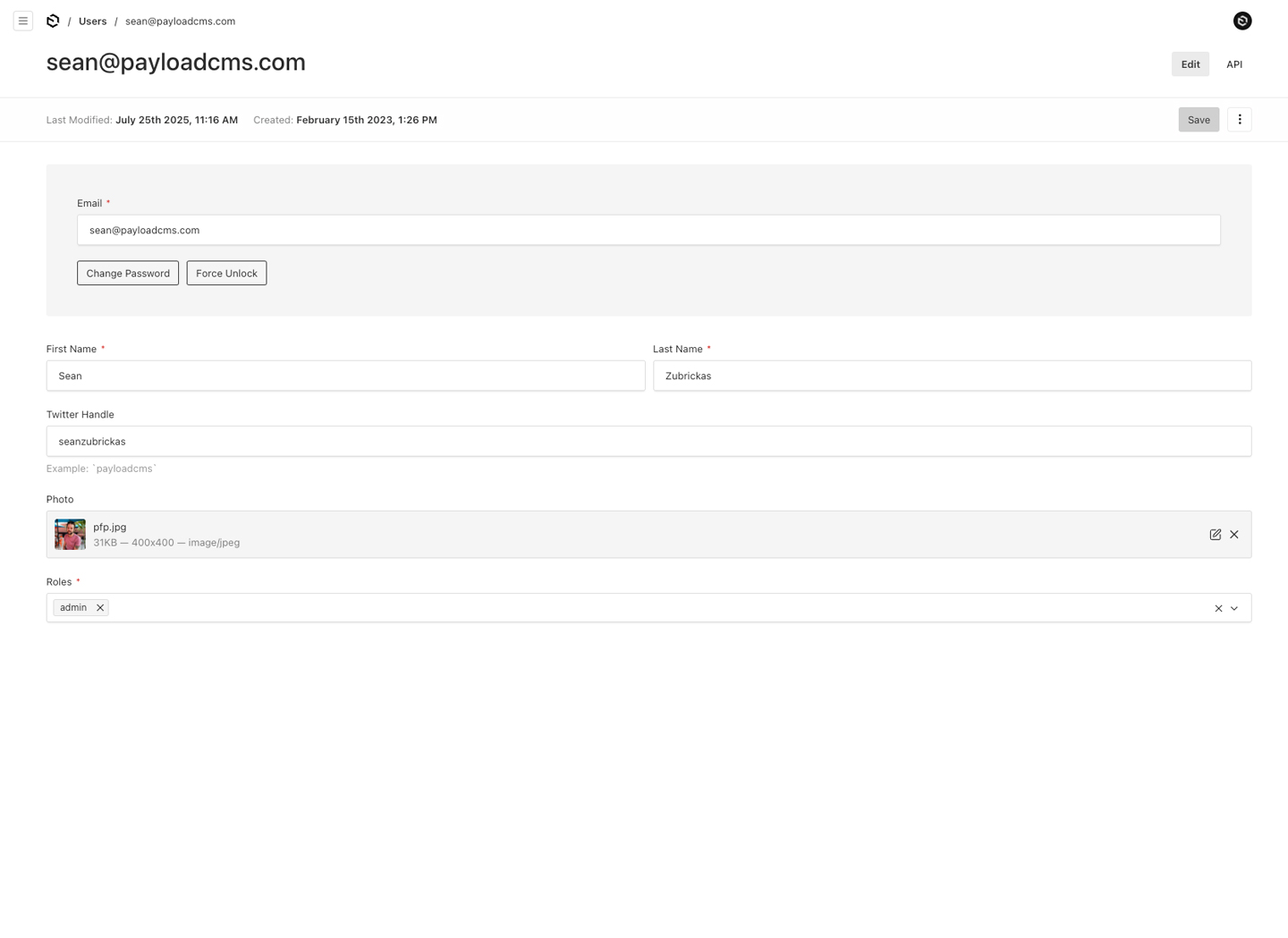
|
||||
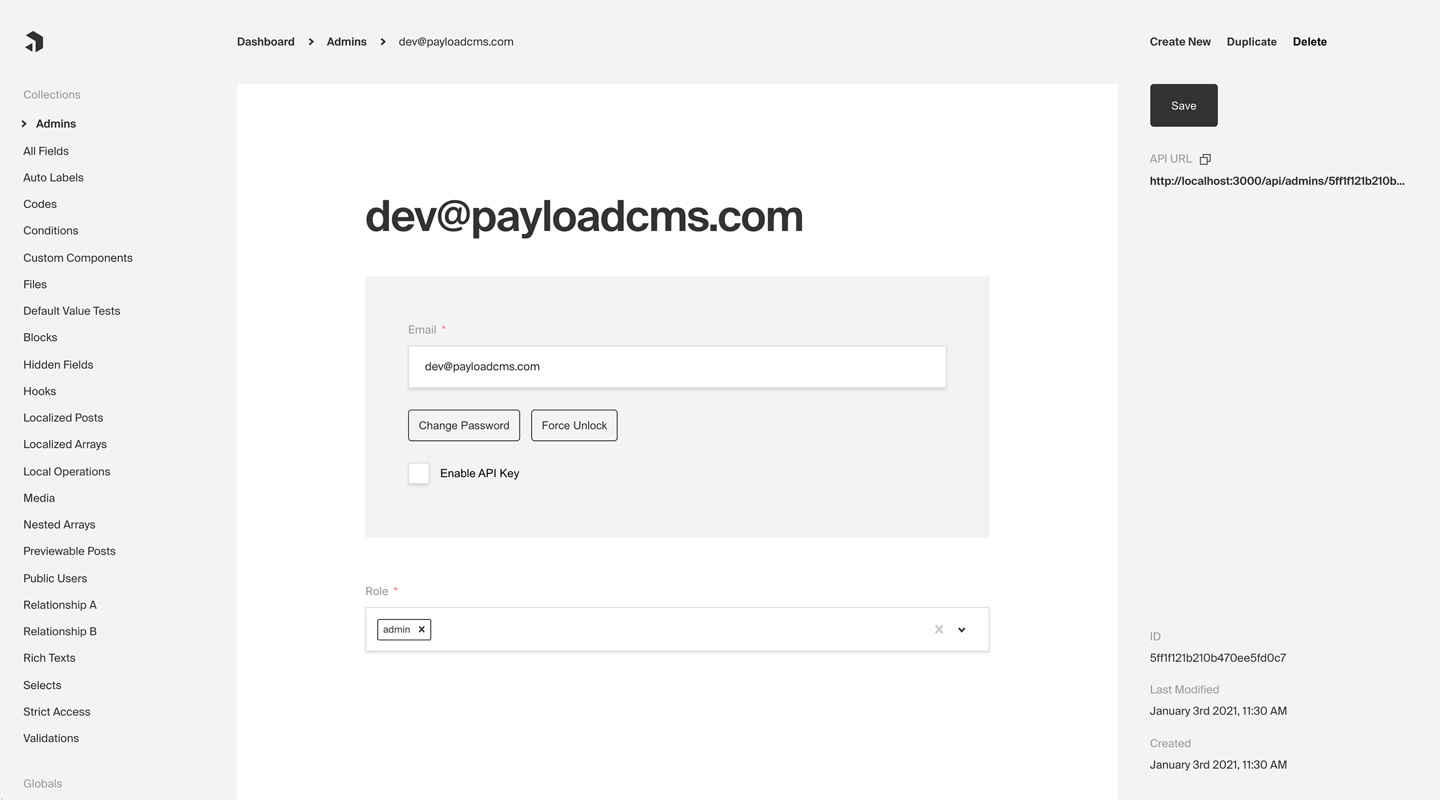
|
||||
_Admin Panel screenshot depicting an Admins Collection with Auth enabled_
|
||||
|
||||
## Config Options
|
||||
@@ -71,7 +71,7 @@ export const Admins: CollectionConfig = {
|
||||
</Banner>
|
||||
|
||||
<Banner type="warning">
|
||||
**Note:** Auth-enabled Collections will be automatically injected with the
|
||||
**Note:** Auth-enabled Collections with be automatically injected with the
|
||||
`hash`, `salt`, and `email` fields. [More
|
||||
details](../fields/overview#field-names).
|
||||
</Banner>
|
||||
@@ -91,7 +91,6 @@ The following options are available:
|
||||
| **`strategies`** | Advanced - an array of custom authentication strategies to extend this collection's authentication with. [More details](./custom-strategies). |
|
||||
| **`tokenExpiration`** | How long (in seconds) to keep the user logged in. JWTs and HTTP-only cookies will both expire at the same time. |
|
||||
| **`useAPIKey`** | Payload Authentication provides for API keys to be set on each user within an Authentication-enabled Collection. [More details](./api-keys). |
|
||||
| **`useSessions`** | True by default. Set to `false` to use stateless JWTs for authentication instead of sessions. |
|
||||
| **`verify`** | Set to `true` or pass an object with verification options to require users to verify by email before they are allowed to log into your app. [More details](./email#email-verification). |
|
||||
|
||||
### Login With Username
|
||||
@@ -143,17 +142,14 @@ import { buildConfig } from 'payload'
|
||||
export default buildConfig({
|
||||
// ...
|
||||
// highlight-start
|
||||
admin: {
|
||||
autoLogin:
|
||||
process.env.NODE_ENV === 'development'
|
||||
? {
|
||||
email: 'test@example.com',
|
||||
password: 'test',
|
||||
prefillOnly: true,
|
||||
}
|
||||
: false,
|
||||
},
|
||||
|
||||
autoLogin:
|
||||
process.env.NEXT_PUBLIC_ENABLE_AUTOLOGIN === 'true'
|
||||
? {
|
||||
email: 'test@example.com',
|
||||
password: 'test',
|
||||
prefillOnly: true,
|
||||
}
|
||||
: false,
|
||||
// highlight-end
|
||||
})
|
||||
```
|
||||
@@ -179,7 +175,7 @@ All auth-related operations are available via Payload's REST, Local, and GraphQL
|
||||
|
||||
## Strategies
|
||||
|
||||
Out of the box Payload ships with three powerful Authentication strategies:
|
||||
Out of the box Payload ships with a three powerful Authentication strategies:
|
||||
|
||||
- [HTTP-Only Cookies](./cookies)
|
||||
- [JSON Web Tokens (JWT)](./jwt)
|
||||
@@ -202,43 +198,3 @@ API Keys can be enabled on auth collections. These are particularly useful when
|
||||
### Custom Strategies
|
||||
|
||||
There are cases where these may not be enough for your application. Payload is extendable by design so you can wire up your own strategy when you need to. [More details](./custom-strategies).
|
||||
|
||||
### Access Control
|
||||
|
||||
Default auth fields including `email`, `username`, and `password` can be overridden by defining a custom field with the same name in your collection config. This allows you to customize the field — including access control — while preserving the underlying auth functionality. For example, you might want to restrict the `email` field from being updated once it is created, or only allow it to be read by certain user roles. You can achieve this by redefining the field and setting access rules accordingly.
|
||||
|
||||
Here's an example of how to restrict access to default auth fields:
|
||||
|
||||
```ts
|
||||
import type { CollectionConfig } from 'payload'
|
||||
|
||||
export const Auth: CollectionConfig = {
|
||||
slug: 'users',
|
||||
auth: true,
|
||||
fields: [
|
||||
{
|
||||
name: 'email', // or 'username'
|
||||
type: 'text',
|
||||
access: {
|
||||
create: () => true,
|
||||
read: () => false,
|
||||
update: () => false,
|
||||
},
|
||||
},
|
||||
{
|
||||
name: 'password', // this will be applied to all password-related fields including new password, confirm password.
|
||||
type: 'text',
|
||||
hidden: true, // needed only for the password field to prevent duplication in the Admin panel
|
||||
access: {
|
||||
update: () => false,
|
||||
},
|
||||
},
|
||||
],
|
||||
}
|
||||
```
|
||||
|
||||
**Note:**
|
||||
|
||||
- Access functions will apply across the application — I.e. if `read` access is disabled on `email`, it will not appear in the Admin panel UI or API.
|
||||
- Restricting `read` on the `email` or `username` disables the **Unlock** action in the Admin panel as this function requires access to a user-identifying field.
|
||||
- When overriding the `password` field, you may need to include `hidden: true` to prevent duplicate fields being displayed in the Admin panel.
|
||||
|
||||
@@ -8,7 +8,7 @@ keywords: authentication, config, configuration, documentation, Content Manageme
|
||||
|
||||
During the lifecycle of a request you will be able to access the data you have configured to be stored in the JWT by accessing `req.user`. The user object is automatically appended to the request for you.
|
||||
|
||||
### Defining Token Data
|
||||
### Definining Token Data
|
||||
|
||||
You can specify what data gets encoded to the Cookie/JWT-Token by setting `saveToJWT` property on fields within your auth collection.
|
||||
|
||||
|
||||
62
docs/cloud/configuration.mdx
Normal file
62
docs/cloud/configuration.mdx
Normal file
@@ -0,0 +1,62 @@
|
||||
---
|
||||
title: Project Configuration
|
||||
label: Configuration
|
||||
order: 20
|
||||
desc: Quickly configure and deploy your Payload Cloud project in a few simple steps.
|
||||
keywords: configuration, config, settings, project, cloud, payload cloud, deploy, deployment
|
||||
---
|
||||
|
||||
## Select your plan
|
||||
|
||||
Once you have created a project, you will need to select your plan. This will determine the resources that are allocated to your project and the features that are available to you.
|
||||
|
||||
<Banner type="success">
|
||||
Note: All Payload Cloud teams that deploy a project require a card on file.
|
||||
This helps us prevent fraud and abuse on our platform. If you select a plan
|
||||
with a free trial, you will not be charged until your trial period is over.
|
||||
We’ll remind you 7 days before your trial ends and you can cancel anytime.
|
||||
</Banner>
|
||||
|
||||
## Project Details
|
||||
|
||||
| Option | Description |
|
||||
| ---------------- | --------------------------------------------------------------------------------------------------------------------------------------------------------------------------------------------------------------------------------------------- |
|
||||
| **Region** | Select the region closest to your audience. This will ensure the fastest communication between your data and your client. |
|
||||
| **Project Name** | A name for your project. You can change this at any time. |
|
||||
| **Project Slug** | Choose a unique slug to identify your project. This needs to be unique for your team and you can change it any time. |
|
||||
| **Team** | Select the team you want to create the project under. If this is your first project, a personal team will be created for you automatically. You can modify your team settings and invite new members at any time from the Team Settings page. |
|
||||
|
||||
## Build Settings
|
||||
|
||||
If you are deploying a new project from a template, the following settings will be automatically configured for you. If you are using your own repository, you need to make sure your build settings are accurate for your project to deploy correctly.
|
||||
|
||||
| Option | Description |
|
||||
| -------------------- | ----------------------------------------------------------------------------------------------------------------------------------------------------------------- |
|
||||
| **Root Directory** | The folder where your `package.json` file lives. |
|
||||
| **Install Command** | The command used to install your modules, for example: `yarn install` or `npm install` |
|
||||
| **Build Command** | The command used to build your application, for example: `yarn build` or `npm run build` |
|
||||
| **Serve Command** | The command used to serve your application, for example: `yarn serve` or `npm run serve` |
|
||||
| **Branch to Deploy** | Select the branch of your repository that you want to deploy from. This is the branch that will be used to build your project when you commit new changes. |
|
||||
| **Default Domain** | Set a default domain for your project. This must be unique and you will not able to change it. You can always add a custom domain later in your project settings. |
|
||||
|
||||
## Environment Variables
|
||||
|
||||
Any of the features in Payload Cloud that require environment variables will automatically be provided to your application. If your app requires any custom environment variables, you can set them here.
|
||||
|
||||
<Banner type="warning">
|
||||
Note: For security reasons, any variables you wish to provide to the [Admin
|
||||
Panel](../admin/overview) must be prefixed with `NEXT_PUBLIC_`. Learn more
|
||||
[here](../configuration/environment-vars).
|
||||
</Banner>
|
||||
|
||||
## Payment
|
||||
|
||||
Payment methods can be set per project and can be updated any time. You can use team’s default payment method, or add a new one. Modify your payment methods in your Project settings / Team settings.
|
||||
|
||||
<Banner type="success">
|
||||
**Note:** All Payload Cloud teams that deploy a project require a card on
|
||||
file. This helps us prevent fraud and abuse on our platform. If you select a
|
||||
plan with a free trial, you will not be charged until your trial period is
|
||||
over. We’ll remind you 7 days before your trial ends and you can cancel
|
||||
anytime.
|
||||
</Banner>
|
||||
53
docs/cloud/creating-a-project.mdx
Normal file
53
docs/cloud/creating-a-project.mdx
Normal file
@@ -0,0 +1,53 @@
|
||||
---
|
||||
title: Getting Started
|
||||
label: Getting Started
|
||||
order: 10
|
||||
desc: Get started with Payload Cloud, a deployment solution specifically designed for Node + MongoDB applications.
|
||||
keywords: cloud, hosted, database, storage, email, deployment, serverless, node, mongodb, s3, aws, cloudflare, atlas, resend, payload, cms
|
||||
---
|
||||
|
||||
A deployment solution specifically designed for Node.js + MongoDB applications, offering seamless deployment of your entire stack in one place. You can get started in minutes with a one-click template or bring your own codebase with you.
|
||||
|
||||
Payload Cloud offers various plans tailored to meet your specific needs, including a MongoDB Atlas database, S3 file storage, and email delivery powered by [Resend](https://resend.com). To see a full breakdown of features and plans, see our [Cloud Pricing page](https://payloadcms.com/cloud-pricing).
|
||||
|
||||
To get started, you first need to create an account. Head over to [the login screen](https://payloadcms.com/login) and **Register for Free**.
|
||||
|
||||
<Banner type="success">
|
||||
To create your first project, you can either select [a
|
||||
template](#starting-from-a-template) or [import an existing
|
||||
project](#importing-from-an-existing-codebase) from GitHub.
|
||||
</Banner>
|
||||
|
||||
## Starting from a Template
|
||||
|
||||
Templates come preconfigured and provide a one-click solution to quickly deploy a new application.
|
||||
|
||||
|
||||
_Creating a new project from a template._
|
||||
|
||||
After creating an account, select your desired template from the Projects page. At this point, you need to connect to authorize the Payload Cloud application with your GitHub account. Click Continue with GitHub and follow the prompts to authorize the app.
|
||||
|
||||
Next, select your `GitHub Scope`. If you belong to multiple organizations, they will show up here. If you do not see the organization you are looking for, you may need to adjust your GitHub app permissions.
|
||||
|
||||
After selecting your scope, create a unique `repository name` and select whether you want your repository to be public or private on GitHub.
|
||||
|
||||
<Banner type="warning">
|
||||
**Note:** Public repositories can be accessed by anyone online, while private
|
||||
repositories grant access only to you and anyone you explicitly authorize.
|
||||
</Banner>
|
||||
|
||||
Once you are ready, click **Create Project**. This will clone the selected template to a new repository in your GitHub account, and take you to the configuration page to set up your project for deployment.
|
||||
|
||||
## Importing from an Existing Codebase
|
||||
|
||||
Payload Cloud works for any Node.js + MongoDB app. From the New Project page, select **import an existing Git codebase**. Choose the organization and select the repository you want to import. From here, you will be taken to the configuration page to set up your project for deployment.
|
||||
|
||||
|
||||
_Creating a new project from an existing repository._
|
||||
|
||||
<Banner type="warning">
|
||||
**Note:** In order to make use of the features of Payload Cloud in your own
|
||||
codebase, you will need to add the [Cloud
|
||||
Plugin](https://github.com/payloadcms/payload/tree/main/packages/payload-cloud)
|
||||
to your Payload app.
|
||||
</Banner>
|
||||
137
docs/cloud/projects.mdx
Normal file
137
docs/cloud/projects.mdx
Normal file
@@ -0,0 +1,137 @@
|
||||
---
|
||||
title: Cloud Projects
|
||||
label: Projects
|
||||
order: 40
|
||||
desc: Manage your Payload Cloud projects.
|
||||
keywords: cloud, payload cloud, projects, project, overview, database, file storage, build settings, environment variables, custom domains, email, developing locally
|
||||
---
|
||||
|
||||
## Overview
|
||||
|
||||
<Banner>
|
||||
The overview tab shows your most recent deployment, along with build and
|
||||
deployment logs. From here, you can see your live URL, deployment details like
|
||||
timestamps and commit hash, as well as the status of your deployment. You can
|
||||
also trigger a redeployment manually, which will rebuild your project using
|
||||
the current configuration.
|
||||
</Banner>
|
||||
|
||||
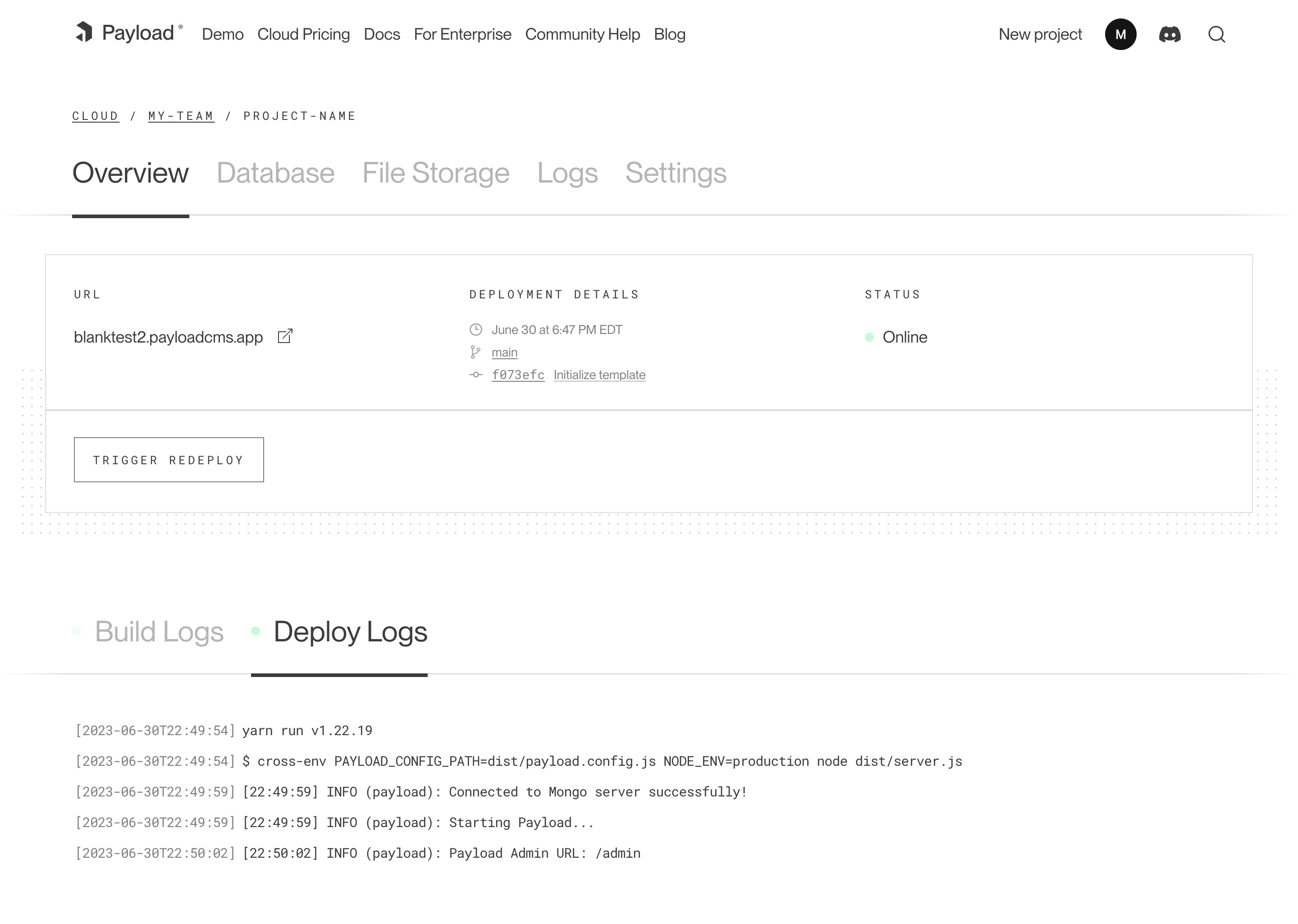
|
||||
_A screenshot of the Overview page for a Cloud project._
|
||||
|
||||
## Database
|
||||
|
||||
Your Payload Cloud project comes with a MongoDB serverless Atlas DB instance or a Dedicated Atlas cluster, depending on your plan. To interact with your cloud database, you will be provided with a MongoDB connection string. This can be found under the **Database** tab of your project.
|
||||
|
||||
`mongodb+srv://your_connection_string`
|
||||
|
||||
## File Storage
|
||||
|
||||
Payload Cloud gives you S3 file storage backed by Cloudflare as a CDN, and this plugin extends Payload so that all of your media will be stored in S3 rather than locally.
|
||||
|
||||
AWS Cognito is used for authentication to your S3 bucket. The [Payload Cloud Plugin](https://github.com/payloadcms/payload/tree/main/packages/payload-cloud) will automatically pick up these values. These values are only if you'd like to access your files directly, outside of Payload Cloud.
|
||||
|
||||
### Accessing Files Outside of Payload Cloud
|
||||
|
||||
If you'd like to access your files outside of Payload Cloud, you'll need to retrieve some values from your project's settings and put them into your environment variables. In Payload Cloud, navigate to the File Storage tab and copy the values using the copy button. Put these values in your .env file. Also copy the Cognito Password value separately and put into your .env file as well.
|
||||
|
||||
When you are done, you should have the following values in your .env file:
|
||||
|
||||
```env
|
||||
PAYLOAD_CLOUD=true
|
||||
PAYLOAD_CLOUD_ENVIRONMENT=prod
|
||||
PAYLOAD_CLOUD_COGNITO_USER_POOL_CLIENT_ID=
|
||||
PAYLOAD_CLOUD_COGNITO_USER_POOL_ID=
|
||||
PAYLOAD_CLOUD_COGNITO_IDENTITY_POOL_ID=
|
||||
PAYLOAD_CLOUD_PROJECT_ID=
|
||||
PAYLOAD_CLOUD_BUCKET=
|
||||
PAYLOAD_CLOUD_BUCKET_REGION=
|
||||
PAYLOAD_CLOUD_COGNITO_PASSWORD=
|
||||
```
|
||||
|
||||
The plugin will pick up these values and use them to access your files.
|
||||
|
||||
## Build Settings
|
||||
|
||||
You can update settings from your Project’s Settings tab. Changes to your build settings will trigger a redeployment of your project.
|
||||
|
||||
## Environment Variables
|
||||
|
||||
From the Environment Variables page of the Settings tab, you can add, update and delete variables for use in your project. Like build settings, these changes will trigger a redeployment of your project.
|
||||
|
||||
<Banner>
|
||||
Note: For security reasons, any variables you wish to provide to the [Admin
|
||||
Panel](../admin/overview) must be prefixed with `NEXT_PUBLIC_`. [More
|
||||
details](../configuration/environment-vars).
|
||||
</Banner>
|
||||
|
||||
## Custom Domains
|
||||
|
||||
With Payload Cloud, you can add custom domain names to your project. To do so, first go to the Domains page of the Settings tab of your project. Here you can see your default domain. To add a new domain, type in the domain name you wish to use.
|
||||
|
||||
<Banner>
|
||||
Note: do not include the protocol (http:// or https://) or any paths (/page).
|
||||
Only include the domain name and extension, and optionally a subdomain. -
|
||||
your-domain.com - backend.your-domain.com
|
||||
</Banner>
|
||||
|
||||
Once you click save, a DNS record will be generated for your domain name to point to your live project. Add this record into your DNS provider’s records, and once the records are resolving properly (this can take 1hr to 48hrs in some cases), your domain will now to point to your live project.
|
||||
|
||||
You will also need to configure your Payload project to use your specified domain. In your `payload.config.ts` file, specify your `serverURL` with your domain:
|
||||
|
||||
```ts
|
||||
export default buildConfig({
|
||||
serverURL: 'https://example.com',
|
||||
// the rest of your config,
|
||||
})
|
||||
```
|
||||
|
||||
## Email
|
||||
|
||||
Powered by [Resend](https://resend.com), Payload Cloud comes with integrated email support out of the box. No configuration is needed, and you can use `payload.sendEmail()` to send email right from your Payload app. To learn more about sending email with Payload, checkout the [Email Configuration](../email/overview) overview.
|
||||
|
||||
If you are on the Pro or Enterprise plan, you can add your own custom Email domain name. From the Email page of your project’s Settings, add the domain you wish to use for email delivery. This will generate a set of DNS records. Add these records to your DNS provider and click verify to check that your records are resolving properly. Once verified, your emails will now be sent from your custom domain name.
|
||||
|
||||
## Developing Locally
|
||||
|
||||
To make changes to your project, you will need to clone the repository defined in your project settings to your local machine. In order to run your project locally, you will need configure your local environment first. Refer to your repository’s `README.md` file to see the steps needed for your specific template.
|
||||
|
||||
From there, you are ready to make updates to your project. When you are ready to make your changes live, commit your changes to the branch you specified in your Project settings, and your application will automatically trigger a redeploy and build from your latest commit.
|
||||
|
||||
## Cloud Plugin
|
||||
|
||||
Projects generated from a template will come pre-configured with the official Cloud Plugin, but if you are using your own repository you will need to add this into your project. To do so, add the plugin to your Payload Config:
|
||||
|
||||
`pnpm add @payloadcms/payload-cloud`
|
||||
|
||||
```js
|
||||
import { payloadCloudPlugin } from '@payloadcms/payload-cloud'
|
||||
import { buildConfig } from 'payload'
|
||||
|
||||
export default buildConfig({
|
||||
plugins: [payloadCloudPlugin()],
|
||||
// rest of config
|
||||
})
|
||||
```
|
||||
|
||||
<Banner type="warning">
|
||||
**Note:** If your Payload Config already has an email with transport, this
|
||||
will take precedence over Payload Cloud's email service.
|
||||
</Banner>
|
||||
|
||||
<Banner type="info">
|
||||
Good to know: the Payload Cloud Plugin was previously named
|
||||
`@payloadcms/plugin-cloud`. If you are using this plugin, you should update to
|
||||
the new package name.
|
||||
</Banner>
|
||||
|
||||
#### **Optional configuration**
|
||||
|
||||
If you wish to opt-out of any Payload cloud features, the plugin also accepts options to do so.
|
||||
|
||||
```js
|
||||
payloadCloud({
|
||||
storage: false, // Disable file storage
|
||||
email: false, // Disable email delivery
|
||||
})
|
||||
```
|
||||
35
docs/cloud/teams.mdx
Normal file
35
docs/cloud/teams.mdx
Normal file
@@ -0,0 +1,35 @@
|
||||
---
|
||||
title: Cloud Teams
|
||||
label: Teams
|
||||
order: 30
|
||||
desc: Manage your Payload Cloud team and billing settings.
|
||||
keywords: team, teams, billing, subscription, payment, plan, plans, cloud, payload cloud
|
||||
---
|
||||
|
||||
<Banner>
|
||||
Within Payload Cloud, the team management feature offers you the ability to
|
||||
manage your organization, team members, billing, and subscription settings.
|
||||
</Banner>
|
||||
|
||||
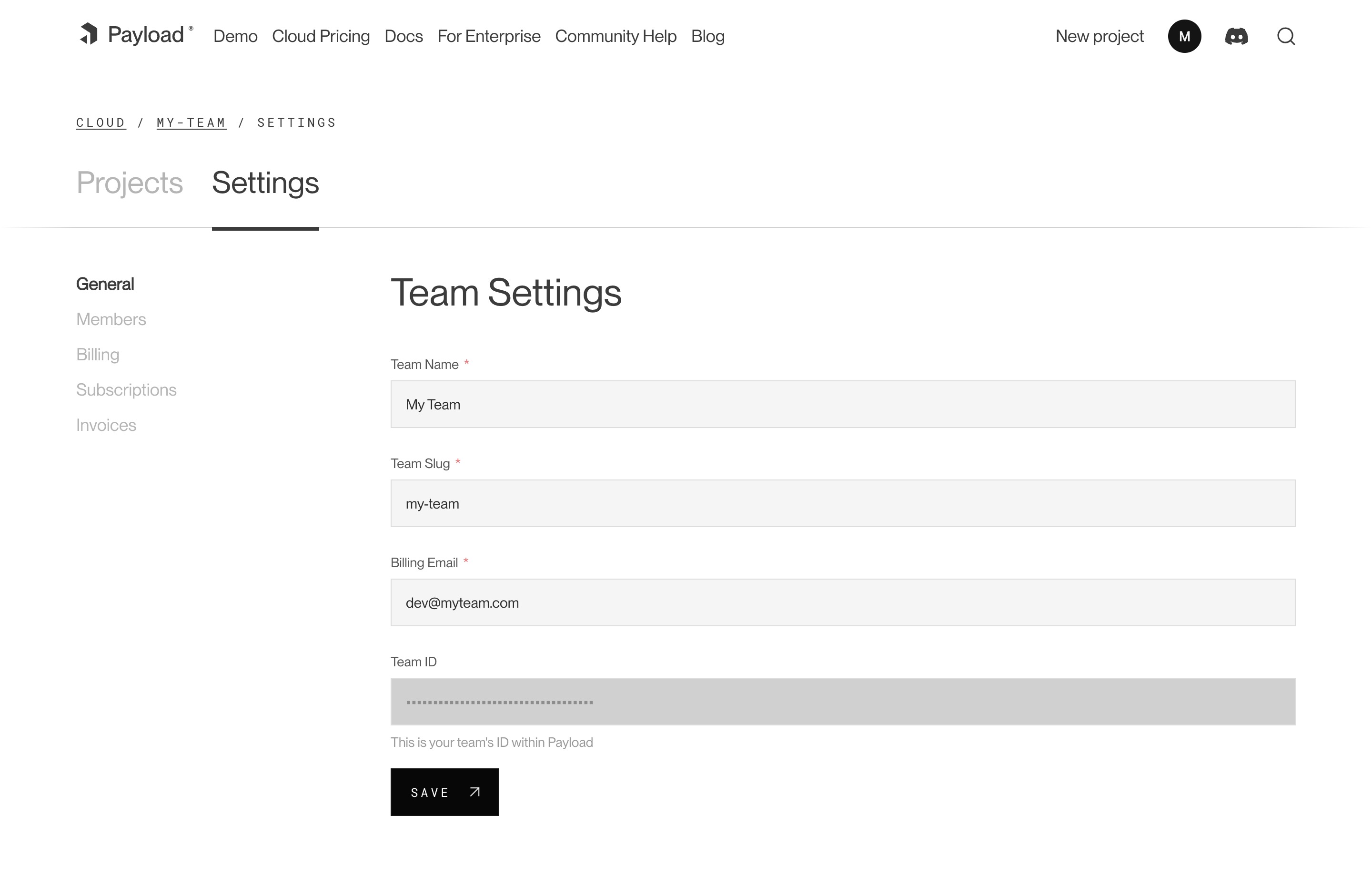
|
||||
_A screenshot of the Team Settings page._
|
||||
|
||||
## Members
|
||||
|
||||
Each team has members that can interact with your projects. You can invite multiple people to your team and each individual can belong to more than one team. You can assign them either `owner` or `user` permissions. Owners are able to make admin-only changes, such as deleting projects, and editing billing information.
|
||||
|
||||
## Adding Members
|
||||
|
||||
To add a new member to your team, visit your Team’s Settings page, and click “Invite Teammate”. You can then add their email address, and assign their role. Press “Save” to send the invitations, which will send an email to the invited team member where they can create a new account.
|
||||
|
||||
## Billing
|
||||
|
||||
Users can update billing settings and subscriptions for any teams where they are designated as an `owner`. To make updates to the team’s payment methods, visit the Billing page under the Team Settings tab. You can add new cards, delete cards, and set a payment method as a default. The default payment method will be used in the event that another payment method fails.
|
||||
|
||||
## Subscriptions
|
||||
|
||||
From the Subscriptions page, a team owner can see all current plans for their team. From here, you can see the price of each plan, if there is an active trial, and when you will be billed next.
|
||||
|
||||
## Invoices
|
||||
|
||||
The Invoices page will you show you the invoices for your account, as well as the status on their payment.
|
||||
@@ -79,14 +79,12 @@ The following options are available:
|
||||
| `lockDocuments` | Enables or disables document locking. By default, document locking is enabled. Set to an object to configure, or set to `false` to disable locking. [More details](../admin/locked-documents). |
|
||||
| `slug` \* | Unique, URL-friendly string that will act as an identifier for this Collection. |
|
||||
| `timestamps` | Set to false to disable documents' automatically generated `createdAt` and `updatedAt` timestamps. |
|
||||
| `trash` | A boolean to enable soft deletes for this collection. Defaults to `false`. [More details](../trash/overview). |
|
||||
| `typescript` | An object with property `interface` as the text used in schema generation. Auto-generated from slug if not defined. |
|
||||
| `upload` | Specify options if you would like this Collection to support file uploads. For more, consult the [Uploads](../upload/overview) documentation. |
|
||||
| `versions` | Set to true to enable default options, or configure with object properties. [More details](../versions/overview#collection-config). |
|
||||
| `defaultPopulate` | Specify which fields to select when this Collection is populated from another document. [More Details](../queries/select#defaultpopulate-collection-config-property). |
|
||||
| `indexes` | Define compound indexes for this collection. This can be used to either speed up querying/sorting by 2 or more fields at the same time or to ensure uniqueness between several fields. |
|
||||
| `forceSelect` | Specify which fields should be selected always, regardless of the `select` query which can be useful that the field exists for access control / hooks |
|
||||
| `disableBulkEdit` | Disable the bulk edit operation for the collection in the admin panel and the REST API |
|
||||
|
||||
_\* An asterisk denotes that a property is required._
|
||||
|
||||
@@ -127,29 +125,20 @@ The following options are available:
|
||||
| `group` | Text or localization object used to group Collection and Global links in the admin navigation. Set to `false` to hide the link from the navigation while keeping its routes accessible. |
|
||||
| `hidden` | Set to true or a function, called with the current user, returning true to exclude this Collection from navigation and admin routing. |
|
||||
| `hooks` | Admin-specific hooks for this Collection. [More details](../hooks/collections). |
|
||||
| `useAsTitle` | Specify a top-level field to use for a document title throughout the Admin Panel. If no field is defined, the ID of the document is used as the title. |
|
||||
| `useAsTitle` | Specify a top-level field to use for a document title throughout the Admin Panel. If no field is defined, the ID of the document is used as the title. A field with `virtual: true` cannot be used as the title. |
|
||||
| `description` | Text to display below the Collection label in the List View to give editors more information. Alternatively, you can use the `admin.components.Description` to render a React component. [More details](#custom-components). |
|
||||
| `defaultColumns` | Array of field names that correspond to which columns to show by default in this Collection's List View. |
|
||||
| `disableCopyToLocale` | Disables the "Copy to Locale" button while editing documents within this Collection. Only applicable when localization is enabled. |
|
||||
| `groupBy` | Beta. Enable grouping by a field in the list view. |
|
||||
| `hideAPIURL` | Hides the "API URL" meta field while editing documents within this Collection. |
|
||||
| `enableRichTextLink` | The [Rich Text](../fields/rich-text) field features a `Link` element which allows for users to automatically reference related documents within their rich text. Set to `true` by default. |
|
||||
| `enableRichTextRelationship` | The [Rich Text](../fields/rich-text) field features a `Relationship` element which allows for users to automatically reference related documents within their rich text. Set to `true` by default. |
|
||||
| `folders` | A boolean to enable folders for a given collection. Defaults to `false`. [More details](../folders/overview). |
|
||||
| `meta` | Page metadata overrides to apply to this Collection within the Admin Panel. [More details](../admin/metadata). |
|
||||
| `preview` | Function to generate preview URLs within the Admin Panel that can point to your app. [More details](../admin/preview). |
|
||||
| `livePreview` | Enable real-time editing for instant visual feedback of your front-end application. [More details](../live-preview/overview). |
|
||||
| `components` | Swap in your own React components to be used within this Collection. [More details](#custom-components). |
|
||||
| `listSearchableFields` | Specify which fields should be searched in the List search view. [More details](#list-searchable-fields). |
|
||||
| `pagination` | Set pagination-specific options for this Collection in the List View. [More details](#pagination). |
|
||||
| `baseFilter` | Defines a default base filter which will be applied to the List View (along with any other filters applied by the user) and internal links in Lexical Editor, |
|
||||
|
||||
<Banner type="warning">
|
||||
**Note:** If you set `useAsTitle` to a relationship or join field, it will use
|
||||
only the ID of the related document(s) as the title. To display a specific
|
||||
field (i.e. title) from the related document instead, create a virtual field
|
||||
that extracts the desired data, and set `useAsTitle` to that virtual field.
|
||||
</Banner>
|
||||
| `pagination` | Set pagination-specific options for this Collection. [More details](#pagination). |
|
||||
| `baseListFilter` | You can define a default base filter for this collection's List view, which will be merged into any filters that the user performs. |
|
||||
|
||||
### Custom Components
|
||||
|
||||
@@ -187,7 +176,7 @@ The following options are available:
|
||||
#### Edit View Options
|
||||
|
||||
```ts
|
||||
import type { CollectionConfig } from 'payload'
|
||||
import type { CollectionCOnfig } from 'payload'
|
||||
|
||||
export const MyCollection: CollectionConfig = {
|
||||
// ...
|
||||
@@ -204,15 +193,13 @@ export const MyCollection: CollectionConfig = {
|
||||
|
||||
The following options are available:
|
||||
|
||||
| Option | Description |
|
||||
| ------------------------ | ------------------------------------------------------------------------------------------------------------------------------------------------------------------------------------------------------- |
|
||||
| `beforeDocumentControls` | Inject custom components before the Save / Publish buttons. [More details](../custom-components/edit-view#beforedocumentcontrols). |
|
||||
| `editMenuItems` | Inject custom components within the 3-dot menu dropdown located in the document controls bar. [More details](../custom-components/edit-view#editmenuitems). |
|
||||
| `SaveButton` | Replace the default Save Button within the Edit View. [Drafts](../versions/drafts) must be disabled. [More details](../custom-components/edit-view#savebutton). |
|
||||
| `SaveDraftButton` | Replace the default Save Draft Button within the Edit View. [Drafts](../versions/drafts) must be enabled and autosave must be disabled. [More details](../custom-components/edit-view#savedraftbutton). |
|
||||
| `PublishButton` | Replace the default Publish Button within the Edit View. [Drafts](../versions/drafts) must be enabled. [More details](../custom-components/edit-view#publishbutton). |
|
||||
| `PreviewButton` | Replace the default Preview Button within the Edit View. [Preview](../admin/preview) must be enabled. [More details](../custom-components/edit-view#previewbutton). |
|
||||
| `Upload` | Replace the default Upload component within the Edit View. [Upload](../upload/overview) must be enabled. [More details](../custom-components/edit-view#upload). |
|
||||
| Option | Description |
|
||||
| ----------------- | --------------------------------------------------------------------------------------------------------------------------------------------------------------------------------------------------------- |
|
||||
| `SaveButton` | Replace the default Save Button within the Edit View. [Drafts](../versions/drafts) must be disabled. [More details](../custom-components/edit-view#save-button). |
|
||||
| `SaveDraftButton` | Replace the default Save Draft Button within the Edit View. [Drafts](../versions/drafts) must be enabled and autosave must be disabled. [More details](../custom-components/edit-view#save-draft-button). |
|
||||
| `PublishButton` | Replace the default Publish Button within the Edit View. [Drafts](../versions/drafts) must be enabled. [More details](../custom-components/edit-view#publish-button). |
|
||||
| `PreviewButton` | Replace the default Preview Button within the Edit View. [Preview](../admin/preview) must be enabled. [More details](../custom-components/edit-view#preview-button). |
|
||||
| `Upload` | Replace the default Upload component within the Edit View. [Upload](../upload/overview) must be enabled. [More details](../custom-components/edit-view#upload). |
|
||||
|
||||
<Banner type="success">
|
||||
**Note:** For details on how to build Custom Components, see [Building Custom
|
||||
@@ -287,7 +274,7 @@ You can also pass an object to the collection's `graphQL` property, which allows
|
||||
|
||||
## TypeScript
|
||||
|
||||
You can import types from Payload to help make writing your Collection configs easier and type-safe. There are two main types that represent the Collection Config, `CollectionConfig` and `SanitizedCollectionConfig`.
|
||||
You can import types from Payload to help make writing your Collection configs easier and type-safe. There are two main types that represent the Collection Config, `CollectionConfig` and `SanitizeCollectionConfig`.
|
||||
|
||||
The `CollectionConfig` type represents a raw Collection Config in its full form, where only the bare minimum properties are marked as required. The `SanitizedCollectionConfig` type represents a Collection Config after it has been fully sanitized. Generally, this is only used internally by Payload.
|
||||
|
||||
|
||||
@@ -1,7 +1,7 @@
|
||||
---
|
||||
title: Environment Variables
|
||||
label: Environment Variables
|
||||
order: 60
|
||||
order: 100
|
||||
desc: Learn how to use Environment Variables in your Payload project
|
||||
---
|
||||
|
||||
@@ -72,7 +72,7 @@ const MyClientComponent = () => {
|
||||
}
|
||||
```
|
||||
|
||||
For more information, check out the [Next.js documentation](https://nextjs.org/docs/app/building-your-application/configuring/environment-variables).
|
||||
For more information, check out the [Next.js Documentation](https://nextjs.org/docs/app/building-your-application/configuring/environment-variables).
|
||||
|
||||
## Outside of Next.js
|
||||
|
||||
|
||||
@@ -179,12 +179,12 @@ export const MyGlobal: SanitizedGlobalConfig = {
|
||||
|
||||
The following options are available:
|
||||
|
||||
| Option | Description |
|
||||
| ----------------- | ---------------------------------------------------------------------------------------------------------------------------------------------------------------------------------------------------------- |
|
||||
| `SaveButton` | Replace the default Save Button with a Custom Component. [Drafts](../versions/drafts) must be disabled. [More details](../custom-components/edit-view#savebutton). |
|
||||
| `SaveDraftButton` | Replace the default Save Draft Button with a Custom Component. [Drafts](../versions/drafts) must be enabled and autosave must be disabled. [More details](../custom-components/edit-view#savedraftbutton). |
|
||||
| `PublishButton` | Replace the default Publish Button with a Custom Component. [Drafts](../versions/drafts) must be enabled. [More details](../custom-components/edit-view#publishbutton). |
|
||||
| `PreviewButton` | Replace the default Preview Button with a Custom Component. [Preview](../admin/preview) must be enabled. [More details](../custom-components/edit-view#previewbutton). |
|
||||
| Option | Description |
|
||||
| ----------------- | ------------------------------------------------------------------------------------------------------------------------------------------------------------------------------------------------------------ |
|
||||
| `SaveButton` | Replace the default Save Button with a Custom Component. [Drafts](../versions/drafts) must be disabled. [More details](../custom-components/edit-view#save-button). |
|
||||
| `SaveDraftButton` | Replace the default Save Draft Button with a Custom Component. [Drafts](../versions/drafts) must be enabled and autosave must be disabled. [More details](../custom-components/edit-view#save-draft-button). |
|
||||
| `PublishButton` | Replace the default Publish Button with a Custom Component. [Drafts](../versions/drafts) must be enabled. [More details](../custom-components/edit-view#publish-button). |
|
||||
| `PreviewButton` | Replace the default Preview Button with a Custom Component. [Preview](../admin/preview) must be enabled. [More details](../custom-components/edit-view#preview-button). |
|
||||
|
||||
<Banner type="success">
|
||||
**Note:** For details on how to build Custom Components, see [Building Custom
|
||||
@@ -205,7 +205,7 @@ You can also pass an object to the global's `graphQL` property, which allows you
|
||||
|
||||
## TypeScript
|
||||
|
||||
You can import types from Payload to help make writing your Global configs easier and type-safe. There are two main types that represent the Global Config, `GlobalConfig` and `SanitizedGlobalConfig`.
|
||||
You can import types from Payload to help make writing your Global configs easier and type-safe. There are two main types that represent the Global Config, `GlobalConfig` and `SanitizeGlobalConfig`.
|
||||
|
||||
The `GlobalConfig` type represents a raw Global Config in its full form, where only the bare minimum properties are marked as required. The `SanitizedGlobalConfig` type represents a Global Config after it has been fully sanitized. Generally, this is only used internally by Payload.
|
||||
|
||||
|
||||
@@ -84,7 +84,6 @@ The following options are available:
|
||||
| **`csrf`** | A whitelist array of URLs to allow Payload to accept cookies from. [More details](../authentication/cookies#csrf-attacks). |
|
||||
| **`defaultDepth`** | If a user does not specify `depth` while requesting a resource, this depth will be used. [More details](../queries/depth). |
|
||||
| **`defaultMaxTextLength`** | The maximum allowed string length to be permitted application-wide. Helps to prevent malicious public document creation. |
|
||||
| `folders` | An optional object to configure global folder settings. [More details](../folders/overview). |
|
||||
| `queryPresets` | An object that to configure Collection Query Presets. [More details](../query-presets/overview). |
|
||||
| **`maxDepth`** | The maximum allowed depth to be permitted application-wide. This setting helps prevent against malicious queries. Defaults to `10`. [More details](../queries/depth). |
|
||||
| **`indexSortableFields`** | Automatically index all sortable top-level fields in the database to improve sort performance and add database compatibility for Azure Cosmos and similar. |
|
||||
@@ -110,7 +109,7 @@ _\* An asterisk denotes that a property is required._
|
||||
details](../custom-components/overview#accessing-the-payload-config).
|
||||
</Banner>
|
||||
|
||||
### TypeScript Config
|
||||
### Typescript Config
|
||||
|
||||
Payload exposes a variety of TypeScript settings that you can leverage. These settings are used to auto-generate TypeScript interfaces for your [Collections](./collections) and [Globals](./globals), and to ensure that Payload uses your [Generated Types](../typescript/overview) for all [Local API](../local-api/overview) methods.
|
||||
|
||||
@@ -121,11 +120,10 @@ import { buildConfig } from 'payload'
|
||||
|
||||
export default buildConfig({
|
||||
// ...
|
||||
// highlight-start
|
||||
typescript: {
|
||||
// highlight-line
|
||||
// ...
|
||||
},
|
||||
// highlight-end
|
||||
})
|
||||
```
|
||||
|
||||
@@ -214,7 +212,7 @@ For more information about what we track, take a look at our [privacy policy](/p
|
||||
|
||||
## Cross-origin resource sharing (CORS)#cors
|
||||
|
||||
Cross-origin resource sharing (CORS) can be configured with either a whitelist array of URLS to allow CORS requests from, a wildcard string (`*`) to accept incoming requests from any domain, or an object with the following properties:
|
||||
Cross-origin resource sharing (CORS) can be configured with either a whitelist array of URLS to allow CORS requests from, a wildcard string (`*`) to accept incoming requests from any domain, or a object with the following properties:
|
||||
|
||||
| Option | Description |
|
||||
| ------------- | --------------------------------------------------------------------------------------------------------------------------------------- |
|
||||
@@ -228,9 +226,7 @@ import { buildConfig } from 'payload'
|
||||
|
||||
export default buildConfig({
|
||||
// ...
|
||||
// highlight-start
|
||||
cors: '*',
|
||||
// highlight-end
|
||||
cors: '*', // highlight-line
|
||||
})
|
||||
```
|
||||
|
||||
@@ -244,8 +240,8 @@ export default buildConfig({
|
||||
// highlight-start
|
||||
cors: {
|
||||
origins: ['http://localhost:3000'],
|
||||
headers: ['x-custom-header'],
|
||||
},
|
||||
headers: ['x-custom-header']
|
||||
}
|
||||
// highlight-end
|
||||
})
|
||||
```
|
||||
@@ -295,7 +291,7 @@ export const script = async (config: SanitizedConfig) => {
|
||||
collection: 'pages',
|
||||
data: { title: 'my title' },
|
||||
})
|
||||
payload.logger.info('Successfully seeded!')
|
||||
payload.logger.info('Succesffully seeded!')
|
||||
process.exit(0)
|
||||
}
|
||||
```
|
||||
|
||||
@@ -51,7 +51,7 @@ For more granular control, pass a configuration object instead. Payload exposes
|
||||
| Property | Description |
|
||||
| -------------- | ----------------------------------------------------------------------------------------------------------------------------------------------------------------------------------- |
|
||||
| `Component` \* | Pass in the component path that should be rendered when a user navigates to this route. |
|
||||
| `path` \* | Any valid URL path or array of paths that [`path-to-regexp`](https://www.npmjs.com/package/path-to-regex) understands. Must begin with a forward slash (`/`). |
|
||||
| `path` \* | Any valid URL path or array of paths that [`path-to-regexp`](https://www.npmjs.com/package/path-to-regex) understands. |
|
||||
| `exact` | Boolean. When true, will only match if the path matches the `usePathname()` exactly. |
|
||||
| `strict` | When true, a path that has a trailing slash will only match a `location.pathname` with a trailing slash. This has no effect when there are additional URL segments in the pathname. |
|
||||
| `sensitive` | When true, will match if the path is case sensitive. |
|
||||
@@ -158,7 +158,7 @@ export function MyCustomView(props: AdminViewServerProps) {
|
||||
|
||||
<Banner type="success">
|
||||
**Tip:** For consistent layout and navigation, you may want to wrap your
|
||||
Custom View with one of the built-in [Templates](./overview#templates).
|
||||
Custom View with one of the built-in [Template](./overview#templates).
|
||||
</Banner>
|
||||
|
||||
### View Templates
|
||||
|
||||
@@ -30,6 +30,7 @@ export const MyCollectionOrGlobalConfig: CollectionConfig = {
|
||||
// - api
|
||||
// - versions
|
||||
// - version
|
||||
// - livePreview
|
||||
// - [key: string]
|
||||
// See below for more details
|
||||
},
|
||||
@@ -58,7 +59,7 @@ _For details on how to build Custom Views, including all available props, see [B
|
||||
|
||||
### Document Root
|
||||
|
||||
The Document Root is mounted on the top-level route for a Document. Setting this property will completely take over the entire Document View layout, including the title, [Document Tabs](#document-tabs), _and all other nested Document Views_ including the [Edit View](./edit-view), API View, etc.
|
||||
The Document Root is mounted on the top-level route for a Document. Setting this property will completely take over the entire Document View layout, including the title, [Document Tabs](#ocument-tabs), _and all other nested Document Views_ including the [Edit View](./edit-view), API View, etc.
|
||||
|
||||
When setting a Document Root, you are responsible for rendering all necessary components and controls, as no document controls or tabs would be rendered. To replace only the Edit View precisely, use the `edit.default` key instead.
|
||||
|
||||
@@ -87,7 +88,7 @@ export const MyCollection: CollectionConfig = {
|
||||
|
||||
### Edit View
|
||||
|
||||
The Edit View is where users interact with individual Collection and Global Documents. This is where they can view, edit, and save their content. The Edit View is keyed under the `default` property in the `views.edit` object.
|
||||
The Edit View is where users interact with individual Collection and Global Documents. This is where they can view, edit, and save their content. the Edit View is keyed under the `default` property in the `views.edit` object.
|
||||
|
||||
For more information on customizing the Edit View, see the [Edit View](./edit-view) documentation.
|
||||
|
||||
@@ -106,8 +107,8 @@ export const MyCollection: CollectionConfig = {
|
||||
components: {
|
||||
views: {
|
||||
edit: {
|
||||
myCustomView: {
|
||||
Component: '/path/to/MyCustomView',
|
||||
myCustomTab: {
|
||||
Component: '/path/to/MyCustomTab',
|
||||
path: '/my-custom-tab',
|
||||
// highlight-start
|
||||
tab: {
|
||||
@@ -115,14 +116,13 @@ export const MyCollection: CollectionConfig = {
|
||||
},
|
||||
// highlight-end
|
||||
},
|
||||
anotherCustomView: {
|
||||
anotherCustomTab: {
|
||||
Component: '/path/to/AnotherCustomView',
|
||||
path: '/another-custom-view',
|
||||
// highlight-start
|
||||
tab: {
|
||||
label: 'Another Custom View',
|
||||
href: '/another-custom-view',
|
||||
order: '100',
|
||||
},
|
||||
// highlight-end
|
||||
},
|
||||
@@ -143,7 +143,6 @@ The following options are available for tabs:
|
||||
| ----------- | ------------------------------------------------------------------------------------------------------------- |
|
||||
| `label` | The label to display in the tab. |
|
||||
| `href` | The URL to navigate to when the tab is clicked. This is optional and defaults to the tab's `path`. |
|
||||
| `order` | The order in which the tab appears in the navigation. Can be set on default and custom tabs. |
|
||||
| `Component` | The component to render in the tab. This can be a Server or Client component. [More details](#tab-components) |
|
||||
|
||||
### Tab Components
|
||||
|
||||
@@ -6,7 +6,7 @@ desc:
|
||||
keywords: admin, components, custom, documentation, Content Management System, cms, headless, javascript, node, react, nextjs
|
||||
---
|
||||
|
||||
The Edit View is where users interact with individual [Collection](../configuration/collections) and [Global](../configuration/globals) Documents within the [Admin Panel](../admin/overview). The Edit View contains the actual form in which submits the data to the server. This is where they can view, edit, and save their content. It contains controls for saving, publishing, and previewing the document, all of which can be customized to a high degree.
|
||||
The Edit View is where users interact with individual [Collection](../collections/overview) and [Global](../globals/overview) Documents within the [Admin Panel](../admin/overview). The Edit View contains the actual form in which submits the data to the server. This is where they can view, edit, and save their content. It contains controls for saving, publishing, and previewing the document, all of which can be customized to a high degree.
|
||||
|
||||
The Edit View can be swapped out in its entirety for a Custom View, or it can be injected with a number of Custom Components to add additional functionality or presentational elements without replacing the entire view.
|
||||
|
||||
@@ -101,16 +101,14 @@ export const MyCollection: CollectionConfig = {
|
||||
|
||||
The following options are available:
|
||||
|
||||
| Path | Description |
|
||||
| ------------------------ | ---------------------------------------------------------------------------------------------------------------------------- |
|
||||
| `beforeDocumentControls` | Inject custom components before the Save / Publish buttons. [More details](#beforedocumentcontrols). |
|
||||
| `editMenuItems` | Inject custom components within the 3-dot menu dropdown located in the document control bar. [More details](#editmenuitems). |
|
||||
| `SaveButton` | A button that saves the current document. [More details](#savebutton). |
|
||||
| `SaveDraftButton` | A button that saves the current document as a draft. [More details](#savedraftbutton). |
|
||||
| `PublishButton` | A button that publishes the current document. [More details](#publishbutton). |
|
||||
| `PreviewButton` | A button that previews the current document. [More details](#previewbutton). |
|
||||
| `Description` | A description of the Collection. [More details](#description). |
|
||||
| `Upload` | A file upload component. [More details](#upload). |
|
||||
| Path | Description |
|
||||
| ----------------- | -------------------------------------------------------------------------------------- |
|
||||
| `SaveButton` | A button that saves the current document. [More details](#SaveButton). |
|
||||
| `SaveDraftButton` | A button that saves the current document as a draft. [More details](#SaveDraftButton). |
|
||||
| `PublishButton` | A button that publishes the current document. [More details](#PublishButton). |
|
||||
| `PreviewButton` | A button that previews the current document. [More details](#PreviewButton). |
|
||||
| `Description` | A description of the Collection. [More details](#Description). |
|
||||
| `Upload` | A file upload component. [More details](#Upload). |
|
||||
|
||||
#### Globals
|
||||
|
||||
@@ -135,15 +133,13 @@ export const MyGlobal: GlobalConfig = {
|
||||
|
||||
The following options are available:
|
||||
|
||||
| Path | Description |
|
||||
| ------------------------ | ---------------------------------------------------------------------------------------------------------------------------- |
|
||||
| `beforeDocumentControls` | Inject custom components before the Save / Publish buttons. [More details](#beforedocumentcontrols). |
|
||||
| `editMenuItems` | Inject custom components within the 3-dot menu dropdown located in the document control bar. [More details](#editmenuitems). |
|
||||
| `SaveButton` | A button that saves the current document. [More details](#savebutton). |
|
||||
| `SaveDraftButton` | A button that saves the current document as a draft. [More details](#savedraftbutton). |
|
||||
| `PublishButton` | A button that publishes the current document. [More details](#publishbutton). |
|
||||
| `PreviewButton` | A button that previews the current document. [More details](#previewbutton). |
|
||||
| `Description` | A description of the Global. [More details](#description). |
|
||||
| Path | Description |
|
||||
| ----------------- | -------------------------------------------------------------------------------------- |
|
||||
| `SaveButton` | A button that saves the current document. [More details](#SaveButton). |
|
||||
| `SaveDraftButton` | A button that saves the current document as a draft. [More details](#SaveDraftButton). |
|
||||
| `PublishButton` | A button that publishes the current document. [More details](#PublishButton). |
|
||||
| `PreviewButton` | A button that previews the current document. [More details](#PreviewButton). |
|
||||
| `Description` | A description of the Global. [More details](#Description). |
|
||||
|
||||
### SaveButton
|
||||
|
||||
@@ -195,158 +191,6 @@ export function MySaveButton(props: SaveButtonClientProps) {
|
||||
}
|
||||
```
|
||||
|
||||
### beforeDocumentControls
|
||||
|
||||
The `beforeDocumentControls` property allows you to render custom components just before the default document action buttons (like Save, Publish, or Preview). This is useful for injecting custom buttons, status indicators, or any other UI elements before the built-in controls.
|
||||
|
||||
To add `beforeDocumentControls` components, use the `components.edit.beforeDocumentControls` property in you [Collection Config](../configuration/collections) or `components.elements.beforeDocumentControls` in your [Global Config](../configuration/globals):
|
||||
|
||||
#### Collections
|
||||
|
||||
```
|
||||
export const MyCollection: CollectionConfig = {
|
||||
admin: {
|
||||
components: {
|
||||
edit: {
|
||||
// highlight-start
|
||||
beforeDocumentControls: ['/path/to/CustomComponent'],
|
||||
// highlight-end
|
||||
},
|
||||
},
|
||||
},
|
||||
}
|
||||
```
|
||||
|
||||
#### Globals
|
||||
|
||||
```
|
||||
export const MyGlobal: GlobalConfig = {
|
||||
admin: {
|
||||
components: {
|
||||
elements: {
|
||||
// highlight-start
|
||||
beforeDocumentControls: ['/path/to/CustomComponent'],
|
||||
// highlight-end
|
||||
},
|
||||
},
|
||||
},
|
||||
}
|
||||
```
|
||||
|
||||
Here's an example of a custom `beforeDocumentControls` component:
|
||||
|
||||
#### Server Component
|
||||
|
||||
```tsx
|
||||
import React from 'react'
|
||||
import type { BeforeDocumentControlsServerProps } from 'payload'
|
||||
|
||||
export function MyCustomDocumentControlButton(
|
||||
props: BeforeDocumentControlsServerProps,
|
||||
) {
|
||||
return <div>This is a custom beforeDocumentControl button (Server)</div>
|
||||
}
|
||||
```
|
||||
|
||||
#### Client Component
|
||||
|
||||
```tsx
|
||||
'use client'
|
||||
import React from 'react'
|
||||
import type { BeforeDocumentControlsClientProps } from 'payload'
|
||||
|
||||
export function MyCustomDocumentControlButton(
|
||||
props: BeforeDocumentControlsClientProps,
|
||||
) {
|
||||
return <div>This is a custom beforeDocumentControl button (Client)</div>
|
||||
}
|
||||
```
|
||||
|
||||
### editMenuItems
|
||||
|
||||
The `editMenuItems` property allows you to inject custom components into the 3-dot menu dropdown located in the document controls bar. This dropdown contains default options including `Create New`, `Duplicate`, `Delete`, and other options when additional features are enabled. Any custom components you add will appear below these default items.
|
||||
|
||||
To add `editMenuItems`, use the `components.edit.editMenuItems` property in your [Collection Config](../configuration/collections):
|
||||
|
||||
#### Config Example
|
||||
|
||||
```ts
|
||||
import type { CollectionConfig } from 'payload'
|
||||
|
||||
export const Pages: CollectionConfig = {
|
||||
slug: 'pages',
|
||||
admin: {
|
||||
components: {
|
||||
edit: {
|
||||
// highlight-start
|
||||
editMenuItems: ['/path/to/CustomEditMenuItem'],
|
||||
// highlight-end
|
||||
},
|
||||
},
|
||||
},
|
||||
}
|
||||
```
|
||||
|
||||
Here's an example of a custom `editMenuItems` component:
|
||||
|
||||
#### Server Component
|
||||
|
||||
```tsx
|
||||
import React from 'react'
|
||||
|
||||
import type { EditMenuItemsServerProps } from 'payload'
|
||||
|
||||
export const EditMenuItems = async (props: EditMenuItemsServerProps) => {
|
||||
const href = `/custom-action?id=${props.id}`
|
||||
|
||||
return (
|
||||
<>
|
||||
<a href={href}>Custom Edit Menu Item</a>
|
||||
<a href={href}>
|
||||
Another Custom Edit Menu Item - add as many as you need!
|
||||
</a>
|
||||
</>
|
||||
)
|
||||
}
|
||||
```
|
||||
|
||||
#### Client Component
|
||||
|
||||
```tsx
|
||||
'use client'
|
||||
|
||||
import React from 'react'
|
||||
import { PopupList } from '@payloadcms/ui'
|
||||
|
||||
import type { EditViewMenuItemClientProps } from 'payload'
|
||||
|
||||
export const EditMenuItems = (props: EditViewMenuItemClientProps) => {
|
||||
const handleClick = () => {
|
||||
console.log('Custom button clicked!')
|
||||
}
|
||||
|
||||
return (
|
||||
<PopupList.ButtonGroup>
|
||||
<PopupList.Button onClick={handleClick}>
|
||||
Custom Edit Menu Item
|
||||
</PopupList.Button>
|
||||
<PopupList.Button onClick={handleClick}>
|
||||
Another Custom Edit Menu Item - add as many as you need!
|
||||
</PopupList.Button>
|
||||
</PopupList.ButtonGroup>
|
||||
)
|
||||
}
|
||||
```
|
||||
|
||||
<Banner type="info">
|
||||
**Styling:** Use Payload's built-in `PopupList.Button` to ensure your menu
|
||||
items automatically match the default dropdown styles. If you want a different
|
||||
look, you can customize the appearance by passing your own `className` to
|
||||
`PopupList.Button`, or use a completely custom button built with a standard
|
||||
HTML `button` element or any other component that fits your design
|
||||
preferences.
|
||||
</Banner>
|
||||
|
||||
### SaveDraftButton
|
||||
|
||||
The `SaveDraftButton` property allows you to render a custom Save Draft Button in the Edit View.
|
||||
|
||||
@@ -94,7 +94,6 @@ The following options are available:
|
||||
| `beforeListTable` | An array of custom components to inject before the table of documents in the List View. [More details](#beforelisttable). |
|
||||
| `afterList` | An array of custom components to inject after the list of documents in the List View. [More details](#afterlist). |
|
||||
| `afterListTable` | An array of custom components to inject after the table of documents in the List View. [More details](#afterlisttable). |
|
||||
| `listMenuItems` | An array of components to render within a menu next to the List Controls (after the Columns and Filters options) |
|
||||
| `Description` | A component to render a description of the Collection. [More details](#description). |
|
||||
|
||||
### beforeList
|
||||
|
||||
@@ -505,51 +505,3 @@ Payload also exports its [SCSS](https://sass-lang.com) library for reuse which i
|
||||
**Note:** You can also drill into Payload's own component styles, or easily
|
||||
apply global, app-wide CSS. More on that [here](../admin/customizing-css).
|
||||
</Banner>
|
||||
|
||||
## Performance
|
||||
|
||||
An often overlooked aspect of Custom Components is performance. If unchecked, Custom Components can lead to slow load times of the Admin Panel and ultimately a poor user experience.
|
||||
|
||||
This is different from front-end performance of your public-facing site.
|
||||
|
||||
<Banner type="success">
|
||||
For more performance tips, see the [Performance
|
||||
documentation](../performance/overview).
|
||||
</Banner>
|
||||
|
||||
### Follow React and Next.js best practices
|
||||
|
||||
All Custom Components are built using [React](https://react.dev). For this reason, it is important to follow React best practices. This includes using memoization, streaming, caching, optimizing renders, using hooks appropriately, and more.
|
||||
|
||||
To learn more, see the [React documentation](https://react.dev/learn).
|
||||
|
||||
The Admin Panel itself is a [Next.js](https://nextjs.org) application. For this reason, it is _also_ important to follow Next.js best practices. This includes bundling, when to use layouts vs pages, where to place the server/client boundary, and more.
|
||||
|
||||
To learn more, see the [Next.js documentation](https://nextjs.org/docs).
|
||||
|
||||
### Reducing initial HTML size
|
||||
|
||||
With Server Components, be aware of what is being sent to through the server/client boundary. All props are serialized and sent through the network. This can lead to large HTML sizes and slow initial load times if too much data is being sent to the client.
|
||||
|
||||
To minimize this, you must be explicit about what props are sent to the client. Prefer server components and only send the necessary props to the client. This will also offset some of the JS execution to the server.
|
||||
|
||||
<Banner type="success">
|
||||
**Tip:** Use [React Suspense](https://react.dev/reference/react/Suspense) to
|
||||
progressively load components and improve perceived performance.
|
||||
</Banner>
|
||||
|
||||
### Prevent unnecessary re-renders
|
||||
|
||||
If subscribing your component to form state, it may be re-rendering more often than necessary.
|
||||
|
||||
To do this, use the [`useFormFields`](../admin/react-hooks) hook instead of `useFields` when you only need to access specific fields.
|
||||
|
||||
```ts
|
||||
'use client'
|
||||
import { useFormFields } from '@payloadcms/ui'
|
||||
|
||||
const MyComponent: TextFieldClientComponent = ({ path }) => {
|
||||
const value = useFormFields(([fields, dispatch]) => fields[path])
|
||||
// ...
|
||||
}
|
||||
```
|
||||
|
||||
@@ -40,7 +40,7 @@ The following options are available:
|
||||
| `beforeDashboard` | An array of Custom Components to inject into the built-in Dashboard, _before_ the default dashboard contents. [More details](#beforedashboard). |
|
||||
| `beforeLogin` | An array of Custom Components to inject into the built-in Login, _before_ the default login form. [More details](#beforelogin). |
|
||||
| `beforeNavLinks` | An array of Custom Components to inject into the built-in Nav, _before_ the links themselves. [More details](#beforenavlinks). |
|
||||
| `graphics.Icon` | The simplified logo used in contexts like the `Nav` component. [More details](#graphicsicon). |
|
||||
| `graphics.Icon` | The simplified logo used in contexts like the the `Nav` component. [More details](#graphicsicon). |
|
||||
| `graphics.Logo` | The full logo used in contexts like the `Login` view. [More details](#graphicslogo). |
|
||||
| `header` | An array of Custom Components to be injected above the Payload header. [More details](#header). |
|
||||
| `logout.Button` | The button displayed in the sidebar that logs the user out. [More details](#logoutbutton). |
|
||||
@@ -345,7 +345,7 @@ export default function MyCustomIcon() {
|
||||
|
||||
The `Logo` property is the full logo used in contexts like the `Login` view. This is typically a larger, more detailed representation of your brand.
|
||||
|
||||
To add a custom logo, use the `admin.components.graphics.Logo` property in your Payload Config:
|
||||
To add a custom logo, use the `admin.components.graphic.Logo` property in your Payload Config:
|
||||
|
||||
```ts
|
||||
import { buildConfig } from 'payload'
|
||||
@@ -372,13 +372,13 @@ export default function MyCustomLogo() {
|
||||
}
|
||||
```
|
||||
|
||||
### header
|
||||
### Header
|
||||
|
||||
The `header` property allows you to inject Custom Components above the Payload header.
|
||||
The `Header` property allows you to inject Custom Components above the Payload header.
|
||||
|
||||
Examples of a custom header components might include an announcements banner, a notifications bar, or anything else you'd like to display at the top of the Admin Panel in a prominent location.
|
||||
|
||||
To add `header` components, use the `admin.components.header` property in your Payload Config:
|
||||
To add `Header` components, use the `admin.components.header` property in your Payload Config:
|
||||
|
||||
```ts
|
||||
import { buildConfig } from 'payload'
|
||||
@@ -388,14 +388,14 @@ export default buildConfig({
|
||||
admin: {
|
||||
// highlight-start
|
||||
components: {
|
||||
header: ['/path/to/your/component'],
|
||||
Header: ['/path/to/your/component'],
|
||||
},
|
||||
// highlight-end
|
||||
},
|
||||
})
|
||||
```
|
||||
|
||||
Here is an example of a simple `header` component:
|
||||
Here is an example of a simple `Header` component:
|
||||
|
||||
```tsx
|
||||
export default function MyCustomHeader() {
|
||||
|
||||
@@ -1,84 +0,0 @@
|
||||
---
|
||||
title: Indexes
|
||||
label: Indexes
|
||||
order: 40
|
||||
keywords: database, indexes
|
||||
desc: Index fields to produce faster queries.
|
||||
---
|
||||
|
||||
Database indexes are a way to optimize the performance of your database by allowing it to quickly locate and retrieve data. If you have a field that you frequently query or sort by, adding an index to that field can significantly improve the speed of those operations.
|
||||
|
||||
When your query runs, the database will not scan the entire document to find that one field, but will instead use the index to quickly locate the data.
|
||||
|
||||
To index a field, set the `index` option to `true` in your field's config:
|
||||
|
||||
```ts
|
||||
import type { CollectionConfig } from 'payload'
|
||||
|
||||
export MyCollection: CollectionConfig = {
|
||||
// ...
|
||||
fields: [
|
||||
// ...
|
||||
{
|
||||
name: 'title',
|
||||
type: 'text',
|
||||
// highlight-start
|
||||
index: true,
|
||||
// highlight-end
|
||||
},
|
||||
]
|
||||
}
|
||||
```
|
||||
|
||||
<Banner type="info">
|
||||
**Note:** The `id`, `createdAt`, and `updatedAt` fields are indexed by
|
||||
default.
|
||||
</Banner>
|
||||
|
||||
<Banner type="success">
|
||||
**Tip:** If you're using MongoDB, you can use [MongoDB
|
||||
Compass](https://www.mongodb.com/products/compass) to visualize and manage
|
||||
your indexes.
|
||||
</Banner>
|
||||
|
||||
## Compound Indexes
|
||||
|
||||
In addition to indexing single fields, you can also create compound indexes that index multiple fields together. This can be useful for optimizing queries that filter or sort by multiple fields.
|
||||
|
||||
To create a compound index, use the `indexes` option in your [Collection Config](../configuration/collections):
|
||||
|
||||
```ts
|
||||
import type { CollectionConfig } from 'payload'
|
||||
|
||||
export const MyCollection: CollectionConfig = {
|
||||
// ...
|
||||
fields: [
|
||||
// ...
|
||||
],
|
||||
indexes: [
|
||||
{
|
||||
fields: ['title', 'createdAt'],
|
||||
unique: true, // Optional, if you want the combination of fields to be unique
|
||||
},
|
||||
],
|
||||
}
|
||||
```
|
||||
## Localized fields and MongoDB indexes
|
||||
|
||||
When you set `index: true` or `unique: true` on a localized field, MongoDB creates one index **per locale path** (e.g., `slug.en`, `slug.da-dk`, etc.). With many locales and indexed fields, this can quickly approach MongoDB's per-collection index limit.
|
||||
|
||||
If you know you'll query specifically by a locale, index only those locale paths using the collection-level `indexes` option instead of setting `index: true` on the localized field. This approach gives you more control and helps avoid unnecessary indexes.
|
||||
|
||||
```ts
|
||||
import type { CollectionConfig } from 'payload'
|
||||
|
||||
export const Pages: CollectionConfig = {
|
||||
fields: [{ name: 'slug', type: 'text', localized: true }],
|
||||
indexes: [
|
||||
// Index English slug only (rather than all locales)
|
||||
{ fields: ['slug.en'] },
|
||||
// You could also make it unique:
|
||||
// { fields: ['slug.en'], unique: true },
|
||||
],
|
||||
}
|
||||
```
|
||||
@@ -183,13 +183,13 @@ Depending on which Database Adapter you use, your migration workflow might diffe
|
||||
|
||||
In relational databases, migrations will be **required** for non-development database environments. But with MongoDB, you might only need to run migrations once in a while (or never even need them).
|
||||
|
||||
#### MongoDB#mongodb-migrations
|
||||
#### MongoDB
|
||||
|
||||
In MongoDB, you'll only ever really need to run migrations for times where you change your database shape, and you have lots of existing data that you'd like to transform from Shape A to Shape B.
|
||||
|
||||
In this case, you can create a migration by running `pnpm payload migrate:create`, and then write the logic that you need to perform to migrate your documents to their new shape. You can then either run your migrations in CI before you build / deploy, or you can run them locally, against your production database, by using your production database connection string on your local computer and running the `pnpm payload migrate` command.
|
||||
|
||||
#### Postgres#postgres-migrations
|
||||
#### Postgres
|
||||
|
||||
In relational databases like Postgres, migrations are a bit more important, because each time you add a new field or a new collection, you'll need to update the shape of your database to match your Payload Config (otherwise you'll see errors upon trying to read / write your data).
|
||||
|
||||
@@ -298,15 +298,3 @@ Passing your migrations as shown above will tell Payload, in production only, to
|
||||
may slow down serverless cold starts on platforms such as Vercel. Generally,
|
||||
this option should only be used for long-running servers / containers.
|
||||
</Banner>
|
||||
|
||||
## Environment-Specific Configurations and Migrations
|
||||
|
||||
Your configuration may include environment-specific settings (e.g., enabling a plugin only in production). If you generate migrations without considering the environment, it can lead to discrepancies and issues. When running migrations locally, Payload uses the development environment, which might miss production-specific configurations. Similarly, running migrations in production could miss development-specific entities.
|
||||
|
||||
This is an easy oversight, so be mindful of any environment-specific logic in your config when handling migrations.
|
||||
|
||||
**Ways to address this:**
|
||||
|
||||
- Manually update your migration file after it is generated to include any environment-specific configurations.
|
||||
- Temporarily enable any required production environment variables in your local setup when generating the migration to capture the necessary updates.
|
||||
- Use separate migration files for each environment to ensure the correct migration is executed in the corresponding environment.
|
||||
|
||||
@@ -1,7 +1,7 @@
|
||||
---
|
||||
title: MongoDB
|
||||
label: MongoDB
|
||||
order: 50
|
||||
order: 40
|
||||
desc: Payload has supported MongoDB natively since we started. The flexible nature of MongoDB lends itself well to Payload's powerful fields.
|
||||
keywords: MongoDB, documentation, typescript, Content Management System, cms, headless, javascript, node, react, nextjs
|
||||
---
|
||||
@@ -30,22 +30,17 @@ export default buildConfig({
|
||||
|
||||
## Options
|
||||
|
||||
| Option | Description |
|
||||
| ---------------------------- | ------------------------------------------------------------------------------------------------------------------------------------------------------------------------------------------------------------------------------------------------------------------------------------------------------------ |
|
||||
| `autoPluralization` | Tell Mongoose to auto-pluralize any collection names if it encounters any singular words used as collection `slug`s. |
|
||||
| `connectOptions` | Customize MongoDB connection options. Payload will connect to your MongoDB database using default options which you can override and extend to include all the [options](https://mongoosejs.com/docs/connections.html#options) available to mongoose. |
|
||||
| `collectionsSchemaOptions` | Customize Mongoose schema options for collections. |
|
||||
| `disableIndexHints` | Set to true to disable hinting to MongoDB to use 'id' as index. This is currently done when counting documents for pagination, as it increases the speed of the count function used in that query. Disabling this optimization might fix some problems with AWS DocumentDB. Defaults to false |
|
||||
| `migrationDir` | Customize the directory that migrations are stored. |
|
||||
| `transactionOptions` | An object with configuration properties used in [transactions](https://www.mongodb.com/docs/manual/core/transactions/) or `false` which will disable the use of transactions. |
|
||||
| `collation` | Enable language-specific string comparison with customizable options. Available on MongoDB 3.4+. Defaults locale to "en". Example: `{ strength: 3 }`. For a full list of collation options and their definitions, see the [MongoDB documentation](https://www.mongodb.com/docs/manual/reference/collation/). |
|
||||
| `allowAdditionalKeys` | By default, Payload strips all additional keys from MongoDB data that don't exist in the Payload schema. If you have some data that you want to include to the result but it doesn't exist in Payload, you can set this to `true`. Be careful as Payload access control _won't_ work for this data. |
|
||||
| `allowIDOnCreate` | Set to `true` to use the `id` passed in data on the create API operations without using a custom ID field. |
|
||||
| `disableFallbackSort` | Set to `true` to disable the adapter adding a fallback sort when sorting by non-unique fields, this can affect performance in some cases but it ensures a consistent order of results. |
|
||||
| `useAlternativeDropDatabase` | Set to `true` to use an alternative `dropDatabase` implementation that calls `collection.deleteMany({})` on every collection instead of sending a raw `dropDatabase` command. Payload only uses `dropDatabase` for testing purposes. Defaults to `false`. |
|
||||
| `useBigIntForNumberIDs` | Set to `true` to use `BigInt` for custom ID fields of type `'number'`. Useful for databases that don't support `double` or `int32` IDs. Defaults to `false`. |
|
||||
| `useJoinAggregations` | Set to `false` to disable join aggregations (which use correlated subqueries) and instead populate join fields via multiple `find` queries. Defaults to `true`. |
|
||||
| `usePipelineInSortLookup` | Set to `false` to disable the use of `pipeline` in the `$lookup` aggregation in sorting. Defaults to `true`. |
|
||||
| Option | Description |
|
||||
| -------------------------- | ------------------------------------------------------------------------------------------------------------------------------------------------------------------------------------------------------------------------------------------------------------------------------------------------------------ |
|
||||
| `autoPluralization` | Tell Mongoose to auto-pluralize any collection names if it encounters any singular words used as collection `slug`s. |
|
||||
| `connectOptions` | Customize MongoDB connection options. Payload will connect to your MongoDB database using default options which you can override and extend to include all the [options](https://mongoosejs.com/docs/connections.html#options) available to mongoose. |
|
||||
| `collectionsSchemaOptions` | Customize Mongoose schema options for collections. |
|
||||
| `disableIndexHints` | Set to true to disable hinting to MongoDB to use 'id' as index. This is currently done when counting documents for pagination, as it increases the speed of the count function used in that query. Disabling this optimization might fix some problems with AWS DocumentDB. Defaults to false |
|
||||
| `migrationDir` | Customize the directory that migrations are stored. |
|
||||
| `transactionOptions` | An object with configuration properties used in [transactions](https://www.mongodb.com/docs/manual/core/transactions/) or `false` which will disable the use of transactions. |
|
||||
| `collation` | Enable language-specific string comparison with customizable options. Available on MongoDB 3.4+. Defaults locale to "en". Example: `{ strength: 3 }`. For a full list of collation options and their definitions, see the [MongoDB documentation](https://www.mongodb.com/docs/manual/reference/collation/). |
|
||||
| `allowAdditionalKeys` | By default, Payload strips all additional keys from MongoDB data that don't exist in the Payload schema. If you have some data that you want to include to the result but it doesn't exist in Payload, you can set this to `true`. Be careful as Payload access control _won't_ work for this data. |
|
||||
| `allowIDOnCreate` | Set to `true` to use the `id` passed in data on the create API operations without using a custom ID field. |
|
||||
|
||||
## Access to Mongoose models
|
||||
|
||||
@@ -60,21 +55,9 @@ You can access Mongoose models as follows:
|
||||
|
||||
## Using other MongoDB implementations
|
||||
|
||||
You can import the `compatibilityOptions` object to get the recommended settings for other MongoDB implementations. Since these databases aren't officially supported by payload, you may still encounter issues even with these settings (please create an issue or PR if you believe these options should be updated):
|
||||
Limitations with [DocumentDB](https://aws.amazon.com/documentdb/) and [Azure Cosmos DB](https://azure.microsoft.com/en-us/products/cosmos-db):
|
||||
|
||||
```ts
|
||||
import { mongooseAdapter, compatibilityOptions } from '@payloadcms/db-mongodb'
|
||||
|
||||
export default buildConfig({
|
||||
db: mongooseAdapter({
|
||||
url: process.env.DATABASE_URI,
|
||||
// For example, if you're using firestore:
|
||||
...compatibilityOptions.firestore,
|
||||
}),
|
||||
})
|
||||
```
|
||||
|
||||
We export compatibility options for [DocumentDB](https://aws.amazon.com/documentdb/), [Azure Cosmos DB](https://azure.microsoft.com/en-us/products/cosmos-db) and [Firestore](https://cloud.google.com/firestore/mongodb-compatibility/docs/overview). Known limitations:
|
||||
|
||||
- Azure Cosmos DB does not support transactions that update two or more documents in different collections, which is a common case when using Payload (via hooks).
|
||||
- Azure Cosmos DB the root config property `indexSortableFields` must be set to `true`.
|
||||
- For Azure Cosmos DB you must pass `transactionOptions: false` to the adapter options. Azure Cosmos DB does not support transactions that update two and more documents in different collections, which is a common case when using Payload (via hooks).
|
||||
- For Azure Cosmos DB the root config property `indexSortableFields` must be set to `true`.
|
||||
- The [Join Field](../fields/join) is not supported in DocumentDB and Azure Cosmos DB, as we internally use MongoDB aggregations to query data for that field, which are limited there. This can be changed in the future.
|
||||
- For DocumentDB pass `disableIndexHints: true` to disable hinting to the DB to use `id` as index which can cause problems with DocumentDB.
|
||||
|
||||
@@ -1,7 +1,7 @@
|
||||
---
|
||||
title: Postgres
|
||||
label: Postgres
|
||||
order: 60
|
||||
order: 50
|
||||
desc: Payload supports Postgres through an officially supported Drizzle Database Adapter.
|
||||
keywords: Postgres, documentation, typescript, Content Management System, cms, headless, javascript, node, react, nextjs
|
||||
---
|
||||
@@ -39,7 +39,7 @@ export default buildConfig({
|
||||
import { vercelPostgresAdapter } from '@payloadcms/db-vercel-postgres'
|
||||
|
||||
export default buildConfig({
|
||||
// Automatically uses process.env.POSTGRES_URL if no options are provided.
|
||||
// Automatically uses proces.env.POSTGRES_URL if no options are provided.
|
||||
db: vercelPostgresAdapter(),
|
||||
// Optionally, can accept the same options as the @vercel/postgres package.
|
||||
db: vercelPostgresAdapter({
|
||||
@@ -80,8 +80,6 @@ export default buildConfig({
|
||||
| `afterSchemaInit` | Drizzle schema hook. Runs after the schema is built. [More Details](#afterschemainit) |
|
||||
| `generateSchemaOutputFile` | Override generated schema from `payload generate:db-schema` file path. Defaults to `{CWD}/src/payload-generated.schema.ts` |
|
||||
| `allowIDOnCreate` | Set to `true` to use the `id` passed in data on the create API operations without using a custom ID field. |
|
||||
| `readReplicas` | An array of DB read replicas connection strings, can be used to offload read-heavy traffic. |
|
||||
| `blocksAsJSON` | Store blocks as a JSON column instead of using the relational structure which can improve performance with a large amount of blocks |
|
||||
|
||||
## Access to Drizzle
|
||||
|
||||
@@ -226,7 +224,7 @@ Make sure Payload doesn't overlap table names with its collections. For example,
|
||||
### afterSchemaInit
|
||||
|
||||
Runs after the Drizzle schema is built. You can use this hook to modify the schema with features that aren't supported by Payload, or if you want to add a column that you don't want to be in the Payload config.
|
||||
To extend a table, Payload exposes `extendTable` utility to the args. You can refer to the [Drizzle documentation](https://orm.drizzle.team/docs/sql-schema-declaration).
|
||||
To extend a table, Payload exposes `extendTable` utillity to the args. You can refer to the [Drizzle documentation](https://orm.drizzle.team/docs/sql-schema-declaration).
|
||||
The following example adds the `extra_integer_column` column and a composite index on `country` and `city` columns.
|
||||
|
||||
```ts
|
||||
|
||||
@@ -1,7 +1,7 @@
|
||||
---
|
||||
title: SQLite
|
||||
label: SQLite
|
||||
order: 70
|
||||
order: 60
|
||||
desc: Payload supports SQLite through an officially supported Drizzle Database Adapter.
|
||||
keywords: SQLite, documentation, typescript, Content Management System, cms, headless, javascript, node, react, nextjs
|
||||
---
|
||||
@@ -50,7 +50,6 @@ export default buildConfig({
|
||||
| `generateSchemaOutputFile` | Override generated schema from `payload generate:db-schema` file path. Defaults to `{CWD}/src/payload-generated.schema.ts` |
|
||||
| `autoIncrement` | Pass `true` to enable SQLite [AUTOINCREMENT](https://www.sqlite.org/autoinc.html) for primary keys to ensure the same ID cannot be reused from deleted rows |
|
||||
| `allowIDOnCreate` | Set to `true` to use the `id` passed in data on the create API operations without using a custom ID field. |
|
||||
| `blocksAsJSON` | Store blocks as a JSON column instead of using the relational structure which can improve performance with a large amount of blocks |
|
||||
|
||||
## Access to Drizzle
|
||||
|
||||
@@ -190,7 +189,7 @@ Make sure Payload doesn't overlap table names with its collections. For example,
|
||||
### afterSchemaInit
|
||||
|
||||
Runs after the Drizzle schema is built. You can use this hook to modify the schema with features that aren't supported by Payload, or if you want to add a column that you don't want to be in the Payload config.
|
||||
To extend a table, Payload exposes `extendTable` utility to the args. You can refer to the [Drizzle documentation](https://orm.drizzle.team/docs/sql-schema-declaration).
|
||||
To extend a table, Payload exposes `extendTable` utillity to the args. You can refer to the [Drizzle documentation](https://orm.drizzle.team/docs/sql-schema-declaration).
|
||||
The following example adds the `extra_integer_column` column and a composite index on `country` and `city` columns.
|
||||
|
||||
```ts
|
||||
|
||||
@@ -39,28 +39,28 @@ export const MyArrayField: Field = {
|
||||
|
||||
## Config Options
|
||||
|
||||
| Option | Description |
|
||||
| ---------------------- | ------------------------------------------------------------------------------------------------------------------------------------------------------------------------------------------------------------------------------------------------------------------------------------------------------- |
|
||||
| **`name`** \* | To be used as the property name when stored and retrieved from the database. [More details](/docs/fields/overview#field-names). |
|
||||
| **`label`** | Text used as the heading in the [Admin Panel](../admin/overview) or an object with keys for each language. Auto-generated from name if not defined. |
|
||||
| **`fields`** \* | Array of field types to correspond to each row of the Array. |
|
||||
| **`validate`** | Provide a custom validation function that will be executed on both the [Admin Panel](../admin/overview) and the backend. [More details](/docs/fields/overview#validation). |
|
||||
| **`minRows`** | A number for the fewest allowed items during validation when a value is present. |
|
||||
| **`maxRows`** | A number for the most allowed items during validation when a value is present. |
|
||||
| **`saveToJWT`** | If this field is top-level and nested in a config supporting [Authentication](/docs/authentication/overview), include its data in the user JWT. |
|
||||
| **`hooks`** | Provide Field Hooks to control logic for this field. [More details](../hooks/fields). |
|
||||
| **`access`** | Provide Field Access Control to denote what users can see and do with this field's data. [More details](../access-control/fields). |
|
||||
| **`hidden`** | Restrict this field's visibility from all APIs entirely. Will still be saved to the database, but will not appear in any API or the Admin Panel. |
|
||||
| **`defaultValue`** | Provide an array of row data to be used for this field's default value. [More details](/docs/fields/overview#default-values). |
|
||||
| **`localized`** | Enable localization for this field. Requires [localization to be enabled](/docs/configuration/localization) in the Base config. If enabled, a separate, localized set of all data within this Array will be kept, so there is no need to specify each nested field as `localized`. |
|
||||
| **`required`** | Require this field to have a value. |
|
||||
| **`labels`** | Customize the row labels appearing in the Admin dashboard. |
|
||||
| **`admin`** | Admin-specific configuration. [More details](#admin-options). |
|
||||
| **`custom`** | Extension point for adding custom data (e.g. for plugins) |
|
||||
| **`interfaceName`** | Create a top level, reusable [Typescript interface](/docs/typescript/generating-types#custom-field-interfaces) & [GraphQL type](/docs/graphql/graphql-schema#custom-field-schemas). |
|
||||
| **`dbName`** | Custom table name for the field when using SQL Database Adapter ([Postgres](/docs/database/postgres)). Auto-generated from name if not defined. |
|
||||
| **`typescriptSchema`** | Override field type generation with providing a JSON schema |
|
||||
| **`virtual`** | Provide `true` to disable field in the database, or provide a string path to [link the field with a relationship](/docs/fields/relationship#linking-virtual-fields-with-relationships). See [Virtual Fields](https://payloadcms.com/blog/learn-how-virtual-fields-can-help-solve-common-cms-challenges) |
|
||||
| Option | Description |
|
||||
| ---------------------- | ---------------------------------------------------------------------------------------------------------------------------------------------------------------------------------------------------------------------------------------------------------------------------------- |
|
||||
| **`name`** \* | To be used as the property name when stored and retrieved from the database. [More](/docs/fields/overview#field-names) |
|
||||
| **`label`** | Text used as the heading in the [Admin Panel](../admin/overview) or an object with keys for each language. Auto-generated from name if not defined. |
|
||||
| **`fields`** \* | Array of field types to correspond to each row of the Array. |
|
||||
| **`validate`** | Provide a custom validation function that will be executed on both the [Admin Panel](../admin/overview) and the backend. [More](/docs/fields/overview#validation) |
|
||||
| **`minRows`** | A number for the fewest allowed items during validation when a value is present. |
|
||||
| **`maxRows`** | A number for the most allowed items during validation when a value is present. |
|
||||
| **`saveToJWT`** | If this field is top-level and nested in a config supporting [Authentication](/docs/authentication/overview), include its data in the user JWT. |
|
||||
| **`hooks`** | Provide Field Hooks to control logic for this field. [More details](../hooks/fields). |
|
||||
| **`access`** | Provide Field Access Control to denote what users can see and do with this field's data. [More details](../access-control/fields). |
|
||||
| **`hidden`** | Restrict this field's visibility from all APIs entirely. Will still be saved to the database, but will not appear in any API or the Admin Panel. |
|
||||
| **`defaultValue`** | Provide an array of row data to be used for this field's default value. [More](/docs/fields/overview#default-values) |
|
||||
| **`localized`** | Enable localization for this field. Requires [localization to be enabled](/docs/configuration/localization) in the Base config. If enabled, a separate, localized set of all data within this Array will be kept, so there is no need to specify each nested field as `localized`. |
|
||||
| **`required`** | Require this field to have a value. |
|
||||
| **`labels`** | Customize the row labels appearing in the Admin dashboard. |
|
||||
| **`admin`** | Admin-specific configuration. [More details](#admin-options). |
|
||||
| **`custom`** | Extension point for adding custom data (e.g. for plugins) |
|
||||
| **`interfaceName`** | Create a top level, reusable [Typescript interface](/docs/typescript/generating-types#custom-field-interfaces) & [GraphQL type](/docs/graphql/graphql-schema#custom-field-schemas). |
|
||||
| **`dbName`** | Custom table name for the field when using SQL Database Adapter ([Postgres](/docs/database/postgres)). Auto-generated from name if not defined. |
|
||||
| **`typescriptSchema`** | Override field type generation with providing a JSON schema |
|
||||
| **`virtual`** | Provide `true` to disable field in the database. See [Virtual Fields](https://payloadcms.com/blog/learn-how-virtual-fields-can-help-solve-common-cms-challenges) |
|
||||
|
||||
_\* An asterisk denotes that a property is required._
|
||||
|
||||
@@ -80,7 +80,7 @@ export const MyArrayField: Field = {
|
||||
}
|
||||
```
|
||||
|
||||
The Array Field inherits all of the default admin options from the base [Field Admin Config](./overview#admin-options), plus the following additional options:
|
||||
The Array Field inherits all of the default options from the base [Field Admin Config](./overview#admin-options), plus the following additional options:
|
||||
|
||||
| Option | Description |
|
||||
| ------------------------- | ----------------------------------------------------------------------------------- |
|
||||
|
||||
@@ -39,26 +39,26 @@ export const MyBlocksField: Field = {
|
||||
|
||||
## Config Options
|
||||
|
||||
| Option | Description |
|
||||
| ---------------------- | ------------------------------------------------------------------------------------------------------------------------------------------------------------------------------------------------------------------------------------------------------------------------------------------------------- |
|
||||
| **`name`** \* | To be used as the property name when stored and retrieved from the database. [More details](/docs/fields/overview#field-names). |
|
||||
| **`label`** | Text used as the heading in the Admin Panel or an object with keys for each language. Auto-generated from name if not defined. |
|
||||
| **`blocks`** \* | Array of [block configs](/docs/fields/blocks#block-configs) to be made available to this field. |
|
||||
| **`validate`** | Provide a custom validation function that will be executed on both the Admin Panel and the backend. [More details](/docs/fields/overview#validation). |
|
||||
| **`minRows`** | A number for the fewest allowed items during validation when a value is present. |
|
||||
| **`maxRows`** | A number for the most allowed items during validation when a value is present. |
|
||||
| **`saveToJWT`** | If this field is top-level and nested in a config supporting [Authentication](/docs/authentication/overview), include its data in the user JWT. |
|
||||
| **`hooks`** | Provide Field Hooks to control logic for this field. [More details](../hooks/fields). |
|
||||
| **`access`** | Provide Field Access Control to denote what users can see and do with this field's data. [More details](../access-control/fields). |
|
||||
| **`hidden`** | Restrict this field's visibility from all APIs entirely. Will still be saved to the database, but will not appear in any API response or the Admin Panel. |
|
||||
| **`defaultValue`** | Provide an array of block data to be used for this field's default value. [More details](/docs/fields/overview#default-values). |
|
||||
| **`localized`** | Enable localization for this field. Requires [localization to be enabled](/docs/configuration/localization) in the Base config. If enabled, a separate, localized set of all data within this field will be kept, so there is no need to specify each nested field as `localized`. |
|
||||
| **`unique`** | Enforce that each entry in the Collection has a unique value for this field. |
|
||||
| **`labels`** | Customize the block row labels appearing in the Admin dashboard. |
|
||||
| **`admin`** | Admin-specific configuration. [More details](#admin-options). |
|
||||
| **`custom`** | Extension point for adding custom data (e.g. for plugins) |
|
||||
| **`typescriptSchema`** | Override field type generation with providing a JSON schema |
|
||||
| **`virtual`** | Provide `true` to disable field in the database, or provide a string path to [link the field with a relationship](/docs/fields/relationship#linking-virtual-fields-with-relationships). See [Virtual Fields](https://payloadcms.com/blog/learn-how-virtual-fields-can-help-solve-common-cms-challenges) |
|
||||
| Option | Description |
|
||||
| ---------------------- | ---------------------------------------------------------------------------------------------------------------------------------------------------------------------------------------------------------------------------------------------------------------------------------- |
|
||||
| **`name`** \* | To be used as the property name when stored and retrieved from the database. [More](/docs/fields/overview#field-names) |
|
||||
| **`label`** | Text used as the heading in the Admin Panel or an object with keys for each language. Auto-generated from name if not defined. |
|
||||
| **`blocks`** \* | Array of [block configs](/docs/fields/blocks#block-configs) to be made available to this field. |
|
||||
| **`validate`** | Provide a custom validation function that will be executed on both the Admin Panel and the backend. [More](/docs/fields/overview#validation) |
|
||||
| **`minRows`** | A number for the fewest allowed items during validation when a value is present. |
|
||||
| **`maxRows`** | A number for the most allowed items during validation when a value is present. |
|
||||
| **`saveToJWT`** | If this field is top-level and nested in a config supporting [Authentication](/docs/authentication/overview), include its data in the user JWT. |
|
||||
| **`hooks`** | Provide Field Hooks to control logic for this field. [More details](../hooks/fields). |
|
||||
| **`access`** | Provide Field Access Control to denote what users can see and do with this field's data. [More details](../access-control/fields). |
|
||||
| **`hidden`** | Restrict this field's visibility from all APIs entirely. Will still be saved to the database, but will not appear in any API response or the Admin Panel. |
|
||||
| **`defaultValue`** | Provide an array of block data to be used for this field's default value. [More](/docs/fields/overview#default-values) |
|
||||
| **`localized`** | Enable localization for this field. Requires [localization to be enabled](/docs/configuration/localization) in the Base config. If enabled, a separate, localized set of all data within this field will be kept, so there is no need to specify each nested field as `localized`. |
|
||||
| **`unique`** | Enforce that each entry in the Collection has a unique value for this field. |
|
||||
| **`labels`** | Customize the block row labels appearing in the Admin dashboard. |
|
||||
| **`admin`** | Admin-specific configuration. [More details](#admin-options). |
|
||||
| **`custom`** | Extension point for adding custom data (e.g. for plugins) |
|
||||
| **`typescriptSchema`** | Override field type generation with providing a JSON schema |
|
||||
| **`virtual`** | Provide `true` to disable field in the database. See [Virtual Fields](https://payloadcms.com/blog/learn-how-virtual-fields-can-help-solve-common-cms-challenges) |
|
||||
|
||||
_\* An asterisk denotes that a property is required._
|
||||
|
||||
@@ -78,7 +78,7 @@ export const MyBlocksField: Field = {
|
||||
}
|
||||
```
|
||||
|
||||
The Blocks Field inherits all of the default admin options from the base [Field Admin Config](./overview#admin-options), plus the following additional options:
|
||||
The Blocks Field inherits all of the default options from the base [Field Admin Config](./overview#admin-options), plus the following additional options:
|
||||
|
||||
| Option | Description |
|
||||
| ---------------------- | -------------------------------------------------------------------------- |
|
||||
@@ -352,20 +352,18 @@ const config = buildConfig({
|
||||
},
|
||||
],
|
||||
},
|
||||
{
|
||||
{
|
||||
slug: 'collection2',
|
||||
fields: [
|
||||
{
|
||||
name: 'editor',
|
||||
type: 'richText',
|
||||
editor: lexicalEditor({
|
||||
features: [
|
||||
BlocksFeature({
|
||||
// Same reference can be reused anywhere, even in the lexical editor, without incurred performance hit
|
||||
blocks: ['TextBlock'],
|
||||
}),
|
||||
],
|
||||
}),
|
||||
BlocksFeature({
|
||||
// Same reference can be reused anywhere, even in the lexical editor, without incurred performance hit
|
||||
blocks: ['TextBlock'],
|
||||
})
|
||||
})
|
||||
},
|
||||
],
|
||||
},
|
||||
|
||||
@@ -28,23 +28,23 @@ export const MyCheckboxField: Field = {
|
||||
|
||||
## Config Options
|
||||
|
||||
| Option | Description |
|
||||
| ---------------------- | ------------------------------------------------------------------------------------------------------------------------------------------------------------------------------------------------------------------------------------------------------------------------------------------------------- |
|
||||
| **`name`** \* | To be used as the property name when stored and retrieved from the database. [More details](/docs/fields/overview#field-names). |
|
||||
| **`label`** | Text used as a field label in the Admin Panel or an object with keys for each language. |
|
||||
| **`validate`** | Provide a custom validation function that will be executed on both the Admin Panel and the backend. [More details](/docs/fields/overview#validation). |
|
||||
| **`index`** | Build an [index](../database/indexes) for this field to produce faster queries. Set this field to `true` if your users will perform queries on this field's data often. |
|
||||
| **`saveToJWT`** | If this field is top-level and nested in a config supporting [Authentication](/docs/authentication/overview), include its data in the user JWT. |
|
||||
| **`hooks`** | Provide Field Hooks to control logic for this field. [More details](../hooks/fields). |
|
||||
| **`access`** | Provide Field Access Control to denote what users can see and do with this field's data. [More details](../access-control/fields). |
|
||||
| **`hidden`** | Restrict this field's visibility from all APIs entirely. Will still be saved to the database, but will not appear in any API or the Admin Panel. |
|
||||
| **`defaultValue`** | Provide data to be used for this field's default value, will default to false if field is also `required`. [More details](/docs/fields/overview#default-values). |
|
||||
| **`localized`** | Enable localization for this field. Requires [localization to be enabled](/docs/configuration/localization) in the Base config. |
|
||||
| **`required`** | Require this field to have a value. |
|
||||
| **`admin`** | Admin-specific configuration. [More details](./overview#admin-options). |
|
||||
| **`custom`** | Extension point for adding custom data (e.g. for plugins) |
|
||||
| **`typescriptSchema`** | Override field type generation with providing a JSON schema |
|
||||
| **`virtual`** | Provide `true` to disable field in the database, or provide a string path to [link the field with a relationship](/docs/fields/relationship#linking-virtual-fields-with-relationships). See [Virtual Fields](https://payloadcms.com/blog/learn-how-virtual-fields-can-help-solve-common-cms-challenges) |
|
||||
| Option | Description |
|
||||
| ---------------------- | --------------------------------------------------------------------------------------------------------------------------------------------------------------------------- |
|
||||
| **`name`** \* | To be used as the property name when stored and retrieved from the database. [More](/docs/fields/overview#field-names) |
|
||||
| **`label`** | Text used as a field label in the Admin Panel or an object with keys for each language. |
|
||||
| **`validate`** | Provide a custom validation function that will be executed on both the Admin Panel and the backend. [More](/docs/fields/overview#validation) |
|
||||
| **`index`** | Build an [index](/docs/database/overview) for this field to produce faster queries. Set this field to `true` if your users will perform queries on this field's data often. |
|
||||
| **`saveToJWT`** | If this field is top-level and nested in a config supporting [Authentication](/docs/authentication/overview), include its data in the user JWT. |
|
||||
| **`hooks`** | Provide Field Hooks to control logic for this field. [More details](../hooks/fields). |
|
||||
| **`access`** | Provide Field Access Control to denote what users can see and do with this field's data. [More details](../access-control/fields). |
|
||||
| **`hidden`** | Restrict this field's visibility from all APIs entirely. Will still be saved to the database, but will not appear in any API or the Admin Panel. |
|
||||
| **`defaultValue`** | Provide data to be used for this field's default value, will default to false if field is also `required`. [More](/docs/fields/overview#default-values) |
|
||||
| **`localized`** | Enable localization for this field. Requires [localization to be enabled](/docs/configuration/localization) in the Base config. |
|
||||
| **`required`** | Require this field to have a value. |
|
||||
| **`admin`** | Admin-specific configuration. [More details](./overview#admin-options). |
|
||||
| **`custom`** | Extension point for adding custom data (e.g. for plugins) |
|
||||
| **`typescriptSchema`** | Override field type generation with providing a JSON schema |
|
||||
| **`virtual`** | Provide `true` to disable field in the database. See [Virtual Fields](https://payloadcms.com/blog/learn-how-virtual-fields-can-help-solve-common-cms-challenges) |
|
||||
|
||||
_\* An asterisk denotes that a property is required._
|
||||
|
||||
|
||||
@@ -29,26 +29,26 @@ export const MyBlocksField: Field = {
|
||||
|
||||
## Config Options
|
||||
|
||||
| Option | Description |
|
||||
| ---------------------- | ------------------------------------------------------------------------------------------------------------------------------------------------------------------------------------------------------------------------------------------------------------------------------------------------------- |
|
||||
| **`name`** \* | To be used as the property name when stored and retrieved from the database. [More details](/docs/fields/overview#field-names). |
|
||||
| **`label`** | Text used as a field label in the Admin Panel or an object with keys for each language. |
|
||||
| **`unique`** | Enforce that each entry in the Collection has a unique value for this field. |
|
||||
| **`index`** | Build an [index](../database/indexes) for this field to produce faster queries. Set this field to `true` if your users will perform queries on this field's data often. |
|
||||
| **`minLength`** | Used by the default validation function to ensure values are of a minimum character length. |
|
||||
| **`maxLength`** | Used by the default validation function to ensure values are of a maximum character length. |
|
||||
| **`validate`** | Provide a custom validation function that will be executed on both the Admin Panel and the backend. [More details](/docs/fields/overview#validation). |
|
||||
| **`saveToJWT`** | If this field is top-level and nested in a config supporting [Authentication](/docs/authentication/overview), include its data in the user JWT. |
|
||||
| **`hooks`** | Provide Field Hooks to control logic for this field. [More details](../hooks/fields). |
|
||||
| **`access`** | Provide Field Access Control to denote what users can see and do with this field's data. [More details](../access-control/fields). |
|
||||
| **`hidden`** | Restrict this field's visibility from all APIs entirely. Will still be saved to the database, but will not appear in any API or the Admin Panel. |
|
||||
| **`defaultValue`** | Provide data to be used for this field's default value. [More details](/docs/fields/overview#default-values). |
|
||||
| **`localized`** | Enable localization for this field. Requires [localization to be enabled](/docs/configuration/localization) in the Base config. |
|
||||
| **`required`** | Require this field to have a value. |
|
||||
| **`admin`** | Admin-specific configuration. See below for [more detail](#admin-options). |
|
||||
| **`custom`** | Extension point for adding custom data (e.g. for plugins) |
|
||||
| **`typescriptSchema`** | Override field type generation with providing a JSON schema |
|
||||
| **`virtual`** | Provide `true` to disable field in the database, or provide a string path to [link the field with a relationship](/docs/fields/relationship#linking-virtual-fields-with-relationships). See [Virtual Fields](https://payloadcms.com/blog/learn-how-virtual-fields-can-help-solve-common-cms-challenges) |
|
||||
| Option | Description |
|
||||
| ---------------------- | --------------------------------------------------------------------------------------------------------------------------------------------------------------------------- |
|
||||
| **`name`** \* | To be used as the property name when stored and retrieved from the database. [More](/docs/fields/overview#field-names) |
|
||||
| **`label`** | Text used as a field label in the Admin Panel or an object with keys for each language. |
|
||||
| **`unique`** | Enforce that each entry in the Collection has a unique value for this field. |
|
||||
| **`index`** | Build an [index](/docs/database/overview) for this field to produce faster queries. Set this field to `true` if your users will perform queries on this field's data often. |
|
||||
| **`minLength`** | Used by the default validation function to ensure values are of a minimum character length. |
|
||||
| **`maxLength`** | Used by the default validation function to ensure values are of a maximum character length. |
|
||||
| **`validate`** | Provide a custom validation function that will be executed on both the Admin Panel and the backend. [More](/docs/fields/overview#validation) |
|
||||
| **`saveToJWT`** | If this field is top-level and nested in a config supporting [Authentication](/docs/authentication/overview), include its data in the user JWT. |
|
||||
| **`hooks`** | Provide Field Hooks to control logic for this field. [More details](../hooks/fields). |
|
||||
| **`access`** | Provide Field Access Control to denote what users can see and do with this field's data. [More details](../access-control/fields). |
|
||||
| **`hidden`** | Restrict this field's visibility from all APIs entirely. Will still be saved to the database, but will not appear in any API or the Admin Panel. |
|
||||
| **`defaultValue`** | Provide data to be used for this field's default value. [More](/docs/fields/overview#default-values) |
|
||||
| **`localized`** | Enable localization for this field. Requires [localization to be enabled](/docs/configuration/localization) in the Base config. |
|
||||
| **`required`** | Require this field to have a value. |
|
||||
| **`admin`** | Admin-specific configuration. See below for [more detail](#admin-options). |
|
||||
| **`custom`** | Extension point for adding custom data (e.g. for plugins) |
|
||||
| **`typescriptSchema`** | Override field type generation with providing a JSON schema |
|
||||
| **`virtual`** | Provide `true` to disable field in the database. See [Virtual Fields](https://payloadcms.com/blog/learn-how-virtual-fields-can-help-solve-common-cms-challenges) |
|
||||
|
||||
_\* An asterisk denotes that a property is required._
|
||||
|
||||
@@ -68,7 +68,7 @@ export const MyCodeField: Field = {
|
||||
}
|
||||
```
|
||||
|
||||
The Code Field inherits all of the default admin options from the base [Field Admin Config](./overview#admin-options), plus the following additional options:
|
||||
The Code Field inherits all of the default options from the base [Field Admin Config](./overview#admin-options), plus the following additional options:
|
||||
|
||||
| Option | Description |
|
||||
| ------------------- | ------------------------------------------------------------------------------------------------------------------------------------------------------------------------------- |
|
||||
|
||||
@@ -58,7 +58,7 @@ export const MyCollapsibleField: Field = {
|
||||
}
|
||||
```
|
||||
|
||||
The Collapsible Field inherits all of the default admin options from the base [Field Admin Config](./overview#admin-options), plus the following additional options:
|
||||
The Collapsible Field inherits all of the default options from the base [Field Admin Config](./overview#admin-options), plus the following additional options:
|
||||
|
||||
| Option | Description |
|
||||
| ------------------- | ------------------------------- |
|
||||
|
||||
@@ -28,24 +28,24 @@ export const MyDateField: Field = {
|
||||
|
||||
## Config Options
|
||||
|
||||
| Option | Description |
|
||||
| ---------------------- | ------------------------------------------------------------------------------------------------------------------------------------------------------------------------------------------------------------------------------------------------------------------------------------------------------- |
|
||||
| **`name`** \* | To be used as the property name when stored and retrieved from the database. [More details](/docs/fields/overview#field-names). |
|
||||
| **`label`** | Text used as a field label in the Admin Panel or an object with keys for each language. |
|
||||
| **`index`** | Build an [index](../database/indexes) for this field to produce faster queries. Set this field to `true` if your users will perform queries on this field's data often. |
|
||||
| **`validate`** | Provide a custom validation function that will be executed on both the Admin Panel and the backend. [More details](/docs/fields/overview#validation). |
|
||||
| **`saveToJWT`** | If this field is top-level and nested in a config supporting [Authentication](/docs/authentication/overview), include its data in the user JWT. |
|
||||
| **`hooks`** | Provide Field Hooks to control logic for this field. [More details](../hooks/fields). |
|
||||
| **`access`** | Provide Field Access Control to denote what users can see and do with this field's data. [More details](../access-control/fields). |
|
||||
| **`hidden`** | Restrict this field's visibility from all APIs entirely. Will still be saved to the database, but will not appear in any API or the Admin Panel. |
|
||||
| **`defaultValue`** | Provide data to be used for this field's default value. [More details](/docs/fields/overview#default-values). |
|
||||
| **`localized`** | Enable localization for this field. Requires [localization to be enabled](/docs/configuration/localization) in the Base config. |
|
||||
| **`required`** | Require this field to have a value. |
|
||||
| **`admin`** | Admin-specific configuration. [More details](#admin-options). |
|
||||
| **`custom`** | Extension point for adding custom data (e.g. for plugins) |
|
||||
| **`timezone`** \* | Set to `true` to enable timezone selection on this field. [More details](#timezones). |
|
||||
| **`typescriptSchema`** | Override field type generation with providing a JSON schema |
|
||||
| **`virtual`** | Provide `true` to disable field in the database, or provide a string path to [link the field with a relationship](/docs/fields/relationship#linking-virtual-fields-with-relationships). See [Virtual Fields](https://payloadcms.com/blog/learn-how-virtual-fields-can-help-solve-common-cms-challenges) |
|
||||
| Option | Description |
|
||||
| ---------------------- | --------------------------------------------------------------------------------------------------------------------------------------------------------------------------- |
|
||||
| **`name`** \* | To be used as the property name when stored and retrieved from the database. [More](/docs/fields/overview#field-names) |
|
||||
| **`label`** | Text used as a field label in the Admin Panel or an object with keys for each language. |
|
||||
| **`index`** | Build an [index](/docs/database/overview) for this field to produce faster queries. Set this field to `true` if your users will perform queries on this field's data often. |
|
||||
| **`validate`** | Provide a custom validation function that will be executed on both the Admin Panel and the backend. [More](/docs/fields/overview#validation) |
|
||||
| **`saveToJWT`** | If this field is top-level and nested in a config supporting [Authentication](/docs/authentication/overview), include its data in the user JWT. |
|
||||
| **`hooks`** | Provide Field Hooks to control logic for this field. [More details](../hooks/fields). |
|
||||
| **`access`** | Provide Field Access Control to denote what users can see and do with this field's data. [More details](../access-control/fields). |
|
||||
| **`hidden`** | Restrict this field's visibility from all APIs entirely. Will still be saved to the database, but will not appear in any API or the Admin Panel. |
|
||||
| **`defaultValue`** | Provide data to be used for this field's default value. [More](/docs/fields/overview#default-values) |
|
||||
| **`localized`** | Enable localization for this field. Requires [localization to be enabled](/docs/configuration/localization) in the Base config. |
|
||||
| **`required`** | Require this field to have a value. |
|
||||
| **`admin`** | Admin-specific configuration. [More details](#admin-options). |
|
||||
| **`custom`** | Extension point for adding custom data (e.g. for plugins) |
|
||||
| **`timezone`** \* | Set to `true` to enable timezone selection on this field. [More details](#timezones). |
|
||||
| **`typescriptSchema`** | Override field type generation with providing a JSON schema |
|
||||
| **`virtual`** | Provide `true` to disable field in the database. See [Virtual Fields](https://payloadcms.com/blog/learn-how-virtual-fields-can-help-solve-common-cms-challenges) |
|
||||
|
||||
_\* An asterisk denotes that a property is required._
|
||||
|
||||
@@ -65,7 +65,7 @@ export const MyDateField: Field = {
|
||||
}
|
||||
```
|
||||
|
||||
The Date Field inherits all of the default admin options from the base [Field Admin Config](./overview#admin-options), plus the following additional options:
|
||||
The Date Field inherits all of the default options from the base [Field Admin Config](./overview#admin-options), plus the following additional options:
|
||||
|
||||
| Property | Description |
|
||||
| ------------------------------ | -------------------------------------------------------------------------------------------------------------------------------------- |
|
||||
|
||||
@@ -28,24 +28,24 @@ export const MyEmailField: Field = {
|
||||
|
||||
## Config Options
|
||||
|
||||
| Option | Description |
|
||||
| ---------------------- | ------------------------------------------------------------------------------------------------------------------------------------------------------------------------------------------------------------------------------------------------------------------------------------------------------- |
|
||||
| **`name`** \* | To be used as the property name when stored and retrieved from the database. [More details](/docs/fields/overview#field-names). |
|
||||
| **`label`** | Text used as a field label in the Admin Panel or an object with keys for each language. |
|
||||
| **`unique`** | Enforce that each entry in the Collection has a unique value for this field. |
|
||||
| **`index`** | Build an [index](../database/indexes) for this field to produce faster queries. Set this field to `true` if your users will perform queries on this field's data often. |
|
||||
| **`validate`** | Provide a custom validation function that will be executed on both the Admin Panel and the backend. [More details](/docs/fields/overview#validation). |
|
||||
| **`saveToJWT`** | If this field is top-level and nested in a config supporting [Authentication](/docs/authentication/overview), include its data in the user JWT. |
|
||||
| **`hooks`** | Provide Field Hooks to control logic for this field. [More details](../hooks/fields). |
|
||||
| **`access`** | Provide Field Access Control to denote what users can see and do with this field's data. [More details](../access-control/fields). |
|
||||
| **`hidden`** | Restrict this field's visibility from all APIs entirely. Will still be saved to the database, but will not appear in any API or the Admin Panel. |
|
||||
| **`defaultValue`** | Provide data to be used for this field's default value. [More details](/docs/fields/overview#default-values). |
|
||||
| **`localized`** | Enable localization for this field. Requires [localization to be enabled](/docs/configuration/localization) in the Base config. |
|
||||
| **`required`** | Require this field to have a value. |
|
||||
| **`admin`** | Admin-specific configuration. [More details](#admin-options). |
|
||||
| **`custom`** | Extension point for adding custom data (e.g. for plugins) |
|
||||
| **`typescriptSchema`** | Override field type generation with providing a JSON schema |
|
||||
| **`virtual`** | Provide `true` to disable field in the database, or provide a string path to [link the field with a relationship](/docs/fields/relationship#linking-virtual-fields-with-relationships). See [Virtual Fields](https://payloadcms.com/blog/learn-how-virtual-fields-can-help-solve-common-cms-challenges) |
|
||||
| Option | Description |
|
||||
| ---------------------- | --------------------------------------------------------------------------------------------------------------------------------------------------------------------------- |
|
||||
| **`name`** \* | To be used as the property name when stored and retrieved from the database. [More](/docs/fields/overview#field-names) |
|
||||
| **`label`** | Text used as a field label in the Admin Panel or an object with keys for each language. |
|
||||
| **`unique`** | Enforce that each entry in the Collection has a unique value for this field. |
|
||||
| **`index`** | Build an [index](/docs/database/overview) for this field to produce faster queries. Set this field to `true` if your users will perform queries on this field's data often. |
|
||||
| **`validate`** | Provide a custom validation function that will be executed on both the Admin Panel and the backend. [More](/docs/fields/overview#validation) |
|
||||
| **`saveToJWT`** | If this field is top-level and nested in a config supporting [Authentication](/docs/authentication/overview), include its data in the user JWT. |
|
||||
| **`hooks`** | Provide Field Hooks to control logic for this field. [More details](../hooks/fields). |
|
||||
| **`access`** | Provide Field Access Control to denote what users can see and do with this field's data. [More details](../access-control/fields). |
|
||||
| **`hidden`** | Restrict this field's visibility from all APIs entirely. Will still be saved to the database, but will not appear in any API or the Admin Panel. |
|
||||
| **`defaultValue`** | Provide data to be used for this field's default value. [More](/docs/fields/overview#default-values) |
|
||||
| **`localized`** | Enable localization for this field. Requires [localization to be enabled](/docs/configuration/localization) in the Base config. |
|
||||
| **`required`** | Require this field to have a value. |
|
||||
| **`admin`** | Admin-specific configuration. [More details](#admin-options). |
|
||||
| **`custom`** | Extension point for adding custom data (e.g. for plugins) |
|
||||
| **`typescriptSchema`** | Override field type generation with providing a JSON schema |
|
||||
| **`virtual`** | Provide `true` to disable field in the database. See [Virtual Fields](https://payloadcms.com/blog/learn-how-virtual-fields-can-help-solve-common-cms-challenges) |
|
||||
|
||||
_\* An asterisk denotes that a property is required._
|
||||
|
||||
@@ -65,7 +65,7 @@ export const MyEmailField: Field = {
|
||||
}
|
||||
```
|
||||
|
||||
The Email Field inherits all of the default admin options from the base [Field Admin Config](./overview#admin-options), plus the following additional options:
|
||||
The Email Field inherits all of the default options from the base [Field Admin Config](./overview#admin-options), plus the following additional options:
|
||||
|
||||
| Property | Description |
|
||||
| ------------------ | ------------------------------------------------------------------------- |
|
||||
|
||||
@@ -35,15 +35,15 @@ export const MyGroupField: Field = {
|
||||
|
||||
| Option | Description |
|
||||
| ---------------------- | ---------------------------------------------------------------------------------------------------------------------------------------------------------------------------------------------------------------------------------------------------------------------------------- |
|
||||
| **`name`** | To be used as the property name when stored and retrieved from the database. [More details](/docs/fields/overview#field-names). |
|
||||
| **`name`** \* | To be used as the property name when stored and retrieved from the database. [More](/docs/fields/overview#field-names) |
|
||||
| **`fields`** \* | Array of field types to nest within this Group. |
|
||||
| **`label`** | Used as a heading in the Admin Panel and to name the generated GraphQL type. Defaults to the field name, if defined. |
|
||||
| **`validate`** | Provide a custom validation function that will be executed on both the Admin Panel and the backend. [More details](/docs/fields/overview#validation). |
|
||||
| **`label`** | Used as a heading in the Admin Panel and to name the generated GraphQL type. |
|
||||
| **`validate`** | Provide a custom validation function that will be executed on both the Admin Panel and the backend. [More](/docs/fields/overview#validation) |
|
||||
| **`saveToJWT`** | If this field is top-level and nested in a config supporting [Authentication](/docs/authentication/overview), include its data in the user JWT. |
|
||||
| **`hooks`** | Provide Field Hooks to control logic for this field. [More details](../hooks/fields). |
|
||||
| **`access`** | Provide Field Access Control to denote what users can see and do with this field's data. [More details](../access-control/fields). |
|
||||
| **`hidden`** | Restrict this field's visibility from all APIs entirely. Will still be saved to the database, but will not appear in any API or the Admin Panel. |
|
||||
| **`defaultValue`** | Provide an object of data to be used for this field's default value. [More details](/docs/fields/overview#default-values). |
|
||||
| **`defaultValue`** | Provide an object of data to be used for this field's default value. [More](/docs/fields/overview#default-values) |
|
||||
| **`localized`** | Enable localization for this field. Requires [localization to be enabled](/docs/configuration/localization) in the Base config. If enabled, a separate, localized set of all data within this Group will be kept, so there is no need to specify each nested field as `localized`. |
|
||||
| **`admin`** | Admin-specific configuration. [More details](#admin-options). |
|
||||
| **`custom`** | Extension point for adding custom data (e.g. for plugins) |
|
||||
@@ -69,7 +69,7 @@ export const MyGroupField: Field = {
|
||||
}
|
||||
```
|
||||
|
||||
The Group Field inherits all of the default admin options from the base [Field Admin Config](./overview#admin-options), plus the following additional options:
|
||||
The Group Field inherits all of the default options from the base [Field Admin Config](./overview#admin-options), plus the following additional options:
|
||||
|
||||
| Option | Description |
|
||||
| ---------------- | ------------------------------------------------------------------------------------------------------------------------------------------------------------------------------------------------------------------------------------------------ |
|
||||
@@ -86,7 +86,7 @@ export const ExampleCollection: CollectionConfig = {
|
||||
slug: 'example-collection',
|
||||
fields: [
|
||||
{
|
||||
name: 'pageMeta',
|
||||
name: 'pageMeta', // required
|
||||
type: 'group', // required
|
||||
interfaceName: 'Meta', // optional
|
||||
fields: [
|
||||
@@ -110,37 +110,3 @@ export const ExampleCollection: CollectionConfig = {
|
||||
],
|
||||
}
|
||||
```
|
||||
|
||||
## Presentational group fields
|
||||
|
||||
You can also use the Group field to only visually group fields without affecting the data structure. Not defining a label will render just the grouped fields.
|
||||
|
||||
```ts
|
||||
import type { CollectionConfig } from 'payload'
|
||||
|
||||
export const ExampleCollection: CollectionConfig = {
|
||||
slug: 'example-collection',
|
||||
fields: [
|
||||
{
|
||||
label: 'Page meta',
|
||||
type: 'group', // required
|
||||
fields: [
|
||||
{
|
||||
name: 'title',
|
||||
type: 'text',
|
||||
required: true,
|
||||
minLength: 20,
|
||||
maxLength: 100,
|
||||
},
|
||||
{
|
||||
name: 'description',
|
||||
type: 'textarea',
|
||||
required: true,
|
||||
minLength: 40,
|
||||
maxLength: 160,
|
||||
},
|
||||
],
|
||||
},
|
||||
],
|
||||
}
|
||||
```
|
||||
|
||||
@@ -135,7 +135,7 @@ powerful Admin UI.
|
||||
|
||||
| Option | Description |
|
||||
| ---------------------- | -------------------------------------------------------------------------------------------------------------------------------------------------------------------------------------------------------------------------------------- |
|
||||
| **`name`** \* | To be used as the property name when retrieved from the database. [More details](./overview#field-names). |
|
||||
| **`name`** \* | To be used as the property name when retrieved from the database. [More](./overview#field-names) |
|
||||
| **`collection`** \* | The `slug`s having the relationship field or an array of collection slugs. |
|
||||
| **`on`** \* | The name of the relationship or upload field that relates to the collection document. Use dot notation for nested paths, like 'myGroup.relationName'. If `collection` is an array, this field must exist for all specified collections |
|
||||
| **`orderable`** | If true, enables custom ordering and joined documents can be reordered via drag and drop. Uses [fractional indexing](https://observablehq.com/@dgreensp/implementing-fractional-indexing) for efficient reordering. |
|
||||
@@ -271,6 +271,21 @@ const result = await payload.find({
|
||||
and blocks.
|
||||
</Banner>
|
||||
|
||||
<Banner type="warning">
|
||||
Currently, querying by the Join Field itself is not supported, meaning:
|
||||
```ts
|
||||
payload.find({
|
||||
collection: 'categories',
|
||||
where: {
|
||||
'relatedPosts.title': { // relatedPosts is a join field
|
||||
equals: "post"
|
||||
}
|
||||
}
|
||||
})
|
||||
```
|
||||
does not work yet.
|
||||
</Banner>
|
||||
|
||||
### Rest API
|
||||
|
||||
The REST API supports the same query options as the Local API. You can use the `joins` query parameter to customize the
|
||||
@@ -296,16 +311,11 @@ query {
|
||||
sort: "createdAt"
|
||||
limit: 5
|
||||
where: { author: { equals: "66e3431a3f23e684075aaeb9" } }
|
||||
"""
|
||||
Optionally pass count: true if you want to retrieve totalDocs
|
||||
"""
|
||||
count: true -- s
|
||||
) {
|
||||
docs {
|
||||
title
|
||||
}
|
||||
hasNextPage
|
||||
totalDocs
|
||||
}
|
||||
}
|
||||
}
|
||||
|
||||
@@ -29,25 +29,25 @@ export const MyJSONField: Field = {
|
||||
|
||||
## Config Options
|
||||
|
||||
| Option | Description |
|
||||
| ---------------------- | ------------------------------------------------------------------------------------------------------------------------------------------------------------------------------------------------------------------------------------------------------------------------------------------------------- |
|
||||
| **`name`** \* | To be used as the property name when stored and retrieved from the database. [More details](/docs/fields/overview#field-names). |
|
||||
| **`label`** | Text used as a field label in the Admin Panel or an object with keys for each language. |
|
||||
| **`unique`** | Enforce that each entry in the Collection has a unique value for this field. |
|
||||
| **`index`** | Build an [index](../database/indexes) for this field to produce faster queries. Set this field to `true` if your users will perform queries on this field's data often. |
|
||||
| **`validate`** | Provide a custom validation function that will be executed on both the Admin Panel and the backend. [More details](/docs/fields/overview#validation). |
|
||||
| **`jsonSchema`** | Provide a JSON schema that will be used for validation. [JSON schemas](https://json-schema.org/learn/getting-started-step-by-step) |
|
||||
| **`saveToJWT`** | If this field is top-level and nested in a config supporting [Authentication](/docs/authentication/overview), include its data in the user JWT. |
|
||||
| **`hooks`** | Provide Field Hooks to control logic for this field. [More details](../hooks/fields). |
|
||||
| **`access`** | Provide Field Access Control to denote what users can see and do with this field's data. [More details](../access-control/fields). |
|
||||
| **`hidden`** | Restrict this field's visibility from all APIs entirely. Will still be saved to the database, but will not appear in any API or the Admin Panel. |
|
||||
| **`defaultValue`** | Provide data to be used for this field's default value. [More details](/docs/fields/overview#default-values). |
|
||||
| **`localized`** | Enable localization for this field. Requires [localization to be enabled](/docs/configuration/localization) in the Base config. |
|
||||
| **`required`** | Require this field to have a value. |
|
||||
| **`admin`** | Admin-specific configuration. [More details](#admin-options). |
|
||||
| **`custom`** | Extension point for adding custom data (e.g. for plugins) |
|
||||
| **`typescriptSchema`** | Override field type generation with providing a JSON schema |
|
||||
| **`virtual`** | Provide `true` to disable field in the database, or provide a string path to [link the field with a relationship](/docs/fields/relationship#linking-virtual-fields-with-relationships). See [Virtual Fields](https://payloadcms.com/blog/learn-how-virtual-fields-can-help-solve-common-cms-challenges) |
|
||||
| Option | Description |
|
||||
| ---------------------- | --------------------------------------------------------------------------------------------------------------------------------------------------------------------------- |
|
||||
| **`name`** \* | To be used as the property name when stored and retrieved from the database. [More](/docs/fields/overview#field-names) |
|
||||
| **`label`** | Text used as a field label in the Admin Panel or an object with keys for each language. |
|
||||
| **`unique`** | Enforce that each entry in the Collection has a unique value for this field. |
|
||||
| **`index`** | Build an [index](/docs/database/overview) for this field to produce faster queries. Set this field to `true` if your users will perform queries on this field's data often. |
|
||||
| **`validate`** | Provide a custom validation function that will be executed on both the Admin Panel and the backend. [More](/docs/fields/overview#validation) |
|
||||
| **`jsonSchema`** | Provide a JSON schema that will be used for validation. [JSON schemas](https://json-schema.org/learn/getting-started-step-by-step) |
|
||||
| **`saveToJWT`** | If this field is top-level and nested in a config supporting [Authentication](/docs/authentication/overview), include its data in the user JWT. |
|
||||
| **`hooks`** | Provide Field Hooks to control logic for this field. [More details](../hooks/fields). |
|
||||
| **`access`** | Provide Field Access Control to denote what users can see and do with this field's data. [More details](../access-control/fields). |
|
||||
| **`hidden`** | Restrict this field's visibility from all APIs entirely. Will still be saved to the database, but will not appear in any API or the Admin Panel. |
|
||||
| **`defaultValue`** | Provide data to be used for this field's default value. [More](/docs/fields/overview#default-values) |
|
||||
| **`localized`** | Enable localization for this field. Requires [localization to be enabled](/docs/configuration/localization) in the Base config. |
|
||||
| **`required`** | Require this field to have a value. |
|
||||
| **`admin`** | Admin-specific configuration. [More details](#admin-options). |
|
||||
| **`custom`** | Extension point for adding custom data (e.g. for plugins) |
|
||||
| **`typescriptSchema`** | Override field type generation with providing a JSON schema |
|
||||
| **`virtual`** | Provide `true` to disable field in the database. See [Virtual Fields](https://payloadcms.com/blog/learn-how-virtual-fields-can-help-solve-common-cms-challenges) |
|
||||
|
||||
_\* An asterisk denotes that a property is required._
|
||||
|
||||
@@ -67,7 +67,7 @@ export const MyJSONField: Field = {
|
||||
}
|
||||
```
|
||||
|
||||
The JSON Field inherits all of the default admin options from the base [Field Admin Config](./overview#admin-options), plus the following additional options:
|
||||
The JSON Field inherits all of the default options from the base [Field Admin Config](./overview#admin-options), plus the following additional options:
|
||||
|
||||
| Option | Description |
|
||||
| ------------------- | ------------------------------------------------------------------------------------------------------------------------------------------------------------- |
|
||||
|
||||
@@ -28,29 +28,29 @@ export const MyNumberField: Field = {
|
||||
|
||||
## Config Options
|
||||
|
||||
| Option | Description |
|
||||
| ---------------------- | ------------------------------------------------------------------------------------------------------------------------------------------------------------------------------------------------------------------------------------------------------------------------------------------------------- |
|
||||
| **`name`** \* | To be used as the property name when stored and retrieved from the database. [More details](/docs/fields/overview#field-names). |
|
||||
| **`label`** | Text used as a field label in the Admin Panel or an object with keys for each language. |
|
||||
| **`min`** | Minimum value accepted. Used in the default `validation` function. |
|
||||
| **`max`** | Maximum value accepted. Used in the default `validation` function. |
|
||||
| **`hasMany`** | Makes this field an ordered array of numbers instead of just a single number. |
|
||||
| **`minRows`** | Minimum number of numbers in the numbers array, if `hasMany` is set to true. |
|
||||
| **`maxRows`** | Maximum number of numbers in the numbers array, if `hasMany` is set to true. |
|
||||
| **`unique`** | Enforce that each entry in the Collection has a unique value for this field. |
|
||||
| **`index`** | Build an [index](../database/indexes) for this field to produce faster queries. Set this field to `true` if your users will perform queries on this field's data often. |
|
||||
| **`validate`** | Provide a custom validation function that will be executed on both the Admin Panel and the backend. [More details](/docs/fields/overview#validation). |
|
||||
| **`saveToJWT`** | If this field is top-level and nested in a config supporting [Authentication](/docs/authentication/overview), include its data in the user JWT. |
|
||||
| **`hooks`** | Provide Field Hooks to control logic for this field. [More details](../hooks/fields). |
|
||||
| **`access`** | Provide Field Access Control to denote what users can see and do with this field's data. [More details](../access-control/fields). |
|
||||
| **`hidden`** | Restrict this field's visibility from all APIs entirely. Will still be saved to the database, but will not appear in any API or the Admin Panel. |
|
||||
| **`defaultValue`** | Provide data to be used for this field's default value. [More details](/docs/fields/overview#default-values). |
|
||||
| **`localized`** | Enable localization for this field. Requires [localization to be enabled](/docs/configuration/localization) in the Base config. |
|
||||
| **`required`** | Require this field to have a value. |
|
||||
| **`admin`** | Admin-specific configuration. [More details](#admin-options). |
|
||||
| **`custom`** | Extension point for adding custom data (e.g. for plugins) |
|
||||
| **`typescriptSchema`** | Override field type generation with providing a JSON schema |
|
||||
| **`virtual`** | Provide `true` to disable field in the database, or provide a string path to [link the field with a relationship](/docs/fields/relationship#linking-virtual-fields-with-relationships). See [Virtual Fields](https://payloadcms.com/blog/learn-how-virtual-fields-can-help-solve-common-cms-challenges) |
|
||||
| Option | Description |
|
||||
| ---------------------- | --------------------------------------------------------------------------------------------------------------------------------------------------------------------------- |
|
||||
| **`name`** \* | To be used as the property name when stored and retrieved from the database. [More](/docs/fields/overview#field-names) |
|
||||
| **`label`** | Text used as a field label in the Admin Panel or an object with keys for each language. |
|
||||
| **`min`** | Minimum value accepted. Used in the default `validation` function. |
|
||||
| **`max`** | Maximum value accepted. Used in the default `validation` function. |
|
||||
| **`hasMany`** | Makes this field an ordered array of numbers instead of just a single number. |
|
||||
| **`minRows`** | Minimum number of numbers in the numbers array, if `hasMany` is set to true. |
|
||||
| **`maxRows`** | Maximum number of numbers in the numbers array, if `hasMany` is set to true. |
|
||||
| **`unique`** | Enforce that each entry in the Collection has a unique value for this field. |
|
||||
| **`index`** | Build an [index](/docs/database/overview) for this field to produce faster queries. Set this field to `true` if your users will perform queries on this field's data often. |
|
||||
| **`validate`** | Provide a custom validation function that will be executed on both the Admin Panel and the backend. [More](/docs/fields/overview#validation) |
|
||||
| **`saveToJWT`** | If this field is top-level and nested in a config supporting [Authentication](/docs/authentication/overview), include its data in the user JWT. |
|
||||
| **`hooks`** | Provide Field Hooks to control logic for this field. [More details](../hooks/fields). |
|
||||
| **`access`** | Provide Field Access Control to denote what users can see and do with this field's data. [More details](../access-control/fields). |
|
||||
| **`hidden`** | Restrict this field's visibility from all APIs entirely. Will still be saved to the database, but will not appear in any API or the Admin Panel. |
|
||||
| **`defaultValue`** | Provide data to be used for this field's default value. [More](/docs/fields/overview#default-values) |
|
||||
| **`localized`** | Enable localization for this field. Requires [localization to be enabled](/docs/configuration/localization) in the Base config. |
|
||||
| **`required`** | Require this field to have a value. |
|
||||
| **`admin`** | Admin-specific configuration. [More details](#admin-options). |
|
||||
| **`custom`** | Extension point for adding custom data (e.g. for plugins) |
|
||||
| **`typescriptSchema`** | Override field type generation with providing a JSON schema |
|
||||
| **`virtual`** | Provide `true` to disable field in the database. See [Virtual Fields](https://payloadcms.com/blog/learn-how-virtual-fields-can-help-solve-common-cms-challenges) |
|
||||
|
||||
_\* An asterisk denotes that a property is required._
|
||||
|
||||
@@ -70,7 +70,7 @@ export const MyNumberField: Field = {
|
||||
}
|
||||
```
|
||||
|
||||
The Number Field inherits all of the default admin options from the base [Field Admin Config](./overview#admin-options), plus the following additional options:
|
||||
The Number Field inherits all of the default options from the base [Field Admin Config](./overview#admin-options), plus the following additional options:
|
||||
|
||||
| Property | Description |
|
||||
| ------------------ | --------------------------------------------------------------------------------- |
|
||||
|
||||
@@ -100,7 +100,7 @@ Here are the available Presentational Fields:
|
||||
|
||||
### Virtual Fields
|
||||
|
||||
Virtual fields are used to display data that is not stored in the database. They are useful for displaying computed values that populate within the API response through hooks, etc.
|
||||
Virtual fields are used to display data that is not stored in the database. They are useful for displaying computed values that populate within the APi response through hooks, etc.
|
||||
|
||||
Here are the available Virtual Fields:
|
||||
|
||||
@@ -157,7 +157,6 @@ The following field names are forbidden and cannot be used:
|
||||
- `salt`
|
||||
- `hash`
|
||||
- `file`
|
||||
- `status` - with Postgres Adapter and when drafts are enabled
|
||||
|
||||
### Field-level Hooks
|
||||
|
||||
@@ -304,24 +303,7 @@ The following additional properties are provided in the `ctx` object:
|
||||
| `path` | The full path to the field in the schema, represented as an array of string segments, including array indexes. I.e `['group', 'myArray', '1', 'textField']`. |
|
||||
| `id` | The `id` of the current document being edited. `id` is `undefined` during the `create` operation. |
|
||||
| `req` | The current HTTP request object. Contains `payload`, `user`, etc. |
|
||||
| `event` | Either `onChange` or `submit` depending on the current action. Used as a performance opt-in. [More details](#validation-performance). |
|
||||
|
||||
#### Localized and Built-in Error Messages
|
||||
|
||||
You can return localized error messages by utilizing the translation function provided in the `req` object:
|
||||
|
||||
```ts
|
||||
import type { Field } from 'payload'
|
||||
|
||||
export const MyField: Field = {
|
||||
type: 'text',
|
||||
name: 'myField',
|
||||
validate: (value, { req: { t } }) =>
|
||||
Boolean(value) || t('validation:required'), // highlight-line
|
||||
}
|
||||
```
|
||||
|
||||
This way you can use [Custom Translations](https://payloadcms.com/docs/configuration/i18n#custom-translations) as well as Payload's built in error messages (like `validation:required` used in the example above). For a full list of available translation strings, see the [english translation file](https://github.com/payloadcms/payload/blob/main/packages/translations/src/languages/en.ts) of Payload.
|
||||
| `event` | Either `onChange` or `submit` depending on the current action. Used as a performance opt-in. [More details](#async-field-validations). |
|
||||
|
||||
#### Reusing Default Field Validations
|
||||
|
||||
@@ -352,6 +334,7 @@ import {
|
||||
code,
|
||||
date,
|
||||
email,
|
||||
group,
|
||||
json,
|
||||
number,
|
||||
point,
|
||||
@@ -366,11 +349,11 @@ import {
|
||||
} from 'payload/shared'
|
||||
```
|
||||
|
||||
#### Validation Performance
|
||||
#### Async Field Validations
|
||||
|
||||
When writing async or computationally heavy validation functions, it is important to consider the performance implications. Within the Admin Panel, validations are executed on every change to the field, so they should be as lightweight as possible and only run when necessary.
|
||||
Custom validation functions can also be asynchronous depending on your needs. This makes it possible to make requests to external services or perform other miscellaneous asynchronous logic.
|
||||
|
||||
If you need to perform expensive validations, such as querying the database, consider using the `event` property in the `ctx` object to only run that particular validation on form submission.
|
||||
When writing async validation functions, it is important to consider the performance implications. Validations are executed on every change to the field, so they should be as lightweight as possible. If you need to perform expensive validations, such as querying the database, consider using the `event` property in the `ctx` object to only run the validation on form submission.
|
||||
|
||||
To write asynchronous validation functions, use the `async` keyword to define your function:
|
||||
|
||||
@@ -404,11 +387,6 @@ export const Orders: CollectionConfig = {
|
||||
}
|
||||
```
|
||||
|
||||
<Banner type="success">
|
||||
For more performance tips, see the [Performance
|
||||
documentation](../performance/overview).
|
||||
</Banner>
|
||||
|
||||
## Custom ID Fields
|
||||
|
||||
All [Collections](../configuration/collections) automatically generate their own ID field. If needed, you can override this behavior by providing an explicit ID field to your config. This field should either be required or have a hook to generate the ID dynamically.
|
||||
@@ -563,7 +541,6 @@ The `ctx` object:
|
||||
| Property | Description |
|
||||
| --------------- | ------------------------------------------------------------------------------------------------------------------------------------------------------------ |
|
||||
| **`blockData`** | The nearest parent block's data. If the field is not inside a block, this will be `undefined`. |
|
||||
| **`operation`** | A string relating to which operation the field type is currently executing within. |
|
||||
| **`path`** | The full path to the field in the schema, represented as an array of string segments, including array indexes. I.e `['group', 'myArray', '1', 'textField']`. |
|
||||
| **`user`** | The currently authenticated user object. |
|
||||
|
||||
|
||||
@@ -32,24 +32,24 @@ export const MyPointField: Field = {
|
||||
|
||||
## Config
|
||||
|
||||
| Option | Description |
|
||||
| ---------------------- | ------------------------------------------------------------------------------------------------------------------------------------------------------------------------------------------------------------------------------------------------------------------------------------------------------- |
|
||||
| **`name`** \* | To be used as the property name when stored and retrieved from the database. [More details](/docs/fields/overview#field-names). |
|
||||
| **`label`** | Used as a field label in the Admin Panel and to name the generated GraphQL type. |
|
||||
| **`unique`** | Enforce that each entry in the Collection has a unique value for this field. |
|
||||
| **`index`** | Build an [index](../database/indexes) for this field to produce faster queries. To support location queries, point index defaults to `2dsphere`, to disable the index set to `false`. |
|
||||
| **`validate`** | Provide a custom validation function that will be executed on both the Admin Panel and the backend. [More details](/docs/fields/overview#validation). |
|
||||
| **`saveToJWT`** | If this field is top-level and nested in a config supporting [Authentication](/docs/authentication/overview), include its data in the user JWT. |
|
||||
| **`hooks`** | Provide Field Hooks to control logic for this field. [More details](../hooks/fields). |
|
||||
| **`access`** | Provide Field Access Control to denote what users can see and do with this field's data. [More details](../access-control/fields). |
|
||||
| **`hidden`** | Restrict this field's visibility from all APIs entirely. Will still be saved to the database, but will not appear in any API or the Admin Panel. |
|
||||
| **`defaultValue`** | Provide data to be used for this field's default value. [More details](/docs/fields/overview#default-values). |
|
||||
| **`localized`** | Enable localization for this field. Requires [localization to be enabled](/docs/configuration/localization) in the Base config. |
|
||||
| **`required`** | Require this field to have a value. |
|
||||
| **`admin`** | Admin-specific configuration. [More details](./overview#admin-options). |
|
||||
| **`custom`** | Extension point for adding custom data (e.g. for plugins) |
|
||||
| **`typescriptSchema`** | Override field type generation with providing a JSON schema |
|
||||
| **`virtual`** | Provide `true` to disable field in the database, or provide a string path to [link the field with a relationship](/docs/fields/relationship#linking-virtual-fields-with-relationships). See [Virtual Fields](https://payloadcms.com/blog/learn-how-virtual-fields-can-help-solve-common-cms-challenges) |
|
||||
| Option | Description |
|
||||
| ---------------------- | ----------------------------------------------------------------------------------------------------------------------------------------------------------------------------------------- |
|
||||
| **`name`** \* | To be used as the property name when stored and retrieved from the database. [More](/docs/fields/overview#field-names) |
|
||||
| **`label`** | Used as a field label in the Admin Panel and to name the generated GraphQL type. |
|
||||
| **`unique`** | Enforce that each entry in the Collection has a unique value for this field. |
|
||||
| **`index`** | Build an [index](/docs/database/overview) for this field to produce faster queries. To support location queries, point index defaults to `2dsphere`, to disable the index set to `false`. |
|
||||
| **`validate`** | Provide a custom validation function that will be executed on both the Admin Panel and the backend. [More](/docs/fields/overview#validation) |
|
||||
| **`saveToJWT`** | If this field is top-level and nested in a config supporting [Authentication](/docs/authentication/overview), include its data in the user JWT. |
|
||||
| **`hooks`** | Provide Field Hooks to control logic for this field. [More details](../hooks/fields). |
|
||||
| **`access`** | Provide Field Access Control to denote what users can see and do with this field's data. [More details](../access-control/fields). |
|
||||
| **`hidden`** | Restrict this field's visibility from all APIs entirely. Will still be saved to the database, but will not appear in any API or the Admin Panel. |
|
||||
| **`defaultValue`** | Provide data to be used for this field's default value. [More](/docs/fields/overview#default-values) |
|
||||
| **`localized`** | Enable localization for this field. Requires [localization to be enabled](/docs/configuration/localization) in the Base config. |
|
||||
| **`required`** | Require this field to have a value. |
|
||||
| **`admin`** | Admin-specific configuration. [More details](./overview#admin-options). |
|
||||
| **`custom`** | Extension point for adding custom data (e.g. for plugins) |
|
||||
| **`typescriptSchema`** | Override field type generation with providing a JSON schema |
|
||||
| **`virtual`** | Provide `true` to disable field in the database. See [Virtual Fields](https://payloadcms.com/blog/learn-how-virtual-fields-can-help-solve-common-cms-challenges) |
|
||||
|
||||
_\* An asterisk denotes that a property is required._
|
||||
|
||||
|
||||
@@ -33,26 +33,26 @@ export const MyRadioField: Field = {
|
||||
|
||||
## Config Options
|
||||
|
||||
| Option | Description |
|
||||
| ---------------------- | ------------------------------------------------------------------------------------------------------------------------------------------------------------------------------------------------------------------------------------------------------------------------------------------------------- |
|
||||
| **`name`** \* | To be used as the property name when stored and retrieved from the database. [More details](/docs/fields/overview#field-names). |
|
||||
| **`options`** \* | Array of options to allow the field to store. Can either be an array of strings, or an array of objects containing a `label` string and a `value` string. |
|
||||
| **`label`** | Text used as a field label in the Admin Panel or an object with keys for each language. |
|
||||
| **`validate`** | Provide a custom validation function that will be executed on both the Admin Panel and the backend. [More details](/docs/fields/overview#validation). |
|
||||
| **`index`** | Build an [index](../database/indexes) for this field to produce faster queries. Set this field to `true` if your users will perform queries on this field's data often. |
|
||||
| **`saveToJWT`** | If this field is top-level and nested in a config supporting [Authentication](/docs/authentication/overview), include its data in the user JWT. |
|
||||
| **`hooks`** | Provide Field Hooks to control logic for this field. [More details](../hooks/fields). |
|
||||
| **`access`** | Provide Field Access Control to denote what users can see and do with this field's data. [More details](../access-control/fields). |
|
||||
| **`hidden`** | Restrict this field's visibility from all APIs entirely. Will still be saved to the database, but will not appear in any API or the Admin Panel. |
|
||||
| **`defaultValue`** | Provide data to be used for this field's default value. The default value must exist within provided values in `options`. [More details](/docs/fields/overview#default-values). |
|
||||
| **`localized`** | Enable localization for this field. Requires [localization to be enabled](/docs/configuration/localization) in the Base config. |
|
||||
| **`required`** | Require this field to have a value. |
|
||||
| **`admin`** | Admin-specific configuration. [More details](#admin-options). |
|
||||
| **`custom`** | Extension point for adding custom data (e.g. for plugins) |
|
||||
| **`enumName`** | Custom enum name for this field when using SQL Database Adapter ([Postgres](/docs/database/postgres)). Auto-generated from name if not defined. |
|
||||
| **`interfaceName`** | Create a top level, reusable [Typescript interface](/docs/typescript/generating-types#custom-field-interfaces) & [GraphQL type](/docs/graphql/graphql-schema#custom-field-schemas). |
|
||||
| **`typescriptSchema`** | Override field type generation with providing a JSON schema |
|
||||
| **`virtual`** | Provide `true` to disable field in the database, or provide a string path to [link the field with a relationship](/docs/fields/relationship#linking-virtual-fields-with-relationships). See [Virtual Fields](https://payloadcms.com/blog/learn-how-virtual-fields-can-help-solve-common-cms-challenges) |
|
||||
| Option | Description |
|
||||
| ---------------------- | ----------------------------------------------------------------------------------------------------------------------------------------------------------------------------------- |
|
||||
| **`name`** \* | To be used as the property name when stored and retrieved from the database. [More](/docs/fields/overview#field-names) |
|
||||
| **`options`** \* | Array of options to allow the field to store. Can either be an array of strings, or an array of objects containing an `label` string and a `value` string. |
|
||||
| **`label`** | Text used as a field label in the Admin Panel or an object with keys for each language. |
|
||||
| **`validate`** | Provide a custom validation function that will be executed on both the Admin Panel and the backend. [More](/docs/fields/overview#validation) |
|
||||
| **`index`** | Build an [index](/docs/database/overview) for this field to produce faster queries. Set this field to `true` if your users will perform queries on this field's data often. |
|
||||
| **`saveToJWT`** | If this field is top-level and nested in a config supporting [Authentication](/docs/authentication/overview), include its data in the user JWT. |
|
||||
| **`hooks`** | Provide Field Hooks to control logic for this field. [More details](../hooks/fields). |
|
||||
| **`access`** | Provide Field Access Control to denote what users can see and do with this field's data. [More details](../access-control/fields). |
|
||||
| **`hidden`** | Restrict this field's visibility from all APIs entirely. Will still be saved to the database, but will not appear in any API or the Admin Panel. |
|
||||
| **`defaultValue`** | Provide data to be used for this field's default value. The default value must exist within provided values in `options`. [More](/docs/fields/overview#default-values) |
|
||||
| **`localized`** | Enable localization for this field. Requires [localization to be enabled](/docs/configuration/localization) in the Base config. |
|
||||
| **`required`** | Require this field to have a value. |
|
||||
| **`admin`** | Admin-specific configuration. [More details](#admin-options). |
|
||||
| **`custom`** | Extension point for adding custom data (e.g. for plugins) |
|
||||
| **`enumName`** | Custom enum name for this field when using SQL Database Adapter ([Postgres](/docs/database/postgres)). Auto-generated from name if not defined. |
|
||||
| **`interfaceName`** | Create a top level, reusable [Typescript interface](/docs/typescript/generating-types#custom-field-interfaces) & [GraphQL type](/docs/graphql/graphql-schema#custom-field-schemas). |
|
||||
| **`typescriptSchema`** | Override field type generation with providing a JSON schema |
|
||||
| **`virtual`** | Provide `true` to disable field in the database. See [Virtual Fields](https://payloadcms.com/blog/learn-how-virtual-fields-can-help-solve-common-cms-challenges) |
|
||||
|
||||
_\* An asterisk denotes that a property is required._
|
||||
|
||||
@@ -82,7 +82,7 @@ export const MyRadioField: Field = {
|
||||
}
|
||||
```
|
||||
|
||||
The Radio Field inherits all of the default admin options from the base [Field Admin Config](./overview#admin-options), plus the following additional options:
|
||||
The Radio Field inherits all of the default options from the base [Field Admin Config](./overview#admin-options), plus the following additional options:
|
||||
|
||||
| Property | Description |
|
||||
| ------------ | ---------------------------------------------------------------------------------------------------------------------------- |
|
||||
|
||||
@@ -37,31 +37,31 @@ export const MyRelationshipField: Field = {
|
||||
|
||||
## Config Options
|
||||
|
||||
| Option | Description |
|
||||
| ---------------------- | ------------------------------------------------------------------------------------------------------------------------------------------------------------------------------------------------------------------------------------------------------------------------------------------------------- |
|
||||
| **`name`** \* | To be used as the property name when stored and retrieved from the database. [More details](/docs/fields/overview#field-names). |
|
||||
| **`relationTo`** \* | Provide one or many collection `slug`s to be able to assign relationships to. |
|
||||
| **`filterOptions`** | A query to filter which options appear in the UI and validate against. [More details](#filtering-relationship-options). |
|
||||
| **`hasMany`** | Boolean when, if set to `true`, allows this field to have many relations instead of only one. |
|
||||
| **`minRows`** | A number for the fewest allowed items during validation when a value is present. Used with `hasMany`. |
|
||||
| **`maxRows`** | A number for the most allowed items during validation when a value is present. Used with `hasMany`. |
|
||||
| **`maxDepth`** | Sets a maximum population depth for this field, regardless of the remaining depth when this field is reached. [Max Depth](/docs/queries/depth#max-depth) |
|
||||
| **`label`** | Text used as a field label in the Admin Panel or an object with keys for each language. |
|
||||
| **`unique`** | Enforce that each entry in the Collection has a unique value for this field. |
|
||||
| **`validate`** | Provide a custom validation function that will be executed on both the Admin Panel and the backend. [More details](/docs/fields/overview#validation). |
|
||||
| **`index`** | Build an [index](../database/indexes) for this field to produce faster queries. Set this field to `true` if your users will perform queries on this field's data often. |
|
||||
| **`saveToJWT`** | If this field is top-level and nested in a config supporting [Authentication](/docs/authentication/overview), include its data in the user JWT. |
|
||||
| **`hooks`** | Provide Field Hooks to control logic for this field. [More details](../hooks/fields). |
|
||||
| **`access`** | Provide Field Access Control to denote what users can see and do with this field's data. [More details](../access-control/fields). |
|
||||
| **`hidden`** | Restrict this field's visibility from all APIs entirely. Will still be saved to the database, but will not appear in any API or the Admin Panel. |
|
||||
| **`defaultValue`** | Provide data to be used for this field's default value. [More details](/docs/fields/overview#default-values). |
|
||||
| **`localized`** | Enable localization for this field. Requires [localization to be enabled](/docs/configuration/localization) in the Base config. |
|
||||
| **`required`** | Require this field to have a value. |
|
||||
| **`admin`** | Admin-specific configuration. [More details](#admin-options). |
|
||||
| **`custom`** | Extension point for adding custom data (e.g. for plugins) |
|
||||
| **`typescriptSchema`** | Override field type generation with providing a JSON schema |
|
||||
| **`virtual`** | Provide `true` to disable field in the database, or provide a string path to [link the field with a relationship](/docs/fields/relationship#linking-virtual-fields-with-relationships). See [Virtual Fields](https://payloadcms.com/blog/learn-how-virtual-fields-can-help-solve-common-cms-challenges) |
|
||||
| **`graphQL`** | Custom graphQL configuration for the field. [More details](/docs/graphql/overview#field-complexity) |
|
||||
| Option | Description |
|
||||
| ---------------------- | --------------------------------------------------------------------------------------------------------------------------------------------------------------------------- |
|
||||
| **`name`** \* | To be used as the property name when stored and retrieved from the database. [More](/docs/fields/overview#field-names) |
|
||||
| **`relationTo`** \* | Provide one or many collection `slug`s to be able to assign relationships to. |
|
||||
| **`filterOptions`** | A query to filter which options appear in the UI and validate against. [More](#filtering-relationship-options). |
|
||||
| **`hasMany`** | Boolean when, if set to `true`, allows this field to have many relations instead of only one. |
|
||||
| **`minRows`** | A number for the fewest allowed items during validation when a value is present. Used with `hasMany`. |
|
||||
| **`maxRows`** | A number for the most allowed items during validation when a value is present. Used with `hasMany`. |
|
||||
| **`maxDepth`** | Sets a maximum population depth for this field, regardless of the remaining depth when this field is reached. [Max Depth](/docs/queries/depth#max-depth) |
|
||||
| **`label`** | Text used as a field label in the Admin Panel or an object with keys for each language. |
|
||||
| **`unique`** | Enforce that each entry in the Collection has a unique value for this field. |
|
||||
| **`validate`** | Provide a custom validation function that will be executed on both the Admin Panel and the backend. [More](/docs/fields/overview#validation) |
|
||||
| **`index`** | Build an [index](/docs/database/overview) for this field to produce faster queries. Set this field to `true` if your users will perform queries on this field's data often. |
|
||||
| **`saveToJWT`** | If this field is top-level and nested in a config supporting [Authentication](/docs/authentication/overview), include its data in the user JWT. |
|
||||
| **`hooks`** | Provide Field Hooks to control logic for this field. [More details](../hooks/fields). |
|
||||
| **`access`** | Provide Field Access Control to denote what users can see and do with this field's data. [More details](../access-control/fields). |
|
||||
| **`hidden`** | Restrict this field's visibility from all APIs entirely. Will still be saved to the database, but will not appear in any API or the Admin Panel. |
|
||||
| **`defaultValue`** | Provide data to be used for this field's default value. [More](/docs/fields/overview#default-values) |
|
||||
| **`localized`** | Enable localization for this field. Requires [localization to be enabled](/docs/configuration/localization) in the Base config. |
|
||||
| **`required`** | Require this field to have a value. |
|
||||
| **`admin`** | Admin-specific configuration. [More details](#admin-options). |
|
||||
| **`custom`** | Extension point for adding custom data (e.g. for plugins) |
|
||||
| **`typescriptSchema`** | Override field type generation with providing a JSON schema |
|
||||
| **`virtual`** | Provide `true` to disable field in the database. See [Virtual Fields](https://payloadcms.com/blog/learn-how-virtual-fields-can-help-solve-common-cms-challenges) |
|
||||
| **`graphQL`** | Custom graphQL configuration for the field. [More details](/docs/graphql/overview#field-complexity) |
|
||||
|
||||
_\* An asterisk denotes that a property is required._
|
||||
|
||||
@@ -86,16 +86,14 @@ export const MyRelationshipField: Field = {
|
||||
}
|
||||
```
|
||||
|
||||
The Relationship Field inherits all of the default admin options from the base [Field Admin Config](./overview#admin-options), plus the following additional options:
|
||||
The Relationship Field inherits all of the default options from the base [Field Admin Config](./overview#admin-options), plus the following additional options:
|
||||
|
||||
| Property | Description |
|
||||
| ----------------- | ------------------------------------------------------------------------------------------------------------------------------------------- |
|
||||
| **`isSortable`** | Set to `true` if you'd like this field to be sortable within the Admin UI using drag and drop (only works when `hasMany` is set to `true`). |
|
||||
| **`allowCreate`** | Set to `false` if you'd like to disable the ability to create new documents from within the relationship field. |
|
||||
| **`allowEdit`** | Set to `false` if you'd like to disable the ability to edit documents from within the relationship field. |
|
||||
| **`sortOptions`** | Define a default sorting order for the options within a Relationship field's dropdown. [More details](#sort-options) |
|
||||
| **`placeholder`** | Define a custom text or function to replace the generic default placeholder |
|
||||
| **`appearance`** | Set to `drawer` or `select` to change the behavior of the field. Defaults to `select`. |
|
||||
| **`sortOptions`** | Define a default sorting order for the options within a Relationship field's dropdown. [More](#sort-options) |
|
||||
|
||||
### Sort Options
|
||||
|
||||
@@ -150,7 +148,7 @@ The `filterOptions` property can either be a `Where` query, or a function return
|
||||
| `id` | The `id` of the current document being edited. Will be `undefined` during the `create` operation or when called on a `Filter` component within the list view. |
|
||||
| `relationTo` | The collection `slug` to filter against, limited to this field's `relationTo` property. |
|
||||
| `req` | The Payload Request, which contains references to `payload`, `user`, `locale`, and more. |
|
||||
| `siblingData` | An object containing document data that is scoped to only fields within the same parent of this field. Will be an empty object when called on a `Filter` component within the list view. |
|
||||
| `siblingData` | An object containing document data that is scoped to only fields within the same parent of this field. Will be an emprt object when called on a `Filter` component within the list view. |
|
||||
| `user` | An object containing the currently authenticated user. |
|
||||
|
||||
## Example
|
||||
@@ -377,45 +375,6 @@ non-polymorphic relationship.
|
||||
|
||||
</Banner>
|
||||
|
||||
### Linking virtual fields with relationships
|
||||
|
||||
You can link virtual fields to fields in other collections through a relationship (or upload) field, for example:
|
||||
|
||||
```ts
|
||||
{
|
||||
collections: [
|
||||
{
|
||||
slug: 'categories',
|
||||
fields: [
|
||||
{
|
||||
name: 'title',
|
||||
type: 'text',
|
||||
},
|
||||
],
|
||||
},
|
||||
{
|
||||
slug: 'posts',
|
||||
fields: [
|
||||
{
|
||||
type: 'relationship',
|
||||
name: 'category',
|
||||
relationTo: 'categories',
|
||||
},
|
||||
{
|
||||
type: 'text',
|
||||
name: 'categoryTitle',
|
||||
virtual: 'category.title',
|
||||
},
|
||||
],
|
||||
},
|
||||
],
|
||||
}
|
||||
```
|
||||
|
||||
Here, `categoryTitle` will _always_ be populated with the corresponding value, even if the current `depth` is `0`, You can also query and sort by this field.
|
||||
The relationship must not be `hasMany: true` or polymorphic.
|
||||
The path can be deeply nested into 2 or more relationship fields, for example `post.category.title` as long as all the relationship fields meet the above requirement.
|
||||
|
||||
## Custom Components
|
||||
|
||||
### Field
|
||||
|
||||
@@ -21,23 +21,23 @@ Instead, you can invest your time and effort into learning the underlying open-s
|
||||
|
||||
## Config Options
|
||||
|
||||
| Option | Description |
|
||||
| ---------------------- | ------------------------------------------------------------------------------------------------------------------------------------------------------------------------------------------------------------------------------------------------------------------------------------------------------- |
|
||||
| **`name`** \* | To be used as the property name when stored and retrieved from the database. [More details](./overview#field-names). |
|
||||
| **`label`** | Text used as a field label in the Admin Panel or an object with keys for each language. |
|
||||
| **`validate`** | Provide a custom validation function that will be executed on both the Admin Panel and the backend. [More details](./overview#validation). |
|
||||
| **`saveToJWT`** | If this field is top-level and nested in a config supporting [Authentication](../authentication/overview), include its data in the user JWT. |
|
||||
| **`hooks`** | Provide Field Hooks to control logic for this field. [More details](../hooks/fields). |
|
||||
| **`access`** | Provide Field Access Control to denote what users can see and do with this field's data. [More details](../access-control/fields). |
|
||||
| **`hidden`** | Restrict this field's visibility from all APIs entirely. Will still be saved to the database, but will not appear in any API or the Admin Panel. |
|
||||
| **`defaultValue`** | Provide data to be used for this field's default value. [More details](./overview#default-values). |
|
||||
| **`localized`** | Enable localization for this field. Requires [localization to be enabled](../configuration/localization) in the Base config. |
|
||||
| **`required`** | Require this field to have a value. |
|
||||
| **`admin`** | Admin-specific configuration. [More details](#admin-options). |
|
||||
| **`editor`** | Customize or override the rich text editor. [More details](../rich-text/overview). |
|
||||
| **`custom`** | Extension point for adding custom data (e.g. for plugins) |
|
||||
| **`typescriptSchema`** | Override field type generation with providing a JSON schema |
|
||||
| **`virtual`** | Provide `true` to disable field in the database, or provide a string path to [link the field with a relationship](/docs/fields/relationship#linking-virtual-fields-with-relationships). See [Virtual Fields](https://payloadcms.com/blog/learn-how-virtual-fields-can-help-solve-common-cms-challenges) |
|
||||
| Option | Description |
|
||||
| ---------------------- | ---------------------------------------------------------------------------------------------------------------------------------------------------------------- |
|
||||
| **`name`** \* | To be used as the property name when stored and retrieved from the database. [More](./overview#field-names) |
|
||||
| **`label`** | Text used as a field label in the Admin Panel or an object with keys for each language. |
|
||||
| **`validate`** | Provide a custom validation function that will be executed on both the Admin Panel and the backend. [More](./overview#validation) |
|
||||
| **`saveToJWT`** | If this field is top-level and nested in a config supporting [Authentication](../authentication/overview), include its data in the user JWT. |
|
||||
| **`hooks`** | Provide Field Hooks to control logic for this field. [More details](../hooks/fields). |
|
||||
| **`access`** | Provide Field Access Control to denote what users can see and do with this field's data. [More details](../access-control/fields). |
|
||||
| **`hidden`** | Restrict this field's visibility from all APIs entirely. Will still be saved to the database, but will not appear in any API or the Admin Panel. |
|
||||
| **`defaultValue`** | Provide data to be used for this field's default value. [More](./overview#default-values) |
|
||||
| **`localized`** | Enable localization for this field. Requires [localization to be enabled](../configuration/localization) in the Base config. |
|
||||
| **`required`** | Require this field to have a value. |
|
||||
| **`admin`** | Admin-specific configuration. [More details](#admin-options). |
|
||||
| **`editor`** | Customize or override the rich text editor. [More details](../rich-text/overview). |
|
||||
| **`custom`** | Extension point for adding custom data (e.g. for plugins) |
|
||||
| **`typescriptSchema`** | Override field type generation with providing a JSON schema |
|
||||
| **`virtual`** | Provide `true` to disable field in the database. See [Virtual Fields](https://payloadcms.com/blog/learn-how-virtual-fields-can-help-solve-common-cms-challenges) |
|
||||
|
||||
\*_ An asterisk denotes that a property is required._
|
||||
|
||||
|
||||
@@ -33,30 +33,29 @@ export const MySelectField: Field = {
|
||||
|
||||
## Config Options
|
||||
|
||||
| Option | Description |
|
||||
| ---------------------- | ------------------------------------------------------------------------------------------------------------------------------------------------------------------------------------------------------------------------------------------------------------------------------------------------------- |
|
||||
| **`name`** \* | To be used as the property name when stored and retrieved from the database. [More details](/docs/fields/overview#field-names). |
|
||||
| **`options`** \* | Array of options to allow the field to store. Can either be an array of strings, or an array of objects containing a `label` string and a `value` string. |
|
||||
| **`hasMany`** | Boolean when, if set to `true`, allows this field to have many selections instead of only one. |
|
||||
| **`label`** | Text used as a field label in the Admin Panel or an object with keys for each language. |
|
||||
| **`unique`** | Enforce that each entry in the Collection has a unique value for this field. |
|
||||
| **`validate`** | Provide a custom validation function that will be executed on both the Admin Panel and the backend. [More details](/docs/fields/overview#validation). |
|
||||
| **`index`** | Build an [index](../database/indexes) for this field to produce faster queries. Set this field to `true` if your users will perform queries on this field's data often. |
|
||||
| **`saveToJWT`** | If this field is top-level and nested in a config supporting [Authentication](/docs/authentication/overview), include its data in the user JWT. |
|
||||
| **`hooks`** | Provide Field Hooks to control logic for this field. [More details](../hooks/fields). |
|
||||
| **`access`** | Provide Field Access Control to denote what users can see and do with this field's data. [More details](../access-control/fields). |
|
||||
| **`hidden`** | Restrict this field's visibility from all APIs entirely. Will still be saved to the database, but will not appear in any API or the Admin Panel. |
|
||||
| **`defaultValue`** | Provide data to be used for this field's default value. [More details](/docs/fields/overview#default-values). |
|
||||
| **`localized`** | Enable localization for this field. Requires [localization to be enabled](/docs/configuration/localization) in the Base config. |
|
||||
| **`required`** | Require this field to have a value. |
|
||||
| **`admin`** | Admin-specific configuration. See the [default field admin config](/docs/fields/overview#admin-options) for more details. |
|
||||
| **`custom`** | Extension point for adding custom data (e.g. for plugins) |
|
||||
| **`enumName`** | Custom enum name for this field when using SQL Database Adapter ([Postgres](/docs/database/postgres)). Auto-generated from name if not defined. |
|
||||
| **`dbName`** | Custom table name (if `hasMany` set to `true`) for this field when using SQL Database Adapter ([Postgres](/docs/database/postgres)). Auto-generated from name if not defined. |
|
||||
| **`interfaceName`** | Create a top level, reusable [Typescript interface](/docs/typescript/generating-types#custom-field-interfaces) & [GraphQL type](/docs/graphql/graphql-schema#custom-field-schemas). |
|
||||
| **`filterOptions`** | Dynamically filter which options are available based on the user, data, etc. [More details](#filteroptions) |
|
||||
| **`typescriptSchema`** | Override field type generation with providing a JSON schema |
|
||||
| **`virtual`** | Provide `true` to disable field in the database, or provide a string path to [link the field with a relationship](/docs/fields/relationship#linking-virtual-fields-with-relationships). See [Virtual Fields](https://payloadcms.com/blog/learn-how-virtual-fields-can-help-solve-common-cms-challenges) |
|
||||
| Option | Description |
|
||||
| ---------------------- | ----------------------------------------------------------------------------------------------------------------------------------------------------------------------------------- |
|
||||
| **`name`** \* | To be used as the property name when stored and retrieved from the database. [More](/docs/fields/overview#field-names) |
|
||||
| **`options`** \* | Array of options to allow the field to store. Can either be an array of strings, or an array of objects containing a `label` string and a `value` string. |
|
||||
| **`hasMany`** | Boolean when, if set to `true`, allows this field to have many selections instead of only one. |
|
||||
| **`label`** | Text used as a field label in the Admin Panel or an object with keys for each language. |
|
||||
| **`unique`** | Enforce that each entry in the Collection has a unique value for this field. |
|
||||
| **`validate`** | Provide a custom validation function that will be executed on both the Admin Panel and the backend. [More](/docs/fields/overview#validation) |
|
||||
| **`index`** | Build an [index](/docs/database/overview) for this field to produce faster queries. Set this field to `true` if your users will perform queries on this field's data often. |
|
||||
| **`saveToJWT`** | If this field is top-level and nested in a config supporting [Authentication](/docs/authentication/overview), include its data in the user JWT. |
|
||||
| **`hooks`** | Provide Field Hooks to control logic for this field. [More details](../hooks/fields). |
|
||||
| **`access`** | Provide Field Access Control to denote what users can see and do with this field's data. [More details](../access-control/fields). |
|
||||
| **`hidden`** | Restrict this field's visibility from all APIs entirely. Will still be saved to the database, but will not appear in any API or the Admin Panel. |
|
||||
| **`defaultValue`** | Provide data to be used for this field's default value. [More](/docs/fields/overview#default-values) |
|
||||
| **`localized`** | Enable localization for this field. Requires [localization to be enabled](/docs/configuration/localization) in the Base config. |
|
||||
| **`required`** | Require this field to have a value. |
|
||||
| **`admin`** | Admin-specific configuration. See the [default field admin config](/docs/fields/overview#admin-options) for more details. |
|
||||
| **`custom`** | Extension point for adding custom data (e.g. for plugins) |
|
||||
| **`enumName`** | Custom enum name for this field when using SQL Database Adapter ([Postgres](/docs/database/postgres)). Auto-generated from name if not defined. |
|
||||
| **`dbName`** | Custom table name (if `hasMany` set to `true`) for this field when using SQL Database Adapter ([Postgres](/docs/database/postgres)). Auto-generated from name if not defined. |
|
||||
| **`interfaceName`** | Create a top level, reusable [Typescript interface](/docs/typescript/generating-types#custom-field-interfaces) & [GraphQL type](/docs/graphql/graphql-schema#custom-field-schemas). |
|
||||
| **`typescriptSchema`** | Override field type generation with providing a JSON schema |
|
||||
| **`virtual`** | Provide `true` to disable field in the database. See [Virtual Fields](https://payloadcms.com/blog/learn-how-virtual-fields-can-help-solve-common-cms-challenges) |
|
||||
|
||||
_\* An asterisk denotes that a property is required._
|
||||
|
||||
@@ -68,61 +67,6 @@ _\* An asterisk denotes that a property is required._
|
||||
used as a GraphQL enum.
|
||||
</Banner>
|
||||
|
||||
### filterOptions
|
||||
|
||||
Used to dynamically filter which options are available based on the current user, document data, or other criteria.
|
||||
|
||||
Some examples of this might include:
|
||||
|
||||
- Restricting options based on a user's role, e.g. admin-only options
|
||||
- Displaying different options based on the value of another field, e.g. a city/state selector
|
||||
|
||||
The result of `filterOptions` will determine:
|
||||
|
||||
- Which options are displayed in the Admin Panel
|
||||
- Which options can be saved to the database
|
||||
|
||||
To do this, use the `filterOptions` property in your [Field Config](./overview):
|
||||
|
||||
```ts
|
||||
import type { Field } from 'payload'
|
||||
|
||||
export const MySelectField: Field = {
|
||||
// ...
|
||||
// highlight-start
|
||||
type: 'select',
|
||||
options: [
|
||||
{
|
||||
label: 'One',
|
||||
value: 'one',
|
||||
},
|
||||
{
|
||||
label: 'Two',
|
||||
value: 'two',
|
||||
},
|
||||
{
|
||||
label: 'Three',
|
||||
value: 'three',
|
||||
},
|
||||
],
|
||||
filterOptions: ({ options, data }) =>
|
||||
data.disallowOption1
|
||||
? options.filter(
|
||||
(option) =>
|
||||
(typeof option === 'string' ? options : option.value) !== 'one',
|
||||
)
|
||||
: options,
|
||||
// highlight-end
|
||||
}
|
||||
```
|
||||
|
||||
<Banner type="warning">
|
||||
**Note:** This property is similar to `filterOptions` in
|
||||
[Relationship](./relationship) or [Upload](./upload) fields, except that the
|
||||
return value of this function is simply an array of options, not a query
|
||||
constraint.
|
||||
</Banner>
|
||||
|
||||
## Admin Options
|
||||
|
||||
To customize the appearance and behavior of the Select Field in the [Admin Panel](../admin/overview), you can use the `admin` option:
|
||||
@@ -139,13 +83,12 @@ export const MySelectField: Field = {
|
||||
}
|
||||
```
|
||||
|
||||
The Select Field inherits all of the default admin options from the base [Field Admin Config](./overview#admin-options), plus the following additional options:
|
||||
The Select Field inherits all of the default options from the base [Field Admin Config](./overview#admin-options), plus the following additional options:
|
||||
|
||||
| Property | Description |
|
||||
| ----------------- | ------------------------------------------------------------------------------------------------------------------------------------------- |
|
||||
| **`isClearable`** | Set to `true` if you'd like this field to be clearable within the Admin UI. |
|
||||
| **`isSortable`** | Set to `true` if you'd like this field to be sortable within the Admin UI using drag and drop. (Only works when `hasMany` is set to `true`) |
|
||||
| **`placeholder`** | Define a custom text or function to replace the generic default placeholder |
|
||||
|
||||
## Example
|
||||
|
||||
|
||||
@@ -43,14 +43,14 @@ export const MyTabsField: Field = {
|
||||
|
||||
Each tab must have either a `name` or `label` and the required `fields` array. You can also optionally pass a `description` to render within each individual tab.
|
||||
|
||||
| Option | Description |
|
||||
| ------------------- | ------------------------------------------------------------------------------------------------------------------------------------------------------------------------------------------------------------------------------------------------------------------------------------------------------- |
|
||||
| **`name`** | Groups field data into an object when stored and retrieved from the database. [More details](/docs/fields/overview#field-names). |
|
||||
| **`label`** | The label to render on the tab itself. Required when name is undefined, defaults to name converted to words. |
|
||||
| **`fields`** \* | The fields to render within this tab. |
|
||||
| **`description`** | Optionally render a description within this tab to describe the contents of the tab itself. |
|
||||
| **`interfaceName`** | Create a top level, reusable [Typescript interface](/docs/typescript/generating-types#custom-field-interfaces) & [GraphQL type](/docs/graphql/graphql-schema#custom-field-schemas). (`name` must be present) |
|
||||
| **`virtual`** | Provide `true` to disable field in the database, or provide a string path to [link the field with a relationship](/docs/fields/relationship#linking-virtual-fields-with-relationships). See [Virtual Fields](https://payloadcms.com/blog/learn-how-virtual-fields-can-help-solve-common-cms-challenges) |
|
||||
| Option | Description |
|
||||
| ------------------- | ------------------------------------------------------------------------------------------------------------------------------------------------------------------------------------------------------------ |
|
||||
| **`name`** | Groups field data into an object when stored and retrieved from the database. [More](/docs/fields/overview#field-names) |
|
||||
| **`label`** | The label to render on the tab itself. Required when name is undefined, defaults to name converted to words. |
|
||||
| **`fields`** \* | The fields to render within this tab. |
|
||||
| **`description`** | Optionally render a description within this tab to describe the contents of the tab itself. |
|
||||
| **`interfaceName`** | Create a top level, reusable [Typescript interface](/docs/typescript/generating-types#custom-field-interfaces) & [GraphQL type](/docs/graphql/graphql-schema#custom-field-schemas). (`name` must be present) |
|
||||
| **`virtual`** | Provide `true` to disable field in the database (`name` must be present). See [Virtual Fields](https://payloadcms.com/blog/learn-how-virtual-fields-can-help-solve-common-cms-challenges) |
|
||||
|
||||
_\* An asterisk denotes that a property is required._
|
||||
|
||||
|
||||
@@ -28,29 +28,29 @@ export const MyTextField: Field = {
|
||||
|
||||
## Config Options
|
||||
|
||||
| Option | Description |
|
||||
| ---------------------- | ------------------------------------------------------------------------------------------------------------------------------------------------------------------------------------------------------------------------------------------------------------------------------------------------------- |
|
||||
| **`name`** \* | To be used as the property name when stored and retrieved from the database. [More details](/docs/fields/overview#field-names). |
|
||||
| **`label`** | Text used as a field label in the Admin Panel or an object with keys for each language. |
|
||||
| **`unique`** | Enforce that each entry in the Collection has a unique value for this field. |
|
||||
| **`minLength`** | Used by the default validation function to ensure values are of a minimum character length. |
|
||||
| **`maxLength`** | Used by the default validation function to ensure values are of a maximum character length. |
|
||||
| **`validate`** | Provide a custom validation function that will be executed on both the Admin Panel and the backend. [More details](/docs/fields/overview#validation). |
|
||||
| **`index`** | Build an [index](../database/indexes) for this field to produce faster queries. Set this field to `true` if your users will perform queries on this field's data often. |
|
||||
| **`saveToJWT`** | If this field is top-level and nested in a config supporting [Authentication](/docs/authentication/overview), include its data in the user JWT. |
|
||||
| **`hooks`** | Provide Field Hooks to control logic for this field. [More details](../hooks/fields). |
|
||||
| **`access`** | Provide Field Access Control to denote what users can see and do with this field's data. [More details](../access-control/fields). |
|
||||
| **`hidden`** | Restrict this field's visibility from all APIs entirely. Will still be saved to the database, but will not appear in any API or the Admin Panel. |
|
||||
| **`defaultValue`** | Provide data to be used for this field's default value. [More details](/docs/fields/overview#default-values). |
|
||||
| **`localized`** | Enable localization for this field. Requires [localization to be enabled](/docs/configuration/localization) in the Base config. |
|
||||
| **`required`** | Require this field to have a value. |
|
||||
| **`admin`** | Admin-specific configuration. [More details](#admin-options). |
|
||||
| **`custom`** | Extension point for adding custom data (e.g. for plugins) |
|
||||
| **`hasMany`** | Makes this field an ordered array of text instead of just a single text. |
|
||||
| **`minRows`** | Minimum number of texts in the array, if `hasMany` is set to true. |
|
||||
| **`maxRows`** | Maximum number of texts in the array, if `hasMany` is set to true. |
|
||||
| **`typescriptSchema`** | Override field type generation with providing a JSON schema |
|
||||
| **`virtual`** | Provide `true` to disable field in the database, or provide a string path to [link the field with a relationship](/docs/fields/relationship#linking-virtual-fields-with-relationships). See [Virtual Fields](https://payloadcms.com/blog/learn-how-virtual-fields-can-help-solve-common-cms-challenges) |
|
||||
| Option | Description |
|
||||
| ---------------------- | --------------------------------------------------------------------------------------------------------------------------------------------------------------------------- |
|
||||
| **`name`** \* | To be used as the property name when stored and retrieved from the database. [More](/docs/fields/overview#field-names) |
|
||||
| **`label`** | Text used as a field label in the Admin Panel or an object with keys for each language. |
|
||||
| **`unique`** | Enforce that each entry in the Collection has a unique value for this field. |
|
||||
| **`minLength`** | Used by the default validation function to ensure values are of a minimum character length. |
|
||||
| **`maxLength`** | Used by the default validation function to ensure values are of a maximum character length. |
|
||||
| **`validate`** | Provide a custom validation function that will be executed on both the Admin Panel and the backend. [More](/docs/fields/overview#validation) |
|
||||
| **`index`** | Build an [index](/docs/database/overview) for this field to produce faster queries. Set this field to `true` if your users will perform queries on this field's data often. |
|
||||
| **`saveToJWT`** | If this field is top-level and nested in a config supporting [Authentication](/docs/authentication/overview), include its data in the user JWT. |
|
||||
| **`hooks`** | Provide Field Hooks to control logic for this field. [More details](../hooks/fields). |
|
||||
| **`access`** | Provide Field Access Control to denote what users can see and do with this field's data. [More details](../access-control/fields). |
|
||||
| **`hidden`** | Restrict this field's visibility from all APIs entirely. Will still be saved to the database, but will not appear in any API or the Admin Panel. |
|
||||
| **`defaultValue`** | Provide data to be used for this field's default value. [More](/docs/fields/overview#default-values) |
|
||||
| **`localized`** | Enable localization for this field. Requires [localization to be enabled](/docs/configuration/localization) in the Base config. |
|
||||
| **`required`** | Require this field to have a value. |
|
||||
| **`admin`** | Admin-specific configuration. [More details](#admin-options). |
|
||||
| **`custom`** | Extension point for adding custom data (e.g. for plugins) |
|
||||
| **`hasMany`** | Makes this field an ordered array of text instead of just a single text. |
|
||||
| **`minRows`** | Minimum number of texts in the array, if `hasMany` is set to true. |
|
||||
| **`maxRows`** | Maximum number of texts in the array, if `hasMany` is set to true. |
|
||||
| **`typescriptSchema`** | Override field type generation with providing a JSON schema |
|
||||
| **`virtual`** | Provide `true` to disable field in the database. See [Virtual Fields](https://payloadcms.com/blog/learn-how-virtual-fields-can-help-solve-common-cms-challenges) |
|
||||
|
||||
_\* An asterisk denotes that a property is required._
|
||||
|
||||
@@ -70,7 +70,7 @@ export const MyTextField: Field = {
|
||||
}
|
||||
```
|
||||
|
||||
The Text Field inherits all of the default admin options from the base [Field Admin Config](./overview#admin-options), plus the following additional options:
|
||||
The Text Field inherits all of the default options from the base [Field Admin Config](./overview#admin-options), plus the following additional options:
|
||||
|
||||
| Option | Description |
|
||||
| ------------------ | --------------------------------------------------------------------------------------------------------------------------- |
|
||||
|
||||
@@ -28,26 +28,26 @@ export const MyTextareaField: Field = {
|
||||
|
||||
## Config Options
|
||||
|
||||
| Option | Description |
|
||||
| ---------------------- | ------------------------------------------------------------------------------------------------------------------------------------------------------------------------------------------------------------------------------------------------------------------------------------------------------- |
|
||||
| **`name`** \* | To be used as the property name when stored and retrieved from the database. [More details](/docs/fields/overview#field-names). |
|
||||
| **`label`** | Text used as a field label in the Admin Panel or an object with keys for each language. |
|
||||
| **`unique`** | Enforce that each entry in the Collection has a unique value for this field. |
|
||||
| **`minLength`** | Used by the default validation function to ensure values are of a minimum character length. |
|
||||
| **`maxLength`** | Used by the default validation function to ensure values are of a maximum character length. |
|
||||
| **`validate`** | Provide a custom validation function that will be executed on both the Admin Panel and the backend. [More details](/docs/fields/overview#validation). |
|
||||
| **`index`** | Build an [index](../database/indexes) for this field to produce faster queries. Set this field to `true` if your users will perform queries on this field's data often. |
|
||||
| **`saveToJWT`** | If this field is top-level and nested in a config supporting [Authentication](/docs/authentication/overview), include its data in the user JWT. |
|
||||
| **`hooks`** | Provide Field Hooks to control logic for this field. [More details](../hooks/fields). |
|
||||
| **`access`** | Provide Field Access Control to denote what users can see and do with this field's data. [More details](../access-control/fields). |
|
||||
| **`hidden`** | Restrict this field's visibility from all APIs entirely. Will still be saved to the database, but will not appear in any API or the Admin Panel. |
|
||||
| **`defaultValue`** | Provide data to be used for this field's default value. [More details](/docs/fields/overview#default-values). |
|
||||
| **`localized`** | Enable localization for this field. Requires [localization to be enabled](/docs/configuration/localization) in the Base config. |
|
||||
| **`required`** | Require this field to have a value. |
|
||||
| **`admin`** | Admin-specific configuration. [More details](#admin-options). |
|
||||
| **`custom`** | Extension point for adding custom data (e.g. for plugins) |
|
||||
| **`typescriptSchema`** | Override field type generation with providing a JSON schema |
|
||||
| **`virtual`** | Provide `true` to disable field in the database, or provide a string path to [link the field with a relationship](/docs/fields/relationship#linking-virtual-fields-with-relationships). See [Virtual Fields](https://payloadcms.com/blog/learn-how-virtual-fields-can-help-solve-common-cms-challenges) |
|
||||
| Option | Description |
|
||||
| ---------------------- | --------------------------------------------------------------------------------------------------------------------------------------------------------------------------- |
|
||||
| **`name`** \* | To be used as the property name when stored and retrieved from the database. [More](/docs/fields/overview#field-names) |
|
||||
| **`label`** | Text used as a field label in the Admin Panel or an object with keys for each language. |
|
||||
| **`unique`** | Enforce that each entry in the Collection has a unique value for this field. |
|
||||
| **`minLength`** | Used by the default validation function to ensure values are of a minimum character length. |
|
||||
| **`maxLength`** | Used by the default validation function to ensure values are of a maximum character length. |
|
||||
| **`validate`** | Provide a custom validation function that will be executed on both the Admin Panel and the backend. [More](/docs/fields/overview#validation) |
|
||||
| **`index`** | Build an [index](/docs/database/overview) for this field to produce faster queries. Set this field to `true` if your users will perform queries on this field's data often. |
|
||||
| **`saveToJWT`** | If this field is top-level and nested in a config supporting [Authentication](/docs/authentication/overview), include its data in the user JWT. |
|
||||
| **`hooks`** | Provide Field Hooks to control logic for this field. [More details](../hooks/fields). |
|
||||
| **`access`** | Provide Field Access Control to denote what users can see and do with this field's data. [More details](../access-control/fields). |
|
||||
| **`hidden`** | Restrict this field's visibility from all APIs entirely. Will still be saved to the database, but will not appear in any API or the Admin Panel. |
|
||||
| **`defaultValue`** | Provide data to be used for this field's default value. [More](/docs/fields/overview#default-values) |
|
||||
| **`localized`** | Enable localization for this field. Requires [localization to be enabled](/docs/configuration/localization) in the Base config. |
|
||||
| **`required`** | Require this field to have a value. |
|
||||
| **`admin`** | Admin-specific configuration. [More details](#admin-options). |
|
||||
| **`custom`** | Extension point for adding custom data (e.g. for plugins) |
|
||||
| **`typescriptSchema`** | Override field type generation with providing a JSON schema |
|
||||
| **`virtual`** | Provide `true` to disable field in the database. See [Virtual Fields](https://payloadcms.com/blog/learn-how-virtual-fields-can-help-solve-common-cms-challenges) |
|
||||
|
||||
_\* An asterisk denotes that a property is required._
|
||||
|
||||
@@ -67,7 +67,7 @@ export const MyTextareaField: Field = {
|
||||
}
|
||||
```
|
||||
|
||||
The Textarea Field inherits all of the default admin options from the base [Field Admin Config](./overview#admin-options), plus the following additional options:
|
||||
The Textarea Field inherits all of the default options from the base [Field Admin Config](./overview#admin-options), plus the following additional options:
|
||||
|
||||
| Option | Description |
|
||||
| ------------------ | --------------------------------------------------------------------------------------------------------------------------- |
|
||||
|
||||
@@ -32,8 +32,8 @@ export const MyUIField: Field = {
|
||||
| ------------------------------- | ---------------------------------------------------------------------------------------------------------- |
|
||||
| **`name`** \* | A unique identifier for this field. |
|
||||
| **`label`** | Human-readable label for this UI field. |
|
||||
| **`admin.components.Field`** \* | React component to be rendered for this field within the Edit View. [More details](./overview#field). |
|
||||
| **`admin.components.Cell`** | React component to be rendered as a Cell within collection List views. [More details](./overview#cell). |
|
||||
| **`admin.components.Field`** \* | React component to be rendered for this field within the Edit View. [More](./overview#field) |
|
||||
| **`admin.components.Cell`** | React component to be rendered as a Cell within collection List views. [More](./overview#cell) |
|
||||
| **`admin.disableListColumn`** | Set `disableListColumn` to `true` to prevent the UI field from appearing in the list view column selector. |
|
||||
| **`custom`** | Extension point for adding custom data (e.g. for plugins) |
|
||||
|
||||
|
||||
@@ -44,32 +44,32 @@ export const MyUploadField: Field = {
|
||||
|
||||
## Config Options
|
||||
|
||||
| Option | Description |
|
||||
| ---------------------- | ------------------------------------------------------------------------------------------------------------------------------------------------------------------------------------------------------------------------------------------------------------------------------------------------------- |
|
||||
| **`name`** \* | To be used as the property name when stored and retrieved from the database. [More details](/docs/fields/overview#field-names). |
|
||||
| **`relationTo`** \* | Provide a single collection `slug` to allow this field to accept a relation to. **Note: the related collection must be configured to support Uploads.** |
|
||||
| **`filterOptions`** | A query to filter which options appear in the UI and validate against. [More details](#filtering-upload-options). |
|
||||
| **`hasMany`** | Boolean which, if set to true, allows this field to have many relations instead of only one. |
|
||||
| **`minRows`** | A number for the fewest allowed items during validation when a value is present. Used with hasMany. |
|
||||
| **`maxRows`** | A number for the most allowed items during validation when a value is present. Used with hasMany. |
|
||||
| **`maxDepth`** | Sets a number limit on iterations of related documents to populate when queried. [Depth](../queries/depth) |
|
||||
| **`label`** | Text used as a field label in the Admin Panel or an object with keys for each language. |
|
||||
| **`unique`** | Enforce that each entry in the Collection has a unique value for this field. |
|
||||
| **`validate`** | Provide a custom validation function that will be executed on both the Admin Panel and the backend. [More details](/docs/fields/overview#validation). |
|
||||
| **`index`** | Build an [index](../database/indexes) for this field to produce faster queries. Set this field to `true` if your users will perform queries on this field's data often. |
|
||||
| **`saveToJWT`** | If this field is top-level and nested in a config supporting [Authentication](/docs/authentication/overview), include its data in the user JWT. |
|
||||
| **`hooks`** | Provide Field Hooks to control logic for this field. [More details](../hooks/fields). |
|
||||
| **`access`** | Provide Field Access Control to denote what users can see and do with this field's data. [More details](../access-control/fields). |
|
||||
| **`hidden`** | Restrict this field's visibility from all APIs entirely. Will still be saved to the database, but will not appear in any API or the Admin Panel. |
|
||||
| **`defaultValue`** | Provide data to be used for this field's default value. [More details](/docs/fields/overview#default-values). |
|
||||
| **`displayPreview`** | Enable displaying preview of the uploaded file. Overrides related Collection's `displayPreview` option. [More details](/docs/upload/overview#collection-upload-options). |
|
||||
| **`localized`** | Enable localization for this field. Requires [localization to be enabled](/docs/configuration/localization) in the Base config. |
|
||||
| **`required`** | Require this field to have a value. |
|
||||
| **`admin`** | Admin-specific configuration. [Admin Options](./overview#admin-options). |
|
||||
| **`custom`** | Extension point for adding custom data (e.g. for plugins) |
|
||||
| **`typescriptSchema`** | Override field type generation with providing a JSON schema |
|
||||
| **`virtual`** | Provide `true` to disable field in the database, or provide a string path to [link the field with a relationship](/docs/fields/relationship#linking-virtual-fields-with-relationships). See [Virtual Fields](https://payloadcms.com/blog/learn-how-virtual-fields-can-help-solve-common-cms-challenges) |
|
||||
| **`graphQL`** | Custom graphQL configuration for the field. [More details](/docs/graphql/overview#field-complexity) |
|
||||
| Option | Description |
|
||||
| ---------------------- | --------------------------------------------------------------------------------------------------------------------------------------------------------------------------- |
|
||||
| **`name`** \* | To be used as the property name when stored and retrieved from the database. [More](/docs/fields/overview#field-names) |
|
||||
| **`relationTo`** \* | Provide a single collection `slug` to allow this field to accept a relation to. **Note: the related collection must be configured to support Uploads.** |
|
||||
| **`filterOptions`** | A query to filter which options appear in the UI and validate against. [More](#filtering-upload-options). |
|
||||
| **`hasMany`** | Boolean which, if set to true, allows this field to have many relations instead of only one. |
|
||||
| **`minRows`** | A number for the fewest allowed items during validation when a value is present. Used with hasMany. |
|
||||
| **`maxRows`** | A number for the most allowed items during validation when a value is present. Used with hasMany. |
|
||||
| **`maxDepth`** | Sets a number limit on iterations of related documents to populate when queried. [Depth](../queries/depth) |
|
||||
| **`label`** | Text used as a field label in the Admin Panel or an object with keys for each language. |
|
||||
| **`unique`** | Enforce that each entry in the Collection has a unique value for this field. |
|
||||
| **`validate`** | Provide a custom validation function that will be executed on both the Admin Panel and the backend. [More](/docs/fields/overview#validation) |
|
||||
| **`index`** | Build an [index](/docs/database/overview) for this field to produce faster queries. Set this field to `true` if your users will perform queries on this field's data often. |
|
||||
| **`saveToJWT`** | If this field is top-level and nested in a config supporting [Authentication](/docs/authentication/overview), include its data in the user JWT. |
|
||||
| **`hooks`** | Provide Field Hooks to control logic for this field. [More details](../hooks/fields). |
|
||||
| **`access`** | Provide Field Access Control to denote what users can see and do with this field's data. [More details](../access-control/fields). |
|
||||
| **`hidden`** | Restrict this field's visibility from all APIs entirely. Will still be saved to the database, but will not appear in any API or the Admin Panel. |
|
||||
| **`defaultValue`** | Provide data to be used for this field's default value. [More](/docs/fields/overview#default-values) |
|
||||
| **`displayPreview`** | Enable displaying preview of the uploaded file. Overrides related Collection's `displayPreview` option. [More](/docs/upload/overview#collection-upload-options). |
|
||||
| **`localized`** | Enable localization for this field. Requires [localization to be enabled](/docs/configuration/localization) in the Base config. |
|
||||
| **`required`** | Require this field to have a value. |
|
||||
| **`admin`** | Admin-specific configuration. [Admin Options](./overview#admin-options). |
|
||||
| **`custom`** | Extension point for adding custom data (e.g. for plugins) |
|
||||
| **`typescriptSchema`** | Override field type generation with providing a JSON schema |
|
||||
| **`virtual`** | Provide `true` to disable field in the database. See [Virtual Fields](https://payloadcms.com/blog/learn-how-virtual-fields-can-help-solve-common-cms-challenges) |
|
||||
| **`graphQL`** | Custom graphQL configuration for the field. [More details](/docs/graphql/overview#field-complexity) |
|
||||
|
||||
_\* An asterisk denotes that a property is required._
|
||||
|
||||
|
||||
@@ -1,118 +0,0 @@
|
||||
---
|
||||
title: Folders
|
||||
label: Overview
|
||||
order: 10
|
||||
desc: Folders allow you to group documents across collections, and are a great way to organize your content.
|
||||
keywords: folders, folder, content organization
|
||||
---
|
||||
|
||||
Folders allow you to group documents across collections, and are a great way to organize your content. Folders are built on top of relationship fields, when you enable folders on a collection, Payload adds a hidden relationship field `folders`, that relates to a folder — or no folder. Folders also have the `folder` field, allowing folders to be nested within other folders.
|
||||
|
||||
The configuration for folders is done in two places, the collection config and the Payload config. The collection config is where you enable folders, and the Payload config is where you configure the global folder settings.
|
||||
|
||||
<Banner type="warning">
|
||||
**Note:** The Folders feature is currently in beta and may be subject to
|
||||
change in minor versions updates prior to being stable.
|
||||
</Banner>
|
||||
|
||||
## Folder Configuration
|
||||
|
||||
On the payload config, you can configure the following settings under the `folders` property:
|
||||
|
||||
```ts
|
||||
// Type definition
|
||||
|
||||
type RootFoldersConfiguration = {
|
||||
/**
|
||||
* If true, the browse by folder view will be enabled
|
||||
*
|
||||
* @default true
|
||||
*/
|
||||
browseByFolder?: boolean
|
||||
/**
|
||||
* An array of functions to be ran when the folder collection is initialized
|
||||
* This allows plugins to modify the collection configuration
|
||||
*/
|
||||
collectionOverrides?: (({
|
||||
collection,
|
||||
}: {
|
||||
collection: CollectionConfig
|
||||
}) => CollectionConfig | Promise<CollectionConfig>)[]
|
||||
/**
|
||||
* Ability to view hidden fields and collections related to folders
|
||||
*
|
||||
* @default false
|
||||
*/
|
||||
debug?: boolean
|
||||
/**
|
||||
* The Folder field name
|
||||
*
|
||||
* @default "folder"
|
||||
*/
|
||||
fieldName?: string
|
||||
/**
|
||||
* Slug for the folder collection
|
||||
*
|
||||
* @default "payload-folders"
|
||||
*/
|
||||
slug?: string
|
||||
}
|
||||
```
|
||||
|
||||
```ts
|
||||
// Example usage
|
||||
|
||||
import { buildConfig } from 'payload'
|
||||
|
||||
const config = buildConfig({
|
||||
// ...
|
||||
folders: {
|
||||
// highlight-start
|
||||
debug: true, // optional
|
||||
collectionOverrides: [
|
||||
async ({ collection }) => {
|
||||
return collection
|
||||
},
|
||||
], // optional
|
||||
fieldName: 'folder', // optional
|
||||
slug: 'payload-folders', // optional
|
||||
// highlight-end
|
||||
},
|
||||
})
|
||||
```
|
||||
|
||||
## Collection Configuration
|
||||
|
||||
To enable folders on a collection, you need to set the `admin.folders` property to `true` on the collection config. This will add a hidden relationship field to the collection that relates to a folder — or no folder.
|
||||
|
||||
```ts
|
||||
// Type definition
|
||||
|
||||
type CollectionFoldersConfiguration =
|
||||
| boolean
|
||||
| {
|
||||
/**
|
||||
* If true, the collection will be included in the browse by folder view
|
||||
*
|
||||
* @default true
|
||||
*/
|
||||
browseByFolder?: boolean
|
||||
}
|
||||
```
|
||||
|
||||
```ts
|
||||
// Example usage
|
||||
|
||||
import { buildConfig } from 'payload'
|
||||
|
||||
const config = buildConfig({
|
||||
collections: [
|
||||
{
|
||||
slug: 'pages',
|
||||
// highlight-start
|
||||
folders: true, // defaults to false
|
||||
// highlight-end
|
||||
},
|
||||
],
|
||||
})
|
||||
```
|
||||
@@ -63,16 +63,10 @@ To install a Database Adapter, you can run **one** of the following commands:
|
||||
```
|
||||
|
||||
- To install the [Postgres Adapter](../database/postgres), run:
|
||||
|
||||
```bash
|
||||
pnpm i @payloadcms/db-postgres
|
||||
```
|
||||
|
||||
- To install the [SQLite Adapter](../database/sqlite), run:
|
||||
```bash
|
||||
pnpm i @payloadcms/db-sqlite
|
||||
```
|
||||
|
||||
<Banner type="success">
|
||||
**Note:** New [Database Adapters](/docs/database/overview) are becoming
|
||||
available every day. Check the docs for the most up-to-date list of what's
|
||||
@@ -81,7 +75,7 @@ To install a Database Adapter, you can run **one** of the following commands:
|
||||
|
||||
#### 2. Copy Payload files into your Next.js app folder
|
||||
|
||||
Payload installs directly in your Next.js `/app` folder, and you'll need to place some files into that folder for Payload to run. You can copy these files from the [Blank Template](https://github.com/payloadcms/payload/tree/main/templates/blank/src/app/%28payload%29) on GitHub. Once you have the required Payload files in place in your `/app` folder, you should have something like this:
|
||||
Payload installs directly in your Next.js `/app` folder, and you'll need to place some files into that folder for Payload to run. You can copy these files from the [Blank Template](<https://github.com/payloadcms/payload/tree/main/templates/blank/src/app/(payload)>) on GitHub. Once you have the required Payload files in place in your `/app` folder, you should have something like this:
|
||||
|
||||
```plaintext
|
||||
app/
|
||||
|
||||
@@ -16,15 +16,14 @@ The labels you provide for your Collections and Globals are used to name the Gra
|
||||
|
||||
At the top of your Payload Config you can define all the options to manage GraphQL.
|
||||
|
||||
| Option | Description |
|
||||
| ---------------------------------- | ---------------------------------------------------------------------------------------------------------------------------------------------------------- |
|
||||
| `mutations` | Any custom Mutations to be added in addition to what Payload provides. [More](/docs/graphql/extending) |
|
||||
| `queries` | Any custom Queries to be added in addition to what Payload provides. [More](/docs/graphql/extending) |
|
||||
| `maxComplexity` | A number used to set the maximum allowed complexity allowed by requests [More](/docs/graphql/overview#query-complexity-limits) |
|
||||
| `disablePlaygroundInProduction` | A boolean that if false will enable the GraphQL playground in production environments, defaults to true. [More](/docs/graphql/overview#graphql-playground) |
|
||||
| `disableIntrospectionInProduction` | A boolean that if false will enable the GraphQL introspection in production environments, defaults to true. |
|
||||
| `disable` | A boolean that if true will disable the GraphQL entirely, defaults to false. |
|
||||
| `validationRules` | A function that takes the ExecutionArgs and returns an array of ValidationRules. |
|
||||
| Option | Description |
|
||||
| ------------------------------- | ------------------------------------------------------------------------------------------------------------------------------- |
|
||||
| `mutations` | Any custom Mutations to be added in addition to what Payload provides. [More](/docs/graphql/extending) |
|
||||
| `queries` | Any custom Queries to be added in addition to what Payload provides. [More](/docs/graphql/extending) |
|
||||
| `maxComplexity` | A number used to set the maximum allowed complexity allowed by requests [More](/docs/graphql/overview#query-complexity-limits) |
|
||||
| `disablePlaygroundInProduction` | A boolean that if false will enable the GraphQL playground, defaults to true. [More](/docs/graphql/overview#graphql-playground) |
|
||||
| `disable` | A boolean that if true will disable the GraphQL entirely, defaults to false. |
|
||||
| `validationRules` | A function that takes the ExecutionArgs and returns an array of ValidationRules. |
|
||||
|
||||
## Collections
|
||||
|
||||
|
||||
@@ -121,7 +121,7 @@ The following arguments are provided to the `beforeValidate` hook:
|
||||
|
||||
### beforeChange
|
||||
|
||||
Immediately before validation, beforeChange hooks will run during create and update operations. At this stage, the data should be treated as unvalidated user input. There is no guarantee that required fields exist or that fields are in the correct format. As such, using this data for side effects requires manual validation. You can optionally modify the shape of the data to be saved.
|
||||
Immediately following validation, `beforeChange` hooks will run within `create` and `update` operations. At this stage, you can be confident that the data that will be saved to the document is valid in accordance to your field validations. You can optionally modify the shape of data to be saved.
|
||||
|
||||
```ts
|
||||
import type { CollectionBeforeChangeHook } from 'payload'
|
||||
@@ -160,7 +160,6 @@ The following arguments are provided to the `afterChange` hook:
|
||||
| ----------------- | ----------------------------------------------------------------------------------------------------------------------------------------------------- |
|
||||
| **`collection`** | The [Collection](../configuration/collections) in which this Hook is running against. |
|
||||
| **`context`** | Custom context passed between hooks. [More details](./context). |
|
||||
| **`data`** | The incoming data passed through the operation. |
|
||||
| **`doc`** | The resulting Document after changes are applied. |
|
||||
| **`operation`** | The name of the operation that this hook is running within. |
|
||||
| **`previousDoc`** | The Document before changes were applied. |
|
||||
|
||||
@@ -23,7 +23,7 @@ Let's see examples on how context can be used in the first two scenarios mention
|
||||
|
||||
### Passing Data Between Hooks
|
||||
|
||||
To pass data between hooks, you can assign values to context in an earlier hook in the lifecycle of a request and expect it in the context of a later hook.
|
||||
To pass data between hooks, you can assign values to context in an earlier hook in the lifecycle of a request and expect it the context in a later hook.
|
||||
|
||||
For example:
|
||||
|
||||
@@ -128,18 +128,20 @@ const MyCollection: CollectionConfig = {
|
||||
|
||||
## TypeScript
|
||||
|
||||
The default TypeScript interface for `context` is `{ [key: string]: unknown }`. If you prefer a more strict typing in your project or when authoring plugins for others, you can override this using the `declare module` syntax.
|
||||
The default TypeScript interface for `context` is `{ [key: string]: unknown }`. If you prefer a more strict typing in your project or when authoring plugins for others, you can override this using the `declare` syntax.
|
||||
|
||||
This is known as [module augmentation / declaration merging](https://www.typescriptlang.org/docs/handbook/declaration-merging.html#module-augmentation), a TypeScript feature which allows us to add properties to existing types. Simply put this in any `.ts` or `.d.ts` file:
|
||||
This is known as "type augmentation", a TypeScript feature which allows us to add types to existing types. Simply put this in any `.ts` or `.d.ts` file:
|
||||
|
||||
```ts
|
||||
import { RequestContext as OriginalRequestContext } from 'payload'
|
||||
|
||||
declare module 'payload' {
|
||||
// Augment the RequestContext interface to include your custom properties
|
||||
export interface RequestContext {
|
||||
// Create a new interface that merges your additional fields with the original one
|
||||
export interface RequestContext extends OriginalRequestContext {
|
||||
myObject?: string
|
||||
// ...
|
||||
}
|
||||
}
|
||||
```
|
||||
|
||||
This will add the property `myObject` with a type of string to every context object. Make sure to follow this example correctly, as module augmentation can mess up your types if you do it wrong.
|
||||
This will add the property `myObject` with a type of string to every context object. Make sure to follow this example correctly, as type augmentation can mess up your types if you do it wrong.
|
||||
|
||||
@@ -8,15 +8,6 @@ keywords: hooks, fields, config, configuration, documentation, Content Managemen
|
||||
|
||||
Field Hooks are [Hooks](./overview) that run on Documents on a per-field basis. They allow you to execute your own logic during specific events of the Document lifecycle. Field Hooks offer incredible potential for isolating your logic from the rest of your [Collection Hooks](./collections) and [Global Hooks](./globals).
|
||||
|
||||
<Banner type="warning">
|
||||
**Important:** Field Hooks only work on fields that affect data.
|
||||
Presentational fields like [Row](../fields/row),
|
||||
[Collapsible](../fields/collapsible), [Tabs](../fields/tabs) (without names),
|
||||
and [UI](../fields/ui) fields do not execute hooks even if configured. These
|
||||
fields are designed only for organizing the Admin Panel layout and do not
|
||||
store or process data.
|
||||
</Banner>
|
||||
|
||||
To add Hooks to a Field, use the `hooks` property in your [Field Config](../fields/overview):
|
||||
|
||||
```ts
|
||||
|
||||
@@ -128,7 +128,6 @@ The following arguments are provided to the `afterChange` hook:
|
||||
| ----------------- | ----------------------------------------------------------------------------------------------------------------------------------------------------- |
|
||||
| **`global`** | The [Global](../configuration/globals) in which this Hook is running against. |
|
||||
| **`context`** | Custom context passed between hooks. [More details](./context). |
|
||||
| **`data`** | The incoming data passed through the operation. |
|
||||
| **`doc`** | The resulting Document after changes are applied. |
|
||||
| **`previousDoc`** | The Document before changes were applied. |
|
||||
| **`req`** | The [Web Request](https://developer.mozilla.org/en-US/docs/Web/API/Request) object. This is mocked for [Local API](../local-api/overview) operations. |
|
||||
|
||||
@@ -93,108 +93,12 @@ All Hooks can be written as either synchronous or asynchronous functions. Choosi
|
||||
|
||||
#### Asynchronous
|
||||
|
||||
If the Hook should modify data before a Document is updated or created, and it relies on asynchronous actions such as fetching data from a third party, it might make sense to define your Hook as an asynchronous function. This way you can be sure that your Hook completes before the operation's lifecycle continues.
|
||||
|
||||
Async hooks are run in series - so if you have two async hooks defined, the second hook will wait for the first to complete before it starts.
|
||||
|
||||
<Banner type="success">
|
||||
**Tip:** If your hook executes a long-running task that doesn't affect the
|
||||
response in any way, consider [offloading it to the job
|
||||
queue](#offloading-long-running-tasks). That will free up the request to
|
||||
continue processing without waiting for the task to complete.
|
||||
</Banner>
|
||||
If the Hook should modify data before a Document is updated or created, and it relies on asynchronous actions such as fetching data from a third party, it might make sense to define your Hook as an asynchronous function. This way you can be sure that your Hook completes before the operation's lifecycle continues. Async hooks are run in series - so if you have two async hooks defined, the second hook will wait for the first to complete before it starts.
|
||||
|
||||
#### Synchronous
|
||||
|
||||
If your Hook simply performs a side-effect, such as mutating document data, it might be okay to define it synchronously, so the Payload operation does not have to wait for your hook to complete.
|
||||
If your Hook simply performs a side-effect, such as updating a CRM, it might be okay to define it synchronously, so the Payload operation does not have to wait for your hook to complete.
|
||||
|
||||
## Server-only Execution
|
||||
|
||||
Hooks are only triggered on the server and are automatically excluded from the client-side bundle. This means that you can safely use sensitive business logic in your Hooks without worrying about exposing it to the client.
|
||||
|
||||
## Performance
|
||||
|
||||
Hooks are a powerful way to customize the behavior of your APIs, but some hooks are run very often and can add significant overhead to your requests if not optimized.
|
||||
|
||||
When building hooks, combine together as many of these strategies as possible to ensure your hooks are as performant as they can be.
|
||||
|
||||
<Banner type="success">
|
||||
For more performance tips, see the [Performance
|
||||
documentation](../performance/overview).
|
||||
</Banner>
|
||||
|
||||
### Writing efficient hooks
|
||||
|
||||
Consider when hooks are run. One common pitfall is putting expensive logic in hooks that run very often.
|
||||
|
||||
For example, the `read` operation runs on every read request, so avoid putting expensive logic in a `beforeRead` or `afterRead` hook.
|
||||
|
||||
```ts
|
||||
{
|
||||
hooks: {
|
||||
beforeRead: [
|
||||
async () => {
|
||||
// This runs on every read request - avoid expensive logic here
|
||||
await doSomethingExpensive()
|
||||
return data
|
||||
},
|
||||
],
|
||||
},
|
||||
}
|
||||
```
|
||||
|
||||
Instead, you might want to use a `beforeChange` or `afterChange` hook, which only runs when a document is created or updated.
|
||||
|
||||
```ts
|
||||
{
|
||||
hooks: {
|
||||
beforeChange: [
|
||||
async ({ context }) => {
|
||||
// This is more acceptable here, although still should be mindful of performance
|
||||
await doSomethingExpensive()
|
||||
// ...
|
||||
},
|
||||
]
|
||||
},
|
||||
}
|
||||
```
|
||||
|
||||
### Using Hook Context
|
||||
|
||||
Use [Hook Context](./context) avoid prevent infinite loops or avoid repeating expensive operations across multiple hooks in the same request.
|
||||
|
||||
```ts
|
||||
{
|
||||
hooks: {
|
||||
beforeChange: [
|
||||
async ({ context }) => {
|
||||
const somethingExpensive = await doSomethingExpensive()
|
||||
context.somethingExpensive = somethingExpensive
|
||||
// ...
|
||||
},
|
||||
],
|
||||
},
|
||||
}
|
||||
```
|
||||
|
||||
To learn more, see the [Hook Context documentation](./context).
|
||||
|
||||
### Offloading to the jobs queue
|
||||
|
||||
If your hooks perform any long-running tasks that don't direct affect request lifecycle, consider offloading them to the [jobs queue](../jobs-queue/overview). This will free up the request to continue processing without waiting for the task to complete.
|
||||
|
||||
```ts
|
||||
{
|
||||
hooks: {
|
||||
afterChange: [
|
||||
async ({ doc, req }) => {
|
||||
// Offload to job queue
|
||||
await req.payload.jobs.queue(...)
|
||||
// ...
|
||||
},
|
||||
],
|
||||
},
|
||||
}
|
||||
```
|
||||
|
||||
To learn more, see the [Job Queue documentation](../jobs-queue/overview).
|
||||
|
||||
@@ -34,20 +34,20 @@ npm i @payloadcms/plugin-csm
|
||||
Then in the `plugins` array of your Payload Config, call the plugin and enable any collections that require Content Source Maps.
|
||||
|
||||
```ts
|
||||
import { buildConfig } from 'payload/config'
|
||||
import contentSourceMaps from '@payloadcms/plugin-csm'
|
||||
import { buildConfig } from "payload/config"
|
||||
import contentSourceMaps from "@payloadcms/plugin-csm"
|
||||
|
||||
const config = buildConfig({
|
||||
collections: [
|
||||
{
|
||||
slug: 'pages',
|
||||
slug: "pages",
|
||||
fields: [
|
||||
{
|
||||
name: 'slug',
|
||||
type: 'text',
|
||||
},
|
||||
{
|
||||
name: 'title',
|
||||
name: 'title,'
|
||||
type: 'text',
|
||||
},
|
||||
],
|
||||
@@ -55,7 +55,7 @@ const config = buildConfig({
|
||||
],
|
||||
plugins: [
|
||||
contentSourceMaps({
|
||||
collections: ['pages'],
|
||||
collections: ["pages"],
|
||||
}),
|
||||
],
|
||||
})
|
||||
@@ -63,50 +63,19 @@ const config = buildConfig({
|
||||
export default config
|
||||
```
|
||||
|
||||
## Enabling Content Source Maps
|
||||
|
||||
Now in your Next.js app, you need to add the `encodeSourceMaps` query parameter to your API requests. This will tell Payload to include the Content Source Maps in the API response.
|
||||
|
||||
<Banner type="warning">
|
||||
**Note:** For performance reasons, this should only be done when in draft mode
|
||||
or on preview deployments.
|
||||
</Banner>
|
||||
|
||||
#### REST API
|
||||
|
||||
If you're using the REST API, include the `?encodeSourceMaps=true` search parameter.
|
||||
Now in your Next.js app, include the `?encodeSourceMaps=true` parameter in any of your API requests. For performance reasons, this should only be done when in draft mode or on preview deployments.
|
||||
|
||||
```ts
|
||||
if (isDraftMode || process.env.VERCEL_ENV === 'preview') {
|
||||
const res = await fetch(
|
||||
`${process.env.NEXT_PUBLIC_PAYLOAD_CMS_URL}/api/pages?encodeSourceMaps=true&where[slug][equals]=${slug}`,
|
||||
`${process.env.NEXT_PUBLIC_PAYLOAD_CMS_URL}/api/pages?where[slug][equals]=${slug}&encodeSourceMaps=true`,
|
||||
)
|
||||
}
|
||||
```
|
||||
|
||||
#### Local API
|
||||
|
||||
If you're using the Local API, include the `encodeSourceMaps` via the `context` property.
|
||||
|
||||
```ts
|
||||
if (isDraftMode || process.env.VERCEL_ENV === 'preview') {
|
||||
const res = await payload.find({
|
||||
collection: 'pages',
|
||||
where: {
|
||||
slug: {
|
||||
equals: slug,
|
||||
},
|
||||
},
|
||||
context: {
|
||||
encodeSourceMaps: true,
|
||||
},
|
||||
})
|
||||
}
|
||||
```
|
||||
|
||||
And that's it! You are now ready to enter Edit Mode and begin visually editing your content.
|
||||
|
||||
## Edit Mode
|
||||
#### Edit Mode
|
||||
|
||||
To see Content Link on your site, you first need to visit any preview deployment on Vercel and login using the Vercel Toolbar. When Content Source Maps are detected on the page, a pencil icon will appear in the toolbar. Clicking this icon will enable Edit Mode, highlighting all editable fields on the page in blue.
|
||||
|
||||
@@ -125,9 +94,7 @@ const { cleaned, encoded } = vercelStegaSplit(text)
|
||||
|
||||
### Blocks and array fields
|
||||
|
||||
All `blocks` and `array` fields by definition do not have plain text strings to encode. For this reason, they are automatically given an additional `_encodedSourceMap` property, which you can use to enable Content Link on entire _sections_ of your site.
|
||||
|
||||
You can then specify the editing container by adding the `data-vercel-edit-target` HTML attribute to any top-level element of your block.
|
||||
All `blocks` and `array` fields by definition do not have plain text strings to encode. For this reason, they are given an additional `_encodedSourceMap` property, which you can use to enable Content Link on entire _sections_ of your site. You can then specify the editing container by adding the `data-vercel-edit-target` HTML attribute to any top-level element of your block.
|
||||
|
||||
```ts
|
||||
<div data-vercel-edit-target>
|
||||
|
||||
@@ -68,26 +68,3 @@ Here's a quick overview:
|
||||
- Workflows are groupings of specific tasks which should be run in-order, and can be retried from a specific point of failure
|
||||
- A Job is an instance of a single task or workflow which will be executed
|
||||
- A Queue is a way to segment your jobs into different "groups" - for example, some to run nightly, and others to run every 10 minutes
|
||||
|
||||
### Visualizing Jobs in the Admin UI
|
||||
|
||||
By default, the internal `payload-jobs` collection is hidden from the Payload Admin Panel. To make this collection visible for debugging or inspection purposes, you can override its configuration using `jobsCollectionOverrides`.
|
||||
|
||||
```ts
|
||||
import { buildConfig } from 'payload'
|
||||
|
||||
export default buildConfig({
|
||||
// ... other config
|
||||
jobs: {
|
||||
// ... other job settings
|
||||
jobsCollectionOverrides: ({ defaultJobsCollection }) => {
|
||||
if (!defaultJobsCollection.admin) {
|
||||
defaultJobsCollection.admin = {}
|
||||
}
|
||||
|
||||
defaultJobsCollection.admin.hidden = false
|
||||
return defaultJobsCollection
|
||||
},
|
||||
},
|
||||
})
|
||||
```
|
||||
|
||||
@@ -30,9 +30,7 @@ As mentioned above, you can queue jobs, but the jobs won't run unless a worker p
|
||||
|
||||
### Cron jobs
|
||||
|
||||
The `jobs.autoRun` property allows you to configure cron jobs that automatically run queued jobs at specified intervals. Note that this does not _queue_ new jobs - only _runs_ jobs that are already in the specified queue.
|
||||
|
||||
**Example**:
|
||||
You can use the `jobs.autoRun` property to configure cron jobs:
|
||||
|
||||
```ts
|
||||
export default buildConfig({
|
||||
@@ -51,7 +49,7 @@ export default buildConfig({
|
||||
// add as many cron jobs as you want
|
||||
],
|
||||
shouldAutoRun: async (payload) => {
|
||||
// Tell Payload if it should run jobs or not. This function is optional and will return true by default.
|
||||
// Tell Payload if it should run jobs or not.
|
||||
// This function will be invoked each time Payload goes to pick up and run jobs.
|
||||
// If this function ever returns false, the cron schedule will be stopped.
|
||||
return true
|
||||
@@ -82,12 +80,6 @@ await fetch('/api/payload-jobs/run?limit=100&queue=nightly', {
|
||||
|
||||
This endpoint is automatically mounted for you and is helpful in conjunction with serverless platforms like Vercel, where you might want to use Vercel Cron to invoke a serverless function that executes your jobs.
|
||||
|
||||
**Query Parameters:**
|
||||
|
||||
- `limit`: The maximum number of jobs to run in this invocation (default: 10).
|
||||
- `queue`: The name of the queue to run jobs from. If not specified, jobs will be run from the `default` queue.
|
||||
- `allQueues`: If set to `true`, all jobs from all queues will be run. This will ignore the `queue` parameter.
|
||||
|
||||
**Vercel Cron Example**
|
||||
|
||||
If you're deploying on Vercel, you can add a `vercel.json` file in the root of your project that configures Vercel Cron to invoke the `run` endpoint on a cron schedule.
|
||||
@@ -145,15 +137,11 @@ If you want to process jobs programmatically from your server-side code, you can
|
||||
**Run all jobs:**
|
||||
|
||||
```ts
|
||||
// Run all jobs from the `default` queue - default limit is 10
|
||||
const results = await payload.jobs.run()
|
||||
|
||||
// You can customize the queue name and limit by passing them as arguments:
|
||||
await payload.jobs.run({ queue: 'nightly', limit: 100 })
|
||||
|
||||
// Run all jobs from all queues:
|
||||
await payload.jobs.run({ allQueues: true })
|
||||
|
||||
// You can provide a where clause to filter the jobs that should be run:
|
||||
await payload.jobs.run({
|
||||
where: { 'input.message': { equals: 'secret' } },
|
||||
@@ -170,22 +158,10 @@ const results = await payload.jobs.runByID({
|
||||
|
||||
### Bin script
|
||||
|
||||
Finally, you can process jobs via the bin script that comes with Payload out of the box. By default, this script will run jobs from the `default` queue, with a limit of 10 jobs per invocation:
|
||||
Finally, you can process jobs via the bin script that comes with Payload out of the box.
|
||||
|
||||
```sh
|
||||
npx payload jobs:run
|
||||
```
|
||||
|
||||
You can override the default queue and limit by passing the `--queue` and `--limit` flags:
|
||||
|
||||
```sh
|
||||
npx payload jobs:run --queue myQueue --limit 15
|
||||
```
|
||||
|
||||
If you want to run all jobs from all queues, you can pass the `--all-queues` flag:
|
||||
|
||||
```sh
|
||||
npx payload jobs:run --all-queues
|
||||
npx payload jobs:run --queue default --limit 10
|
||||
```
|
||||
|
||||
In addition, the bin script allows you to pass a `--cron` flag to the `jobs:run` command to run the jobs on a scheduled, cron basis:
|
||||
|
||||
@@ -1,155 +0,0 @@
|
||||
---
|
||||
title: Job Schedules
|
||||
label: Schedules
|
||||
order: 60
|
||||
desc: Payload allows you to schedule jobs to run periodically
|
||||
keywords: jobs queue, application framework, typescript, node, react, nextjs, scheduling, cron, schedule
|
||||
---
|
||||
|
||||
Payload's `schedule` property lets you enqueue Jobs regularly according to a cron schedule - daily, weekly, hourly, or any custom interval. This is ideal for tasks or workflows that must repeat automatically and without manual intervention.
|
||||
|
||||
Scheduling Jobs differs significantly from running them:
|
||||
|
||||
- **Queueing**: Scheduling only creates (enqueues) the Job according to your cron expression. It does not immediately execute any business logic.
|
||||
- **Running**: Execution happens separately through your Jobs runner - such as autorun, or manual invocation using `payload.jobs.run()` or the `payload-jobs/run` endpoint.
|
||||
|
||||
Use the `schedule` property specifically when you have recurring tasks or workflows. To enqueue a single Job to run once in the future, use the `waitUntil` property instead.
|
||||
|
||||
## Example use cases
|
||||
|
||||
**Regular emails or notifications**
|
||||
|
||||
Send nightly digests, weekly newsletters, or hourly updates.
|
||||
|
||||
**Batch processing during off-hours**
|
||||
|
||||
Process analytics data or rebuild static sites during low-traffic times.
|
||||
|
||||
**Periodic data synchronization**
|
||||
|
||||
Regularly push or pull updates to or from external APIs.
|
||||
|
||||
## Handling schedules
|
||||
|
||||
Something needs to actually trigger the scheduling of jobs (execute the scheduling lifecycle seen below). By default, the `jobs.autorun` configuration, as well as the `/api/payload-jobs/run` will also handle scheduling for the queue specified in the `autorun` configuration.
|
||||
|
||||
You can disable this behavior by setting `disableScheduling: true` in your `autorun` configuration, or by passing `disableScheduling=true` to the `/api/payload-jobs/run` endpoint. This is useful if you want to handle scheduling manually, for example, by using a cron job or a serverless function that calls the `/api/payload-jobs/handle-schedules` endpoint or the `payload.jobs.handleSchedules()` local API method.
|
||||
|
||||
## Defining schedules on Tasks or Workflows
|
||||
|
||||
Schedules are defined using the `schedule` property:
|
||||
|
||||
```ts
|
||||
export type ScheduleConfig = {
|
||||
cron: string // required, supports seconds precision
|
||||
queue: string // required, the queue to push Jobs onto
|
||||
hooks?: {
|
||||
// Optional hooks to customize scheduling behavior
|
||||
beforeSchedule?: BeforeScheduleFn
|
||||
afterSchedule?: AfterScheduleFn
|
||||
}
|
||||
}
|
||||
```
|
||||
|
||||
### Example schedule
|
||||
|
||||
The following example demonstrates scheduling a Job to enqueue every day at midnight:
|
||||
|
||||
```ts
|
||||
import type { TaskConfig } from 'payload'
|
||||
|
||||
export const SendDigestEmail: TaskConfig<'SendDigestEmail'> = {
|
||||
slug: 'SendDigestEmail',
|
||||
schedule: [
|
||||
{
|
||||
cron: '0 0 * * *', // Every day at midnight
|
||||
queue: 'nightly',
|
||||
},
|
||||
],
|
||||
handler: async () => {
|
||||
await sendDigestToAllUsers()
|
||||
},
|
||||
}
|
||||
```
|
||||
|
||||
This configuration only queues the Job - it does not execute it immediately. To actually run the queued Job, you configure autorun in your Payload config (note that autorun should **not** be used on serverless platforms):
|
||||
|
||||
```ts
|
||||
export default buildConfig({
|
||||
jobs: {
|
||||
autoRun: [
|
||||
{
|
||||
cron: '* * * * *', // Runs every minute
|
||||
queue: 'nightly',
|
||||
},
|
||||
],
|
||||
tasks: [SendDigestEmail],
|
||||
},
|
||||
})
|
||||
```
|
||||
|
||||
That way, Payload's scheduler will automatically enqueue the job into the `nightly` queue every day at midnight. The autorun configuration will check the `nightly` queue every minute and execute any Jobs that are due to run.
|
||||
|
||||
## Scheduling lifecycle
|
||||
|
||||
Here's how the scheduling process operates in detail:
|
||||
|
||||
1. **Cron evaluation**: Payload (or your external trigger in `manual` mode) identifies which schedules are due to run. To do that, it will
|
||||
read the `payload-jobs-stats` global which contains information about the last time each scheduled task or workflow was run.
|
||||
2. **BeforeSchedule hook**:
|
||||
- The default beforeSchedule hook checks how many active or runnable jobs of the same type that have been queued by the scheduling system currently exist.
|
||||
If such a job exists, it will skip scheduling a new one.
|
||||
- You can provide your own `beforeSchedule` hook to customize this behavior. For example, you might want to allow multiple overlapping Jobs or dynamically set the Job input data.
|
||||
3. **Enqueue Job**: Payload queues up a new job. This job will have `waitUntil` set to the next scheduled time based on the cron expression.
|
||||
4. **AfterSchedule hook**:
|
||||
- The default afterSchedule hook updates the `payload-jobs-stats` global metadata with the last scheduled time for the Job.
|
||||
- You can provide your own afterSchedule hook to it for custom logging, metrics, or other post-scheduling actions.
|
||||
|
||||
## Customizing concurrency and input (Advanced)
|
||||
|
||||
You may want more control over concurrency or dynamically set Job inputs at scheduling time. For instance, allowing multiple overlapping Jobs to be scheduled, even if a previously scheduled job has not completed yet, or preparing dynamic data to pass to your Job handler:
|
||||
|
||||
```ts
|
||||
import { countRunnableOrActiveJobsForQueue } from 'payload'
|
||||
|
||||
schedule: [
|
||||
{
|
||||
cron: '* * * * *', // every minute
|
||||
queue: 'reports',
|
||||
hooks: {
|
||||
beforeSchedule: async ({ queueable, req }) => {
|
||||
const runnableOrActiveJobsForQueue =
|
||||
await countRunnableOrActiveJobsForQueue({
|
||||
queue: queueable.scheduleConfig.queue,
|
||||
req,
|
||||
taskSlug: queueable.taskConfig?.slug,
|
||||
workflowSlug: queueable.workflowConfig?.slug,
|
||||
onlyScheduled: true,
|
||||
})
|
||||
|
||||
// Allow up to 3 simultaneous scheduled jobs and set dynamic input
|
||||
return {
|
||||
shouldSchedule: runnableOrActiveJobsForQueue < 3,
|
||||
input: { text: 'Hi there' },
|
||||
}
|
||||
},
|
||||
},
|
||||
},
|
||||
]
|
||||
```
|
||||
|
||||
This allows fine-grained control over how many Jobs can run simultaneously and provides dynamically computed input values each time a Job is scheduled.
|
||||
|
||||
## Scheduling in serverless environments
|
||||
|
||||
On serverless platforms, scheduling must be triggered externally since Payload does not automatically run cron schedules in ephemeral environments. You have two main ways to trigger scheduling manually:
|
||||
|
||||
- **Invoke via Payload's API:** `payload.jobs.handleSchedules()`
|
||||
- **Use the REST API endpoint:** `/api/payload-jobs/handle-schedules`
|
||||
- **Use the run endpoint, which also handles scheduling by default:** `GET /api/payload-jobs/run`
|
||||
|
||||
For example, on Vercel, you can set up a Vercel Cron to regularly trigger scheduling:
|
||||
|
||||
- **Vercel Cron Job:** Configure Vercel Cron to periodically call `GET /api/payload-jobs/handle-schedules`. If you would like to auto-run your scheduled jobs as well, you can use the `GET /api/payload-jobs/run` endpoint.
|
||||
|
||||
Once Jobs are queued, their execution depends entirely on your configured runner setup (e.g., autorun, or manual invocation).
|
||||
@@ -33,7 +33,7 @@ Simply add a task to the `jobs.tasks` array in your Payload config. A task consi
|
||||
| `onSuccess` | Function to be executed if the task succeeds. |
|
||||
| `retries` | Specify the number of times that this step should be retried if it fails. If this is undefined, the task will either inherit the retries from the workflow or have no retries. If this is 0, the task will not be retried. By default, this is undefined. |
|
||||
|
||||
The logic for the Task is defined in the `handler` - which can be defined as a function, or a path to a function. The `handler` will run once a worker picks up a Job that includes this task.
|
||||
The logic for the Task is defined in the `handler` - which can be defined as a function, or a path to a function. The `handler` will run once a worker picks picks up a Job that includes this task.
|
||||
|
||||
It should return an object with an `output` key, which should contain the output of the task as you've defined.
|
||||
|
||||
@@ -213,7 +213,7 @@ export default buildConfig({
|
||||
|
||||
## Nested tasks
|
||||
|
||||
You can run sub-tasks within an existing task, by using the `tasks` or `inlineTask` arguments passed to the task `handler` function:
|
||||
You can run sub-tasks within an existing task, by using the `tasks` or `ìnlineTask` arguments passed to the task `handler` function:
|
||||
|
||||
```ts
|
||||
export default buildConfig({
|
||||
|
||||
@@ -260,7 +260,7 @@ If you are using relationships or uploads in your front-end application, and you
|
||||
{
|
||||
// ...
|
||||
// If your site is running on a different domain than your Payload server,
|
||||
// This will allow requests to be made between the two domains
|
||||
// This will allows requests to be made between the two domains
|
||||
cors: [
|
||||
'http://localhost:3001' // Your front-end application
|
||||
],
|
||||
|
||||
@@ -45,11 +45,13 @@ The following options are available:
|
||||
|
||||
| Path | Description |
|
||||
| ----------------- | ----------------------------------------------------------------------------------------------------------------------------------------------------- |
|
||||
| **`url`** | String, or function that returns a string, pointing to your front-end application. This value is used as the iframe `src`. [More details](#url). |
|
||||
| **`url`** \* | String, or function that returns a string, pointing to your front-end application. This value is used as the iframe `src`. [More details](#url). |
|
||||
| **`breakpoints`** | Array of breakpoints to be used as “device sizes” in the preview window. Each item appears as an option in the toolbar. [More details](#breakpoints). |
|
||||
| **`collections`** | Array of collection slugs to enable Live Preview on. |
|
||||
| **`globals`** | Array of global slugs to enable Live Preview on. |
|
||||
|
||||
_\* An asterisk denotes that a property is required._
|
||||
|
||||
### URL
|
||||
|
||||
The `url` property resolves to a string that points to your front-end application. This value is used as the `src` attribute of the iframe rendering your front-end. Once loaded, the Admin Panel will communicate directly with your app through `window.postMessage` events.
|
||||
@@ -86,16 +88,17 @@ const config = buildConfig({
|
||||
// ...
|
||||
livePreview: {
|
||||
// highlight-start
|
||||
url: ({ data, collectionConfig, locale }) =>
|
||||
`${data.tenant.url}${
|
||||
collectionConfig.slug === 'posts'
|
||||
? `/posts/${data.slug}`
|
||||
: `${data.slug !== 'home' ? `/${data.slug}` : ''}`
|
||||
}${locale ? `?locale=${locale?.code}` : ''}`, // Localization query param
|
||||
url: ({
|
||||
data,
|
||||
collectionConfig,
|
||||
locale
|
||||
}) => `${data.tenant.url}${ // Multi-tenant top-level domain
|
||||
collectionConfig.slug === 'posts' ? `/posts/${data.slug}` : `${data.slug !== 'home' : `/${data.slug}` : ''}`
|
||||
}${locale ? `?locale=${locale?.code}` : ''}`, // Localization query param
|
||||
collections: ['pages'],
|
||||
},
|
||||
// highlight-end
|
||||
},
|
||||
}
|
||||
})
|
||||
```
|
||||
|
||||
|
||||
@@ -51,7 +51,6 @@ export default async function Page() {
|
||||
collection: 'pages',
|
||||
id: '123',
|
||||
draft: true,
|
||||
trash: true, // add this if trash is enabled in your collection and want to preview trashed documents
|
||||
})
|
||||
|
||||
return (
|
||||
|
||||
@@ -1,47 +0,0 @@
|
||||
---
|
||||
title: Respecting Access Control with Local API Operations
|
||||
label: Access Control
|
||||
order: 40
|
||||
desc: Learn how to implement and enforce access control in Payload's Local API operations, ensuring that the right permissions are respected during data manipulation.
|
||||
keywords: server functions, local API, Payload, CMS, access control, permissions, user context, server-side logic, custom workflows, data management, headless CMS, TypeScript, Node.js, backend
|
||||
---
|
||||
|
||||
In Payload, local API operations **override access control by default**. This means that operations will run without checking if the current user has permission to perform the action. This is useful in certain scenarios where access control is not necessary, but it is important to be aware of when to enforce it for security reasons.
|
||||
|
||||
### Default Behavior: Access Control Skipped
|
||||
|
||||
By default, **local API operations skip access control**. This allows operations to execute without the system checking if the current user has appropriate permissions. This might be helpful in admin or server-side scripts where the user context is not required to perform the operation.
|
||||
|
||||
#### For example:
|
||||
|
||||
```ts
|
||||
// Access control is this operation would be skipped by default
|
||||
const test = await payload.create({
|
||||
collection: 'users',
|
||||
data: {
|
||||
email: 'test@test.com',
|
||||
password: 'test',
|
||||
},
|
||||
})
|
||||
```
|
||||
|
||||
### Respecting Access Control
|
||||
|
||||
If you want to respect access control and ensure that the operation is performed only if the user has appropriate permissions, you need to explicitly pass the `user` object and set the `overrideAccess` option to `false`.
|
||||
|
||||
- `overrideAccess: false`: This ensures that access control is **not skipped** and the operation respects the current user's permissions.
|
||||
- `user`: Pass the authenticated user context to the operation. This ensures the system checks whether the user has the right permissions to perform the action.
|
||||
|
||||
```ts
|
||||
const authedCreate = await payload.create({
|
||||
collection: 'users',
|
||||
overrideAccess: false, // This ensures access control will be applied
|
||||
user, // Pass the authenticated user to check permissions
|
||||
data: {
|
||||
email: 'test@test.com',
|
||||
password: 'test',
|
||||
},
|
||||
})
|
||||
```
|
||||
|
||||
This example will only allow the document to be created if the `user` we passed has the appropriate access control permissions.
|
||||
@@ -162,11 +162,6 @@ const result = await payload.find({
|
||||
})
|
||||
```
|
||||
|
||||
<Banner type="info">
|
||||
`pagination`, `page`, and `limit` are three related properties [documented
|
||||
here](/docs/queries/pagination).
|
||||
</Banner>
|
||||
|
||||
### Find by ID#collection-find-by-id
|
||||
|
||||
```js
|
||||
@@ -199,27 +194,6 @@ const result = await payload.count({
|
||||
})
|
||||
```
|
||||
|
||||
### FindDistinct#collection-find-distinct
|
||||
|
||||
```js
|
||||
// Result will be an object with:
|
||||
// {
|
||||
// values: ['value-1', 'value-2'], // array of distinct values,
|
||||
// field: 'title', // the field
|
||||
// totalDocs: 10, // count of the distinct values satisfies query,
|
||||
// perPage: 10, // count of distinct values per page (based on provided limit)
|
||||
// }
|
||||
const result = await payload.findDistinct({
|
||||
collection: 'posts', // required
|
||||
locale: 'en',
|
||||
where: {}, // pass a `where` query here
|
||||
user: dummyUser,
|
||||
overrideAccess: false,
|
||||
field: 'title',
|
||||
sort: 'title',
|
||||
})
|
||||
```
|
||||
|
||||
### Update by ID#collection-update-by-id
|
||||
|
||||
```js
|
||||
@@ -355,7 +329,7 @@ available:
|
||||
// responseHeaders: { ... } // returned headers from the response
|
||||
// }
|
||||
|
||||
const result = await payload.auth({ headers, canSetHeaders: false })
|
||||
const result = await payload.auth({ headers })
|
||||
```
|
||||
|
||||
### Login
|
||||
|
||||
@@ -1,523 +0,0 @@
|
||||
---
|
||||
title: Using Local API Operations with Server Functions
|
||||
label: Server Functions
|
||||
order: 30
|
||||
desc: Learn to use Local API operations with Server Functions in Payload to manage server-side logic, data interactions, and custom workflows directly within your CMS.
|
||||
keywords: server functions, local API, Payload, CMS, server-side logic, custom workflows, data management, headless CMS, TypeScript, Node.js, backend
|
||||
---
|
||||
|
||||
In Next.js, **server functions** (previously called **server actions**) are special functions that run exclusively on the server, enabling secure backend logic execution while being callable from the frontend. These functions bridge the gap between client and server, allowing frontend components to perform backend operations without exposing sensitive logic.
|
||||
|
||||
### Why Use Server Functions?
|
||||
|
||||
- **Executing Backend Logic from the Frontend**: The Local API is designed for server environments and cannot be directly accessed from client-side code. Server functions enable frontend components to trigger backend operations securely.
|
||||
- **Security Benefits**: Instead of exposing a full REST or GraphQL API, server functions restrict access to only the necessary operations, reducing potential security risks.
|
||||
- **Performance Optimizations**: Next.js handles server functions efficiently, offering benefits like caching, optimized database queries, and reduced network overhead compared to traditional API calls.
|
||||
- **Simplified Development Workflow**: Rather than setting up full API routes with authentication and authorization checks, server functions allow for lightweight, direct execution of necessary operations.
|
||||
|
||||
### When to Use Server Functions
|
||||
|
||||
Use server functions whenever you need to call Local API operations from the frontend. Since the Local API is only accessible from the backend, server functions act as a secure bridge, eliminating the need to expose additional API endpoints.
|
||||
|
||||
## Examples
|
||||
|
||||
All Local API operations can be used within server functions, allowing you to interact with Payload's backend securely.
|
||||
|
||||
For a full list of available operations, see the [Local API](https://payloadcms.com/docs/local-api/overview) overview.
|
||||
|
||||
In the following examples, we'll cover some common use cases, including:
|
||||
|
||||
- Creating a document
|
||||
- Updating a document
|
||||
- Handling file uploads when creating or updating a document
|
||||
- Authenticating a user
|
||||
|
||||
### Creating a Document
|
||||
|
||||
First, let's create our server function. Here are some key points for this process:
|
||||
|
||||
- Begin by adding `'use server'` at the top of the file.
|
||||
- You can still use utilities such as `getPayload()`.
|
||||
- Once the function structure is in place, call the Local API operation `payload.create()` and pass in the relevant data.
|
||||
- It's good practice to wrap this in a `try...catch` block for error handling.
|
||||
- Finally, make sure to return the created document (don't just run the operation).
|
||||
|
||||
```ts
|
||||
'use server'
|
||||
|
||||
import { getPayload } from 'payload'
|
||||
import config from '@payload-config'
|
||||
|
||||
export async function createPost(data) {
|
||||
const payload = await getPayload({ config })
|
||||
|
||||
try {
|
||||
const post = await payload.create({
|
||||
collection: 'posts',
|
||||
data,
|
||||
})
|
||||
return post
|
||||
} catch (error) {
|
||||
throw new Error(`Error creating post: ${error.message}`)
|
||||
}
|
||||
}
|
||||
```
|
||||
|
||||
Now, let's look at how to call the `createPost` function we just created from the frontend in a React component when a user clicks a button:
|
||||
|
||||
```ts
|
||||
'use client';
|
||||
|
||||
import React, { useState } from 'react';
|
||||
import { createPost } from '../server/actions'; // import the server function
|
||||
|
||||
export const PostForm: React.FC = () => {
|
||||
const [result, setResult] = useState<string>('');
|
||||
|
||||
return (
|
||||
<>
|
||||
<p>{result}</p>
|
||||
|
||||
<button
|
||||
type="button"
|
||||
onClick={async () => {
|
||||
// Call the server function
|
||||
const newPost = await createPost({ title: 'Sample Post' });
|
||||
setResult('Post created: ' + newPost.title);
|
||||
}}
|
||||
>
|
||||
Create Post
|
||||
</button>
|
||||
</>
|
||||
);
|
||||
};
|
||||
```
|
||||
|
||||
### Updating a Document
|
||||
|
||||
The key points from the previous example also apply here.
|
||||
|
||||
To update a document instead of creating one, you would use `payload.update()` with the relevant data and **passing the document ID.**
|
||||
|
||||
Here's how the server function would look:
|
||||
|
||||
```ts
|
||||
'use server'
|
||||
|
||||
import { getPayload } from 'payload'
|
||||
import config from '@payload-config'
|
||||
|
||||
export async function updatePost(id, data) {
|
||||
const payload = await getPayload({ config })
|
||||
|
||||
try {
|
||||
const post = await payload.update({
|
||||
collection: 'posts',
|
||||
id, // the document id is required
|
||||
data,
|
||||
})
|
||||
return post
|
||||
} catch (error) {
|
||||
throw new Error(`Error updating post: ${error.message}`)
|
||||
}
|
||||
}
|
||||
```
|
||||
|
||||
Here is how you would call the `updatePost` function from a frontend React component:
|
||||
|
||||
```ts
|
||||
'use client';
|
||||
|
||||
import React, { useState } from 'react';
|
||||
import { updatePost } from '../server/actions'; // import the server function
|
||||
|
||||
export const UpdatePostForm: React.FC = () => {
|
||||
const [result, setResult] = useState<string>('');
|
||||
|
||||
return (
|
||||
<>
|
||||
<p>{result}</p>
|
||||
|
||||
<button
|
||||
type="button"
|
||||
onClick={async () => {
|
||||
// Call the server function to update the post
|
||||
const updatedPost = await updatePost('your-post-id-123', { title: 'Updated Post' });
|
||||
setResult('Post updated: ' + updatedPost.title);
|
||||
}}
|
||||
>
|
||||
Update Post
|
||||
</button>
|
||||
</>
|
||||
);
|
||||
};
|
||||
|
||||
```
|
||||
|
||||
### Authenticating a User
|
||||
|
||||
In this example, we will check if a user is authenticated using Payload's authentication system. Here's how it works:
|
||||
|
||||
- First, we use the headers function from `next/headers` to retrieve the request headers.
|
||||
- Next, we pass these headers to `payload.auth()` to fetch the user's authentication details.
|
||||
- If the user is authenticated, their information is returned. If not, handle the unauthenticated case accordingly.
|
||||
|
||||
Here's the server function to authenticate a user:
|
||||
|
||||
```ts
|
||||
'use server'
|
||||
|
||||
import { headers as getHeaders } from 'next/headers'
|
||||
import config from '@payload-config'
|
||||
import { getPayload } from 'payload'
|
||||
|
||||
export const authenticateUser = async () => {
|
||||
const payload = await getPayload({ config })
|
||||
const headers = await getHeaders()
|
||||
const { user } = await payload.auth({ headers })
|
||||
|
||||
if (user) {
|
||||
return { hello: user.email }
|
||||
}
|
||||
|
||||
return { hello: 'Not authenticated' }
|
||||
}
|
||||
```
|
||||
|
||||
Here's a basic example of how to call the authentication server function from the frontend to test it:
|
||||
|
||||
```ts
|
||||
'use client';
|
||||
|
||||
import React, { useState } from 'react';
|
||||
|
||||
import { authenticateUser } from '../server/actions'; // Import the server function
|
||||
|
||||
export const AuthComponent: React.FC = () => {
|
||||
const [userInfo, setUserInfo] = useState<string>('');
|
||||
|
||||
|
||||
return (
|
||||
<React.Fragment>
|
||||
<p>{userInfo}</p>
|
||||
|
||||
<button
|
||||
onClick={async () => {
|
||||
// Call the server function to authenticate the user
|
||||
const result = await authenticateUser();
|
||||
setUserInfo(result.hello);
|
||||
}}
|
||||
type="button"
|
||||
>
|
||||
Check Authentication
|
||||
</button>
|
||||
</React.Fragment>
|
||||
);
|
||||
};
|
||||
```
|
||||
|
||||
### Creating a Document with File Upload
|
||||
|
||||
This example demonstrates how to write a server function that creates a document with a file upload. Here are the key steps:
|
||||
|
||||
- Pass two arguments: **data** for the document content and **upload** for the file
|
||||
- Merge the upload file into the document data as the media field
|
||||
- Use `payload.create()` to create a new post document with both the document data and file
|
||||
|
||||
```ts
|
||||
'use server'
|
||||
|
||||
import { getPayload } from 'payload'
|
||||
import config from '@payload-config'
|
||||
|
||||
export async function createPostWithUpload(data, upload) {
|
||||
const payload = await getPayload({ config })
|
||||
|
||||
try {
|
||||
// Prepare the data with the file
|
||||
const postData = {
|
||||
...data,
|
||||
media: upload,
|
||||
}
|
||||
|
||||
const post = await payload.create({
|
||||
collection: 'posts',
|
||||
data: postData,
|
||||
})
|
||||
|
||||
return post
|
||||
} catch (error) {
|
||||
throw new Error(`Error creating post: ${error.message}`)
|
||||
}
|
||||
}
|
||||
```
|
||||
|
||||
Here is how you would use the server function we just created in a frontend component to allow users to submit a post along with a file upload:
|
||||
|
||||
- The user enters the post title and selects a file to upload.
|
||||
- When the form is submitted, the `handleSubmit` function checks if a file has been chosen.
|
||||
- If a file is selected, it passes both the title and the file to the `createPostWithFile` server function.
|
||||
- And you are done!
|
||||
|
||||
```ts
|
||||
'use client';
|
||||
|
||||
import React, { useState } from 'react';
|
||||
import { createPostWithUpload } from '../server/actions';
|
||||
|
||||
export const PostForm: React.FC = () => {
|
||||
const [title, setTitle] = useState<string>('');
|
||||
const [file, setFile] = useState<File | null>(null);
|
||||
const [result, setResult] = useState<string>('');
|
||||
|
||||
const handleFileChange = (e: React.ChangeEvent<HTMLInputElement>) => {
|
||||
if (e.target.files) {
|
||||
setFile(e.target.files[0]);
|
||||
}
|
||||
};
|
||||
|
||||
const handleSubmit = async (e: React.FormEvent) => {
|
||||
e.preventDefault();
|
||||
if (!file) {
|
||||
setResult('Please upload a file.');
|
||||
return;
|
||||
}
|
||||
|
||||
try {
|
||||
// Call the server function to create the post with the file
|
||||
const newPost = await createPostWithUpload({ title }, file);
|
||||
setResult('Post created with file: ' + newPost.title);
|
||||
} catch (error) {
|
||||
setResult('Error: ' + error.message);
|
||||
}
|
||||
};
|
||||
|
||||
return (
|
||||
<form onSubmit={handleSubmit}>
|
||||
<input
|
||||
type="text"
|
||||
value={title}
|
||||
onChange={(e) => setTitle(e.target.value)}
|
||||
placeholder="Post Title"
|
||||
/>
|
||||
<input type="file" onChange={handleFileChange} />
|
||||
<button type="submit">Create Post</button>
|
||||
<p>{result}</p>
|
||||
</form>
|
||||
);
|
||||
};
|
||||
```
|
||||
|
||||
## Reusable Payload Server Functions
|
||||
|
||||
Managing authentication with the Local API can be tricky as you have to handle cookies and tokens yourself, and there aren't built-in logout or refresh functions since these only modify cookies. To make this easier, we provide `login`, `logout`, and `refresh` as ready-to-use server functions. They take care of the underlying complexity so you don't have to.
|
||||
|
||||
### Login
|
||||
|
||||
Logs in a user by verifying credentials and setting the authentication cookie. This function allows login via username or email, depending on the collection auth configuration.
|
||||
|
||||
#### Importing the `login` function
|
||||
|
||||
```ts
|
||||
import { login } from '@payloadcms/next/auth'
|
||||
```
|
||||
|
||||
The login function needs your Payload config, which cannot be imported in a client component. To work around this, create a simple server function like the one below, and call it from your client.
|
||||
|
||||
```ts
|
||||
'use server'
|
||||
|
||||
import { login } from '@payloadcms/next/auth'
|
||||
import config from '@payload-config'
|
||||
|
||||
export async function loginAction({
|
||||
email,
|
||||
password,
|
||||
}: {
|
||||
email: string
|
||||
password: string
|
||||
}) {
|
||||
try {
|
||||
const result = await login({
|
||||
collection: 'users',
|
||||
config,
|
||||
email,
|
||||
password,
|
||||
})
|
||||
return result
|
||||
} catch (error) {
|
||||
throw new Error(
|
||||
`Login failed: ${error instanceof Error ? error.message : 'Unknown error'}`,
|
||||
)
|
||||
}
|
||||
}
|
||||
```
|
||||
|
||||
#### Login from the React Client Component
|
||||
|
||||
```tsx
|
||||
'use client'
|
||||
|
||||
import { useState } from 'react'
|
||||
import { loginAction } from '../loginAction'
|
||||
|
||||
export default function LoginForm() {
|
||||
const [email, setEmail] = useState<string>('')
|
||||
const [password, setPassword] = useState<string>('')
|
||||
|
||||
return (
|
||||
<form onSubmit={() => loginAction({ email, password })}>
|
||||
<label htmlFor="email">Email</label>
|
||||
<input
|
||||
id="email"
|
||||
onChange={(e: ChangeEvent<HTMLInputElement>) =>
|
||||
setEmail(e.target.value)
|
||||
}
|
||||
type="email"
|
||||
value={email}
|
||||
/>
|
||||
<label htmlFor="password">Password</label>
|
||||
<input
|
||||
id="password"
|
||||
onChange={(e: ChangeEvent<HTMLInputElement>) =>
|
||||
setPassword(e.target.value)
|
||||
}
|
||||
type="password"
|
||||
value={password}
|
||||
/>
|
||||
<button type="submit">Login</button>
|
||||
</form>
|
||||
)
|
||||
}
|
||||
```
|
||||
|
||||
### Logout
|
||||
|
||||
Logs out the current user by clearing the authentication cookie and current sessions.
|
||||
|
||||
#### Importing the `logout` function
|
||||
|
||||
```ts
|
||||
import { logout } from '@payloadcms/next/auth'
|
||||
```
|
||||
|
||||
Similar to the login function, you now need to pass your Payload config to this function and this cannot be done in a client component. Use a helper server function as shown below. To ensure all sessions are cleared, set `allSessions: true` in the options, if you wish to logout but keep current sessions active, you can set this to `false` or leave it `undefined`.
|
||||
|
||||
```ts
|
||||
'use server'
|
||||
|
||||
import { logout } from '@payloadcms/next/auth'
|
||||
import config from '@payload-config'
|
||||
|
||||
export async function logoutAction() {
|
||||
try {
|
||||
return await logout({ allSessions: true, config })
|
||||
} catch (error) {
|
||||
throw new Error(
|
||||
`Logout failed: ${error instanceof Error ? error.message : 'Unknown error'}`,
|
||||
)
|
||||
}
|
||||
}
|
||||
```
|
||||
|
||||
#### Logout from the React Client Component
|
||||
|
||||
```tsx
|
||||
'use client'
|
||||
|
||||
import { logoutAction } from '../logoutAction'
|
||||
|
||||
export default function LogoutButton() {
|
||||
return <button onClick={() => logoutFunction()}>Logout</button>
|
||||
}
|
||||
```
|
||||
|
||||
### Refresh
|
||||
|
||||
Refreshes the authentication token and current session for the logged-in user.
|
||||
|
||||
#### Importing the `refresh` function
|
||||
|
||||
```ts
|
||||
import { refresh } from '@payloadcms/next/auth'
|
||||
```
|
||||
|
||||
As with login and logout, you need to pass your Payload config to this function. Create a helper server function like the one below. Passing the config directly to the client is not possible and will throw errors.
|
||||
|
||||
```ts
|
||||
'use server'
|
||||
|
||||
import { refresh } from '@payloadcms/next/auth'
|
||||
import config from '@payload-config'
|
||||
|
||||
export async function refreshAction() {
|
||||
try {
|
||||
return await refresh({
|
||||
config,
|
||||
})
|
||||
} catch (error) {
|
||||
throw new Error(
|
||||
`Refresh failed: ${error instanceof Error ? error.message : 'Unknown error'}`,
|
||||
)
|
||||
}
|
||||
}
|
||||
```
|
||||
|
||||
#### Using Refresh from the React Client Component
|
||||
|
||||
```tsx
|
||||
'use client'
|
||||
|
||||
import { refreshAction } from '../actions/refreshAction'
|
||||
|
||||
export default function RefreshTokenButton() {
|
||||
return <button onClick={() => refreshFunction()}>Refresh</button>
|
||||
}
|
||||
```
|
||||
|
||||
## Error Handling in Server Functions
|
||||
|
||||
When using server functions, proper error handling is essential to prevent unhandled exceptions and provide meaningful feedback to the frontend.
|
||||
|
||||
### Best Practices#error-handling-best-practices
|
||||
|
||||
- Wrap Local API calls in **try/catch blocks** to catch potential errors.
|
||||
- **Log errors** on the server for debugging purposes.
|
||||
- Return structured **error responses** instead of exposing raw errors to the frontend.
|
||||
|
||||
Example of good error handling:
|
||||
|
||||
```ts
|
||||
export async function createPost(data) {
|
||||
try {
|
||||
const payload = await getPayload({ config })
|
||||
return await payload.create({ collection: 'posts', data })
|
||||
} catch (error) {
|
||||
console.error('Error creating post:', error)
|
||||
return { error: 'Failed to create post' }
|
||||
}
|
||||
}
|
||||
```
|
||||
|
||||
## Security Considerations
|
||||
|
||||
Using server functions helps prevent direct exposure of Local API operations to the frontend, but additional security best practices should be followed:
|
||||
|
||||
### Best Practices#security-best-practices
|
||||
|
||||
- **Restrict access**: Ensure that sensitive actions (like user management) are only callable by authorized users.
|
||||
- **Avoid passing sensitive data**: Do not return sensitive information such as user data, passwords, etc.
|
||||
- **Use authentication & authorization**: Check user roles before performing actions.
|
||||
|
||||
Example of restricting access based on user role:
|
||||
|
||||
```ts
|
||||
export async function deletePost(postId, user) {
|
||||
if (!user || user.role !== 'admin') {
|
||||
throw new Error('Unauthorized')
|
||||
}
|
||||
|
||||
const payload = await getPayload({ config })
|
||||
return await payload.delete({ collection: 'posts', id: postId })
|
||||
}
|
||||
```
|
||||
@@ -1,244 +0,0 @@
|
||||
---
|
||||
title: Performance
|
||||
label: Overview
|
||||
order: 10
|
||||
desc: Ensure your Payload app runs as quickly and efficiently as possible.
|
||||
keywords: performance, optimization, indexes, depth, select, block references, documentation, Content Management System, cms, headless, javascript, node, react, nextjs
|
||||
---
|
||||
|
||||
Payload is designed with performance in mind, but its customizability means that there are many ways to configure your app that can impact performance.
|
||||
|
||||
With this in mind, Payload provides several options and best practices to help you optimize your app's specific performance needs. This includes the database, APIs, and Admin Panel.
|
||||
|
||||
Whether you're building an app or troubleshooting an existing one, follow these guidelines to ensure that it runs as quickly and efficiently as possible.
|
||||
|
||||
## Building your application
|
||||
|
||||
### Database proximity
|
||||
|
||||
The proximity of your database to your server can significantly impact performance. Ensure that your database is hosted in the same region as your server to minimize latency and improve response times.
|
||||
|
||||
### Indexing your fields
|
||||
|
||||
If a particular field is queried often, build an [Index](../database/indexes) for that field to produce faster queries.
|
||||
|
||||
When your query runs, the database will not search the entire document to find that one field, but will instead use the index to quickly locate the data.
|
||||
|
||||
To learn more, see the [Indexes](../database/indexes) docs.
|
||||
|
||||
### Querying your data
|
||||
|
||||
There are several ways to optimize your [Queries](../queries/overview). Many of these options directly impact overall database overhead, response sizes, and/or computational load and can significantly improve performance.
|
||||
|
||||
When building queries, combine as many of these options together as possible. This will ensure your queries are as efficient as they can be.
|
||||
|
||||
To learn more, see the [Query Performance](../queries/overview#performance) docs.
|
||||
|
||||
### Optimizing your APIs
|
||||
|
||||
When querying data through Payload APIs, the request lifecycle includes running hooks, access control, validations, and other operations that can add significant overhead to the request.
|
||||
|
||||
To optimize your APIs, any custom logic should be as efficient as possible. This includes writing lightweight hooks, preventing memory leaks, offloading long-running tasks, and optimizing custom validations.
|
||||
|
||||
To learn more, see the [Hooks Performance](../hooks/overview#performance) docs.
|
||||
|
||||
### Writing efficient validations
|
||||
|
||||
If your validation functions are asynchronous or computationally heavy, ensure they only run when necessary.
|
||||
|
||||
To learn more, see the [Validation Performance](../fields/overview#validation-performance) docs.
|
||||
|
||||
### Optimizing custom components
|
||||
|
||||
When building custom components in the Admin Panel, ensure that they are as efficient as possible. This includes using React best practices such as memoization, lazy loading, and avoiding unnecessary re-renders.
|
||||
|
||||
To learn more, see the [Custom Components Performance](../admin/custom-components#performance) docs.
|
||||
|
||||
## Other Best Practices
|
||||
|
||||
### Block references
|
||||
|
||||
Use [Block References](../fields/blocks#block-references) to share the same block across multiple fields without bloating the config. This will reduce the number of fields to traverse when processing permissions, etc. and can significantly reduce the amount of data sent from the server to the client in the Admin Panel.
|
||||
|
||||
For example, if you have a block that is used in multiple fields, you can define it once and reference it in each field.
|
||||
|
||||
To do this, use the `blockReferences` option in your blocks field:
|
||||
|
||||
```ts
|
||||
import { buildConfig } from 'payload'
|
||||
|
||||
const config = buildConfig({
|
||||
// ...
|
||||
blocks: [
|
||||
{
|
||||
slug: 'TextBlock',
|
||||
fields: [
|
||||
{
|
||||
name: 'text',
|
||||
type: 'text',
|
||||
},
|
||||
],
|
||||
},
|
||||
],
|
||||
collections: [
|
||||
{
|
||||
slug: 'posts',
|
||||
fields: [
|
||||
{
|
||||
name: 'content',
|
||||
type: 'blocks',
|
||||
// highlight-start
|
||||
blockReferences: ['TextBlock'],
|
||||
blocks: [], // Required to be empty, for compatibility reasons
|
||||
// highlight-end
|
||||
},
|
||||
],
|
||||
},
|
||||
{
|
||||
slug: 'pages',
|
||||
fields: [
|
||||
{
|
||||
name: 'content',
|
||||
type: 'blocks',
|
||||
// highlight-start
|
||||
blockReferences: ['TextBlock'],
|
||||
blocks: [], // Required to be empty, for compatibility reasons
|
||||
// highlight-end
|
||||
},
|
||||
],
|
||||
},
|
||||
],
|
||||
})
|
||||
```
|
||||
|
||||
### Using the cached Payload instance
|
||||
|
||||
Ensure that you do not instantiate Payload unnecessarily. Instead, Payload provides a caching mechanism to reuse the same instance across your app.
|
||||
|
||||
To do this, use the `getPayload` function to get the cached instance of Payload:
|
||||
|
||||
```ts
|
||||
import { getPayload } from 'payload'
|
||||
import config from '@payload-config'
|
||||
|
||||
const myFunction = async () => {
|
||||
const payload = await getPayload({ config })
|
||||
|
||||
// use payload here
|
||||
}
|
||||
```
|
||||
|
||||
### When to make direct-to-db calls
|
||||
|
||||
<Banner type="warning">
|
||||
**Warning:** Direct database calls bypass all hooks and validations. Only use
|
||||
this method when you are certain that the operation is safe and does not
|
||||
require any of these features.
|
||||
</Banner>
|
||||
|
||||
Making direct database calls can significantly improve performance by bypassing much of the request lifecycle such as hooks, validations, and other overhead associated with Payload APIs.
|
||||
|
||||
For example, this can be especially useful for the `update` operation, where Payload would otherwise need to make multiple API calls to fetch, update, and fetch again. Making a direct database call can reduce this to a single operation.
|
||||
|
||||
To do this, use the `payload.db` methods:
|
||||
|
||||
```ts
|
||||
await payload.db.updateOne({
|
||||
collection: 'posts',
|
||||
id: post.id,
|
||||
data: {
|
||||
title: 'New Title',
|
||||
},
|
||||
})
|
||||
```
|
||||
|
||||
<Banner type="warning">
|
||||
**Note:** Direct database methods do not start a
|
||||
[transaction](../database/transactions). You have to start that yourself.
|
||||
</Banner>
|
||||
|
||||
#### Returning
|
||||
|
||||
To prevent unnecessary database computation and reduce the size of the response, you can also set `returning: false` in your direct database calls if you don't need the updated document returned to you.
|
||||
|
||||
```ts
|
||||
await payload.db.updateOne({
|
||||
collection: 'posts',
|
||||
id: post.id,
|
||||
data: { title: 'New Title' }, // See note above ^ about Postgres
|
||||
// highlight-start
|
||||
returning: false,
|
||||
// highlight-end
|
||||
})
|
||||
```
|
||||
|
||||
<Banner type="warning">
|
||||
**Note:** The `returning` option is only available on direct-to-db methods.
|
||||
E.g. those on the `payload.db` object. It is not exposed to the Local API.
|
||||
</Banner>
|
||||
|
||||
### Avoid bundling the entire UI library in your front-end
|
||||
|
||||
If your front-end imports from `@payloadcms/ui`, ensure that you do not bundle the entire package as this can significantly increase your bundle size.
|
||||
|
||||
To do this, import using the full path to the specific component you need:
|
||||
|
||||
```ts
|
||||
import { Button } from '@payloadcms/ui/elements/Button'
|
||||
```
|
||||
|
||||
Custom components within the Admin Panel, however, do not have this same restriction and can import directly from `@payloadcms/ui`:
|
||||
|
||||
```ts
|
||||
import { Button } from '@payloadcms/ui'
|
||||
```
|
||||
|
||||
<Banner type="success">
|
||||
**Tip:** Use
|
||||
[`@next/bundle-analyzer`](https://nextjs.org/docs/app/guides/package-bundling)
|
||||
to analyze your component tree and identify unnecessary re-renders or large
|
||||
components that could be optimized.
|
||||
</Banner>
|
||||
|
||||
## Optimizing local development
|
||||
|
||||
Everything mentioned above applies to local development as well, but there are a few additional steps you can take to optimize your local development experience.
|
||||
|
||||
### Enable Turbopack
|
||||
|
||||
<Banner type="warning">
|
||||
**Note:** In the future this will be the default. Use at your own risk.
|
||||
</Banner>
|
||||
|
||||
Add `--turbo` to your dev script to significantly speed up your local development server start time.
|
||||
|
||||
```json
|
||||
{
|
||||
"scripts": {
|
||||
"dev": "next dev --turbo"
|
||||
}
|
||||
}
|
||||
```
|
||||
|
||||
### Only bundle server packages in production
|
||||
|
||||
<Banner type="warning">
|
||||
**Note:** This is enabled by default in `create-payload-app` since v3.28.0. If
|
||||
you created your app after this version, you don't need to do anything.
|
||||
</Banner>
|
||||
|
||||
By default, Next.js bundles both server and client code. However, during development, bundling certain server packages isn't necessary.
|
||||
|
||||
Payload has thousands of modules, slowing down compilation.
|
||||
|
||||
Setting this option skips bundling Payload server modules during development. Fewer files to compile means faster compilation speeds.
|
||||
|
||||
To do this, add the `devBundleServerPackages` option to `withPayload` in your `next.config.js` file:
|
||||
|
||||
```ts
|
||||
const nextConfig = {
|
||||
// your existing next config
|
||||
}
|
||||
|
||||
export default withPayload(nextConfig, { devBundleServerPackages: false })
|
||||
```
|
||||
@@ -1,7 +1,7 @@
|
||||
---
|
||||
title: Form Builder Plugin
|
||||
label: Form Builder
|
||||
order: 30
|
||||
order: 40
|
||||
desc: Easily build and manage forms from the Admin Panel. Send dynamic, personalized emails and even accept and process payments.
|
||||
keywords: plugins, plugin, form, forms, form builder
|
||||
---
|
||||
@@ -85,7 +85,6 @@ formBuilderPlugin({
|
||||
checkbox: true,
|
||||
number: true,
|
||||
message: true,
|
||||
date: false,
|
||||
payment: false,
|
||||
},
|
||||
})
|
||||
@@ -350,18 +349,6 @@ Maps to a `checkbox` input on your front-end. Used to collect a boolean value.
|
||||
| `width` | string | The width of the field on the front-end. |
|
||||
| `required` | checkbox | Whether or not the field is required when submitted. |
|
||||
|
||||
### Date
|
||||
|
||||
Maps to a `date` input on your front-end. Used to collect a date value.
|
||||
|
||||
| Property | Type | Description |
|
||||
| -------------- | -------- | ---------------------------------------------------- |
|
||||
| `name` | string | The name of the field. |
|
||||
| `label` | string | The label of the field. |
|
||||
| `defaultValue` | date | The default value of the field. |
|
||||
| `width` | string | The width of the field on the front-end. |
|
||||
| `required` | checkbox | Whether or not the field is required when submitted. |
|
||||
|
||||
### Number
|
||||
|
||||
Maps to a `number` input on your front-end. Used to collect a number.
|
||||
@@ -434,67 +421,6 @@ formBuilderPlugin({
|
||||
})
|
||||
```
|
||||
|
||||
### Customizing the date field default value
|
||||
|
||||
You can custommise the default value of the date field and any other aspects of the date block in this way.
|
||||
Note that the end submission source will be responsible for the timezone of the date. Payload only stores the date in UTC format.
|
||||
|
||||
```ts
|
||||
import { fields as formFields } from '@payloadcms/plugin-form-builder'
|
||||
|
||||
// payload.config.ts
|
||||
formBuilderPlugin({
|
||||
fields: {
|
||||
// date: true, // just enable it without any customizations
|
||||
date: {
|
||||
...formFields.date,
|
||||
fields: [
|
||||
...(formFields.date && 'fields' in formFields.date
|
||||
? formFields.date.fields.map((field) => {
|
||||
if ('name' in field && field.name === 'defaultValue') {
|
||||
return {
|
||||
...field,
|
||||
timezone: true, // optionally enable timezone
|
||||
admin: {
|
||||
...field.admin,
|
||||
description: 'This is a date field',
|
||||
},
|
||||
}
|
||||
}
|
||||
return field
|
||||
})
|
||||
: []),
|
||||
],
|
||||
},
|
||||
},
|
||||
})
|
||||
```
|
||||
|
||||
### Preventing generated schema naming conflicts
|
||||
|
||||
Plugin fields can cause GraphQL type name collisions with your own blocks or collections. This results in errors like:
|
||||
|
||||
```plaintext
|
||||
Error: Schema must contain uniquely named types but contains multiple types named "Country"
|
||||
```
|
||||
|
||||
You can resolve this by overriding:
|
||||
|
||||
- `graphQL.singularName` in your collection config (for GraphQL schema conflicts)
|
||||
- `interfaceName` in your block config
|
||||
- `interfaceName` in the plugin field config
|
||||
|
||||
```ts
|
||||
// payload.config.ts
|
||||
formBuilderPlugin({
|
||||
fields: {
|
||||
country: {
|
||||
interfaceName: 'CountryFormBlock', // overrides the generated type name to avoid a conflict
|
||||
},
|
||||
},
|
||||
})
|
||||
```
|
||||
|
||||
## Email
|
||||
|
||||
This plugin relies on the [email configuration](../email/overview) defined in your Payload configuration. It will read from your config and attempt to send your emails using the credentials provided.
|
||||
|
||||
@@ -1,155 +0,0 @@
|
||||
---
|
||||
title: Import Export Plugin
|
||||
label: Import Export
|
||||
order: 40
|
||||
desc: Add Import and export functionality to create CSV and JSON data exports
|
||||
keywords: plugins, plugin, import, export, csv, JSON, data, ETL, download
|
||||
---
|
||||
|
||||

|
||||
|
||||
<Banner type="warning">
|
||||
**Note**: This plugin is in **beta** as some aspects of it may change on any
|
||||
minor releases. It is under development and currently only supports exporting
|
||||
of collection data.
|
||||
</Banner>
|
||||
|
||||
This plugin adds features that give admin users the ability to download or create export data as an upload collection and import it back into a project.
|
||||
|
||||
## Core Features
|
||||
|
||||
- Export data as CSV or JSON format via the admin UI
|
||||
- Download the export directly through the browser
|
||||
- Create a file upload of the export data
|
||||
- Use the jobs queue for large exports
|
||||
- (Coming soon) Import collection data
|
||||
|
||||
## Installation
|
||||
|
||||
Install the plugin using any JavaScript package manager like [pnpm](https://pnpm.io), [npm](https://npmjs.com), or [Yarn](https://yarnpkg.com):
|
||||
|
||||
```bash
|
||||
pnpm add @payloadcms/plugin-import-export
|
||||
```
|
||||
|
||||
## Basic Usage
|
||||
|
||||
In the `plugins` array of your [Payload Config](https://payloadcms.com/docs/configuration/overview), call the plugin with [options](#options):
|
||||
|
||||
```ts
|
||||
import { buildConfig } from 'payload'
|
||||
import { importExportPlugin } from '@payloadcms/plugin-import-export'
|
||||
|
||||
const config = buildConfig({
|
||||
collections: [Pages, Media],
|
||||
plugins: [
|
||||
importExportPlugin({
|
||||
collections: ['users', 'pages'],
|
||||
// see below for a list of available options
|
||||
}),
|
||||
],
|
||||
})
|
||||
|
||||
export default config
|
||||
```
|
||||
|
||||
## Options
|
||||
|
||||
| Property | Type | Description |
|
||||
| -------------------------- | -------- | ------------------------------------------------------------------------------------------------------------------------------------ |
|
||||
| `collections` | string[] | Collections to include Import/Export controls in. Defaults to all collections. |
|
||||
| `debug` | boolean | If true, enables debug logging. |
|
||||
| `disableDownload` | boolean | If true, disables the download button in the export preview UI. |
|
||||
| `disableJobsQueue` | boolean | If true, forces the export to run synchronously. |
|
||||
| `disableSave` | boolean | If true, disables the save button in the export preview UI. |
|
||||
| `format` | string | Forces a specific export format (`csv` or `json`), hides the format dropdown, and prevents the user from choosing the export format. |
|
||||
| `overrideExportCollection` | function | Function to override the default export collection; takes the default export collection and allows you to modify and return it. |
|
||||
|
||||
## Field Options
|
||||
|
||||
In addition to the above plugin configuration options, you can granularly set the following field level options using the `custom['plugin-import-export']` properties in any of your collections.
|
||||
|
||||
| Property | Type | Description |
|
||||
| ---------- | -------- | ----------------------------------------------------------------------------------------------------------------------------- |
|
||||
| `disabled` | boolean | When `true` the field is completely excluded from the import-export plugin. |
|
||||
| `toCSV` | function | Custom function used to modify the outgoing csv data by manipulating the data, siblingData or by returning the desired value. |
|
||||
|
||||
### Customizing the output of CSV data
|
||||
|
||||
To manipulate the data that a field exports you can add `toCSV` custom functions. This allows you to modify the outgoing csv data by manipulating the data, siblingData or by returning the desired value.
|
||||
|
||||
The toCSV function argument is an object with the following properties:
|
||||
|
||||
| Property | Type | Description |
|
||||
| ------------ | ------- | ----------------------------------------------------------------- |
|
||||
| `columnName` | string | The CSV column name given to the field. |
|
||||
| `doc` | object | The top level document |
|
||||
| `row` | object | The object data that can be manipulated to assign data to the CSV |
|
||||
| `siblingDoc` | object | The document data at the level where it belongs |
|
||||
| `value` | unknown | The data for the field. |
|
||||
|
||||
Example function:
|
||||
|
||||
```ts
|
||||
const pages: CollectionConfig = {
|
||||
slug: 'pages',
|
||||
fields: [
|
||||
{
|
||||
name: 'author',
|
||||
type: 'relationship',
|
||||
relationTo: 'users',
|
||||
custom: {
|
||||
'plugin-import-export': {
|
||||
toCSV: ({ value, columnName, row }) => {
|
||||
// add both `author_id` and the `author_email` to the csv export
|
||||
if (
|
||||
value &&
|
||||
typeof value === 'object' &&
|
||||
'id' in value &&
|
||||
'email' in value
|
||||
) {
|
||||
row[`${columnName}_id`] = (value as { id: number | string }).id
|
||||
row[`${columnName}_email`] = (value as { email: string }).email
|
||||
}
|
||||
},
|
||||
},
|
||||
},
|
||||
},
|
||||
],
|
||||
}
|
||||
```
|
||||
|
||||
## Exporting Data
|
||||
|
||||
There are four possible ways that the plugin allows for exporting documents, the first two are available in the admin UI from the list view of a collection:
|
||||
|
||||
1. Direct download - Using a `POST` to `/api/exports/download` and streams the response as a file download
|
||||
2. File storage - Goes to the `exports` collection as an uploads enabled collection
|
||||
3. Local API - A create call to the uploads collection: `payload.create({ slug: 'uploads', ...parameters })`
|
||||
4. Jobs Queue - `payload.jobs.queue({ task: 'createCollectionExport', input: parameters })`
|
||||
|
||||
By default, a user can use the Export drawer to create a file download by choosing `Save` or stream a downloadable file directly without persisting it by using the `Download` button. Either option can be disabled to provide the export experience you desire for your use-case.
|
||||
|
||||
The UI for creating exports provides options so that users can be selective about which documents to include and also which columns or fields to include.
|
||||
|
||||
It is necessary to add access control to the uploads collection configuration using the `overrideExportCollection` function if you have enabled this plugin on collections with data that some authenticated users should not have access to.
|
||||
|
||||
<Banner type="warning">
|
||||
**Note**: Users who have read access to the upload collection may be able to
|
||||
download data that is normally not readable due to [access
|
||||
control](../access-control/overview).
|
||||
</Banner>
|
||||
|
||||
The following parameters are used by the export function to handle requests:
|
||||
|
||||
| Property | Type | Description |
|
||||
| ---------------- | -------- | ----------------------------------------------------------------------------------------------------------------- |
|
||||
| `format` | text | Either `csv` or `json` to determine the shape of data exported |
|
||||
| `limit` | number | The max number of documents to return |
|
||||
| `sort` | select | The field to use for ordering documents |
|
||||
| `locale` | string | The locale code to query documents or `all` |
|
||||
| `draft` | string | Either `yes` or `no` to return documents with their newest drafts for drafts enabled collections |
|
||||
| `fields` | string[] | Which collection fields are used to create the export, defaults to all |
|
||||
| `collectionSlug` | string | The slug to query against |
|
||||
| `where` | object | The WhereObject used to query documents to export. This is set by making selections or filters from the list view |
|
||||
| `filename` | text | What to call the export being created |
|
||||
@@ -1,7 +1,7 @@
|
||||
---
|
||||
title: Multi-Tenant Plugin
|
||||
label: Multi-Tenant
|
||||
order: 50
|
||||
order: 40
|
||||
desc: Scaffolds multi-tenancy for your Payload application
|
||||
keywords: plugins, multi-tenant, multi-tenancy, plugin, payload, cms, seo, indexing, search, search engine
|
||||
---
|
||||
@@ -16,8 +16,8 @@ This plugin sets up multi-tenancy for your application from within your [Admin P
|
||||
If you need help, check out our [Community
|
||||
Help](https://payloadcms.com/community-help). If you think you've found a bug,
|
||||
please [open a new
|
||||
issue](https://github.com/payloadcms/payload/issues/new/choose) with as much
|
||||
detail as possible.
|
||||
issue](https://github.com/payloadcms/payload/issues/new?assignees=&labels=plugin%3A%multi-tenant&template=bug_report.md&title=plugin-multi-tenant%3A)
|
||||
with as much detail as possible.
|
||||
</Banner>
|
||||
|
||||
## Core features
|
||||
@@ -35,7 +35,7 @@ This plugin sets up multi-tenancy for your application from within your [Admin P
|
||||
By default this plugin cleans up documents when a tenant is deleted. You should ensure you have
|
||||
strong access control on your tenants collection to prevent deletions by unauthorized users.
|
||||
|
||||
You can disable this behavior by setting `cleanupAfterTenantDelete` to `false` in the plugin options.
|
||||
You can disabled this behavior by setting `cleanupAfterTenantDelete` to `false` in the plugin options.
|
||||
|
||||
</Banner>
|
||||
|
||||
@@ -53,14 +53,6 @@ The plugin accepts an object with the following properties:
|
||||
|
||||
```ts
|
||||
type MultiTenantPluginConfig<ConfigTypes = unknown> = {
|
||||
/**
|
||||
* Base path for your application
|
||||
*
|
||||
* https://nextjs.org/docs/app/api-reference/config/next-config-js/basePath
|
||||
*
|
||||
* @default undefined
|
||||
*/
|
||||
basePath?: string
|
||||
/**
|
||||
* After a tenant is deleted, the plugin will attempt to clean up related documents
|
||||
* - removing documents with the tenant ID
|
||||
@@ -80,30 +72,8 @@ type MultiTenantPluginConfig<ConfigTypes = unknown> = {
|
||||
* @default false
|
||||
*/
|
||||
isGlobal?: boolean
|
||||
/**
|
||||
* Opt out of adding the tenant field and place
|
||||
* it manually using the `tenantField` export from the plugin
|
||||
*/
|
||||
customTenantField?: boolean
|
||||
/**
|
||||
* Overrides for the tenant field, will override the entire tenantField configuration
|
||||
*/
|
||||
tenantFieldOverrides?: CollectionTenantFieldConfigOverrides
|
||||
/**
|
||||
* Set to `false` if you want to manually apply the baseListFilter
|
||||
* Set to `false` if you want to manually apply the baseFilter
|
||||
*
|
||||
* @default true
|
||||
*/
|
||||
useBaseFilter?: boolean
|
||||
/**
|
||||
* @deprecated Use `useBaseFilter` instead. If both are defined,
|
||||
* `useBaseFilter` will take precedence. This property remains only
|
||||
* for backward compatibility and may be removed in a future version.
|
||||
*
|
||||
* Originally, `baseListFilter` was intended to filter only the List View
|
||||
* in the admin panel. However, base filtering is often required in other areas
|
||||
* such as internal link relationships in the Lexical editor.
|
||||
*
|
||||
* @default true
|
||||
*/
|
||||
@@ -129,37 +99,18 @@ type MultiTenantPluginConfig<ConfigTypes = unknown> = {
|
||||
* @default true
|
||||
*/
|
||||
enabled?: boolean
|
||||
/**
|
||||
* Localization for the plugin
|
||||
*/
|
||||
i18n?: {
|
||||
translations: {
|
||||
[key in AcceptedLanguages]?: {
|
||||
/**
|
||||
* @default 'You are about to change ownership from <0>{{fromTenant}}</0> to <0>{{toTenant}}</0>'
|
||||
*/
|
||||
'confirm-modal-tenant-switch--body'?: string
|
||||
/**
|
||||
* `tenantLabel` defaults to the value of the `nav-tenantSelector-label` translation
|
||||
*
|
||||
* @default 'Confirm {{tenantLabel}} change'
|
||||
*/
|
||||
'confirm-modal-tenant-switch--heading'?: string
|
||||
/**
|
||||
* @default 'Assigned Tenant'
|
||||
*/
|
||||
'field-assignedTenant-label'?: string
|
||||
/**
|
||||
* @default 'Tenant'
|
||||
*/
|
||||
'nav-tenantSelector-label'?: string
|
||||
}
|
||||
}
|
||||
}
|
||||
/**
|
||||
* Field configuration for the field added to all tenant enabled collections
|
||||
*/
|
||||
tenantField?: RootTenantFieldConfigOverrides
|
||||
tenantField?: {
|
||||
access?: RelationshipField['access']
|
||||
/**
|
||||
* The name of the field added to all tenant enabled collections
|
||||
*
|
||||
* @default 'tenant'
|
||||
*/
|
||||
name?: string
|
||||
}
|
||||
/**
|
||||
* Field configuration for the field added to the users collection
|
||||
*
|
||||
@@ -212,8 +163,6 @@ type MultiTenantPluginConfig<ConfigTypes = unknown> = {
|
||||
* Customize tenant selector label
|
||||
*
|
||||
* Either a string or an object where the keys are i18n codes and the values are the string labels
|
||||
*
|
||||
* @deprecated Use `i18n.translations` instead.
|
||||
*/
|
||||
tenantSelectorLabel?:
|
||||
| Partial<{
|
||||
@@ -232,9 +181,7 @@ type MultiTenantPluginConfig<ConfigTypes = unknown> = {
|
||||
* Useful for super-admin type users
|
||||
*/
|
||||
userHasAccessToAllTenants?: (
|
||||
user: ConfigTypes extends { user: unknown }
|
||||
? ConfigTypes['user']
|
||||
: TypedUser,
|
||||
user: ConfigTypes extends { user: unknown } ? ConfigTypes['user'] : User,
|
||||
) => boolean
|
||||
/**
|
||||
* Opt out of adding access constraints to the tenants collection
|
||||
@@ -265,15 +212,15 @@ const config = buildConfig({
|
||||
{
|
||||
slug: 'tenants',
|
||||
admin: {
|
||||
useAsTitle: 'name',
|
||||
},
|
||||
useAsTitle: 'name'
|
||||
}
|
||||
fields: [
|
||||
// remember, you own these fields
|
||||
// these are merely suggestions/examples
|
||||
{
|
||||
name: 'name',
|
||||
type: 'text',
|
||||
required: true,
|
||||
name: 'name',
|
||||
type: 'text',
|
||||
required: true,
|
||||
},
|
||||
{
|
||||
name: 'slug',
|
||||
@@ -284,7 +231,7 @@ const config = buildConfig({
|
||||
name: 'domain',
|
||||
type: 'text',
|
||||
required: true,
|
||||
},
|
||||
}
|
||||
],
|
||||
},
|
||||
],
|
||||
@@ -294,7 +241,7 @@ const config = buildConfig({
|
||||
pages: {},
|
||||
navigation: {
|
||||
isGlobal: true,
|
||||
},
|
||||
}
|
||||
},
|
||||
}),
|
||||
],
|
||||
@@ -380,16 +327,14 @@ type ContextType = {
|
||||
/**
|
||||
* Prevents a refresh when the tenant is changed
|
||||
*
|
||||
* If not switching tenants while viewing a "global",
|
||||
* set to true
|
||||
* If not switching tenants while viewing a "global", set to true
|
||||
*/
|
||||
setPreventRefreshOnChange: React.Dispatch<React.SetStateAction<boolean>>
|
||||
/**
|
||||
* Sets the selected tenant ID
|
||||
*
|
||||
* @param args.id - The ID of the tenant to select
|
||||
* @param args.refresh - Whether to refresh the page
|
||||
* after changing the tenant
|
||||
* @param args.refresh - Whether to refresh the page after changing the tenant
|
||||
*/
|
||||
setTenant: (args: {
|
||||
id: number | string | undefined
|
||||
|
||||
@@ -1,7 +1,7 @@
|
||||
---
|
||||
title: Nested Docs Plugin
|
||||
label: Nested Docs
|
||||
order: 60
|
||||
order: 40
|
||||
desc: Nested documents in a parent, child, and sibling relationship.
|
||||
keywords: plugins, nested, documents, parent, child, sibling, relationship
|
||||
---
|
||||
@@ -180,8 +180,8 @@ and `createBreadcrumbField` methods. They will merge your customizations overtop
|
||||
|
||||
```ts
|
||||
import type { CollectionConfig } from 'payload'
|
||||
import { createParentField } from '@payloadcms/plugin-nested-docs'
|
||||
import { createBreadcrumbsField } from '@payloadcms/plugin-nested-docs'
|
||||
import { createParentField } from '@payloadcms/plugin-nested-docs/fields'
|
||||
import { createBreadcrumbsField } from '@payloadcms/plugin-nested-docs/fields'
|
||||
|
||||
const examplePageConfig: CollectionConfig = {
|
||||
slug: 'pages',
|
||||
|
||||
@@ -55,7 +55,6 @@ Payload maintains a set of Official Plugins that solve for some of the common us
|
||||
- [Sentry](./sentry)
|
||||
- [SEO](./seo)
|
||||
- [Stripe](./stripe)
|
||||
- [Import/Export](./import-export)
|
||||
|
||||
You can also [build your own plugin](./build-your-own) to easily extend Payload's functionality in some other way. Once your plugin is ready, consider [sharing it with the community](#community-plugins).
|
||||
|
||||
|
||||
@@ -1,7 +1,7 @@
|
||||
---
|
||||
title: Redirects Plugin
|
||||
label: Redirects
|
||||
order: 70
|
||||
order: 40
|
||||
desc: Automatically create redirects for your Payload application
|
||||
keywords: plugins, redirects, redirect, plugin, payload, cms, seo, indexing, search, search engine
|
||||
---
|
||||
|
||||
@@ -1,7 +1,7 @@
|
||||
---
|
||||
title: Search Plugin
|
||||
label: Search
|
||||
order: 80
|
||||
order: 40
|
||||
desc: Generates records of your documents that are extremely fast to search on.
|
||||
keywords: plugins, search, search plugin, search engine, search index, search results, search bar, search box, search field, search form, search input
|
||||
---
|
||||
|
||||
@@ -1,7 +1,7 @@
|
||||
---
|
||||
title: Sentry Plugin
|
||||
label: Sentry
|
||||
order: 90
|
||||
order: 40
|
||||
desc: Integrate Sentry error tracking into your Payload application
|
||||
keywords: plugins, sentry, error, tracking, monitoring, logging, bug, reporting, performance
|
||||
---
|
||||
@@ -74,32 +74,16 @@ import * as Sentry from '@sentry/nextjs'
|
||||
|
||||
const config = buildConfig({
|
||||
collections: [Pages, Media],
|
||||
plugins: [sentryPlugin({ Sentry })],
|
||||
plugins: [
|
||||
sentryPlugin({
|
||||
Sentry,
|
||||
}),
|
||||
],
|
||||
})
|
||||
|
||||
export default config
|
||||
```
|
||||
|
||||
## Instrumenting Database Queries
|
||||
|
||||
If you want Sentry to capture Postgres query performance traces, you need to inject the Sentry-patched `pg` driver into the Postgres adapter. This ensures Sentry’s instrumentation hooks into your database calls.
|
||||
|
||||
```ts
|
||||
import * as Sentry from '@sentry/nextjs'
|
||||
import { buildConfig } from 'payload'
|
||||
import { sentryPlugin } from '@payloadcms/plugin-sentry'
|
||||
import { postgresAdapter } from '@payloadcms/db-postgres'
|
||||
import pg from 'pg'
|
||||
|
||||
export default buildConfig({
|
||||
db: postgresAdapter({
|
||||
pool: { connectionString: process.env.DATABASE_URL },
|
||||
pg, // Inject the patched pg driver for Sentry instrumentation
|
||||
}),
|
||||
plugins: [sentryPlugin({ Sentry })],
|
||||
})
|
||||
```
|
||||
|
||||
## Options
|
||||
|
||||
- `Sentry` : Sentry | **required**
|
||||
|
||||
Some files were not shown because too many files have changed in this diff Show More
Reference in New Issue
Block a user