
372 lines
14 KiB
Plaintext
372 lines
14 KiB
Plaintext
---
|
|
title: Rich Text Field
|
|
label: Rich Text
|
|
order: 140
|
|
desc: The Rich Text field allows dynamic content to be written through the Admin Panel. Learn how to use Rich Text fields, see examples and options.
|
|
keywords: rich text, fields, config, configuration, documentation, Content Management System, cms, headless, javascript, node, react, express
|
|
---
|
|
|
|
<Banner >
|
|
The Rich Text field is a powerful way to allow editors to write dynamic content. The content is saved as JSON in the database and can be converted into any format, including HTML, that you need.
|
|
</Banner>
|
|
|
|
The Admin component is built on the powerful [`slatejs`](https://docs.slatejs.org/) editor and is meant to be as extensible and customizable as possible.
|
|
|
|
<Banner type="success">
|
|
<strong>Consistent with Payload's goal of making you learn as little of Payload as possible, customizing and using the Rich Text Editor does not involve learning how to develop for a <em>Payload</em> rich text editor.</strong> Instead, you can invest your time and effort into learning Slate, an open-source tool that will allow you to apply your learnings elsewhere as well.
|
|
</Banner>
|
|
|
|
### Config
|
|
|
|
| Option | Description |
|
|
| ---------------- | ----------- |
|
|
| **`name`** * | To be used as the property name when stored and retrieved from the database. [More](/docs/fields/overview#field-names) |
|
|
| **`label`** | Text used as a field label in the Admin panel or an object with keys for each language. |
|
|
| **`validate`** | Provide a custom validation function that will be executed on both the Admin panel and the backend. [More](/docs/fields/overview#validation) |
|
|
| **`saveToJWT`** | If this field is top-level and nested in a config supporting [Authentication](/docs/authentication/config), include its data in the user JWT. |
|
|
| **`hooks`** | Provide field-based hooks to control logic for this field. [More](/docs/fields/overview#field-level-hooks) |
|
|
| **`access`** | Provide field-based access control to denote what users can see and do with this field's data. [More](/docs/fields/overview#field-level-access-control) |
|
|
| **`hidden`** | Restrict this field's visibility from all APIs entirely. Will still be saved to the database, but will not appear in any API or the Admin panel. |
|
|
| **`defaultValue`** | Provide data to be used for this field's default value. [More](/docs/fields/overview#default-values) |
|
|
| **`localized`** | Enable localization for this field. Requires [localization to be enabled](/docs/configuration/localization) in the Base config. |
|
|
| **`required`** | Require this field to have a value. |
|
|
| **`admin`** | Admin-specific configuration. See below for [more detail](#admin-config). |
|
|
| **`custom`** | Extension point for adding custom data (e.g. for plugins) |
|
|
|
|
*\* An asterisk denotes that a property is required.*
|
|
|
|
### Admin config
|
|
|
|
In addition to the default [field admin config](/docs/fields/overview#admin-config), the Rich Text editor allows for the following admin properties:
|
|
|
|
**`placeholder`**
|
|
|
|
Set this property to define a placeholder string in the text input.
|
|
|
|
**`elements`**
|
|
|
|
The `elements` property is used to specify which built-in or custom [SlateJS elements](https://docs.slatejs.org/concepts/02-nodes#element) should be made available to the field within the admin panel.
|
|
|
|
The default `elements` available in Payload are:
|
|
|
|
- `h1`
|
|
- `h2`
|
|
- `h3`
|
|
- `h4`
|
|
- `h5`
|
|
- `h6`
|
|
- `link`
|
|
- `ol`
|
|
- `ul`
|
|
- `indent`
|
|
- [`relationship`](#relationship-element)
|
|
- [`upload`](#upload-element)
|
|
|
|
**`leaves`**
|
|
|
|
The `leaves` property specifies built-in or custom [SlateJS leaves](https://docs.slatejs.org/concepts/08-rendering#leaves) to be enabled within the Admin panel.
|
|
|
|
The default `leaves` available in Payload are:
|
|
|
|
- `bold`
|
|
- `code`
|
|
- `italic`
|
|
- `strikethrough`
|
|
- `underline`
|
|
|
|
**`hideGutter`**
|
|
|
|
Set this property to `true` to hide this field's gutter within the admin panel. The field gutter is rendered as a vertical line and padding, but often if this field is nested within a Group, Block, or Array, you may want to hide the gutter.
|
|
|
|
**`link.fields`**
|
|
|
|
This allows [fields](/docs/fields/overview) to be saved as extra fields on a link inside the Rich Text Editor. When this is present, the fields will render inside a modal that can be opened by clicking the "edit" button on the link element.
|
|
|
|
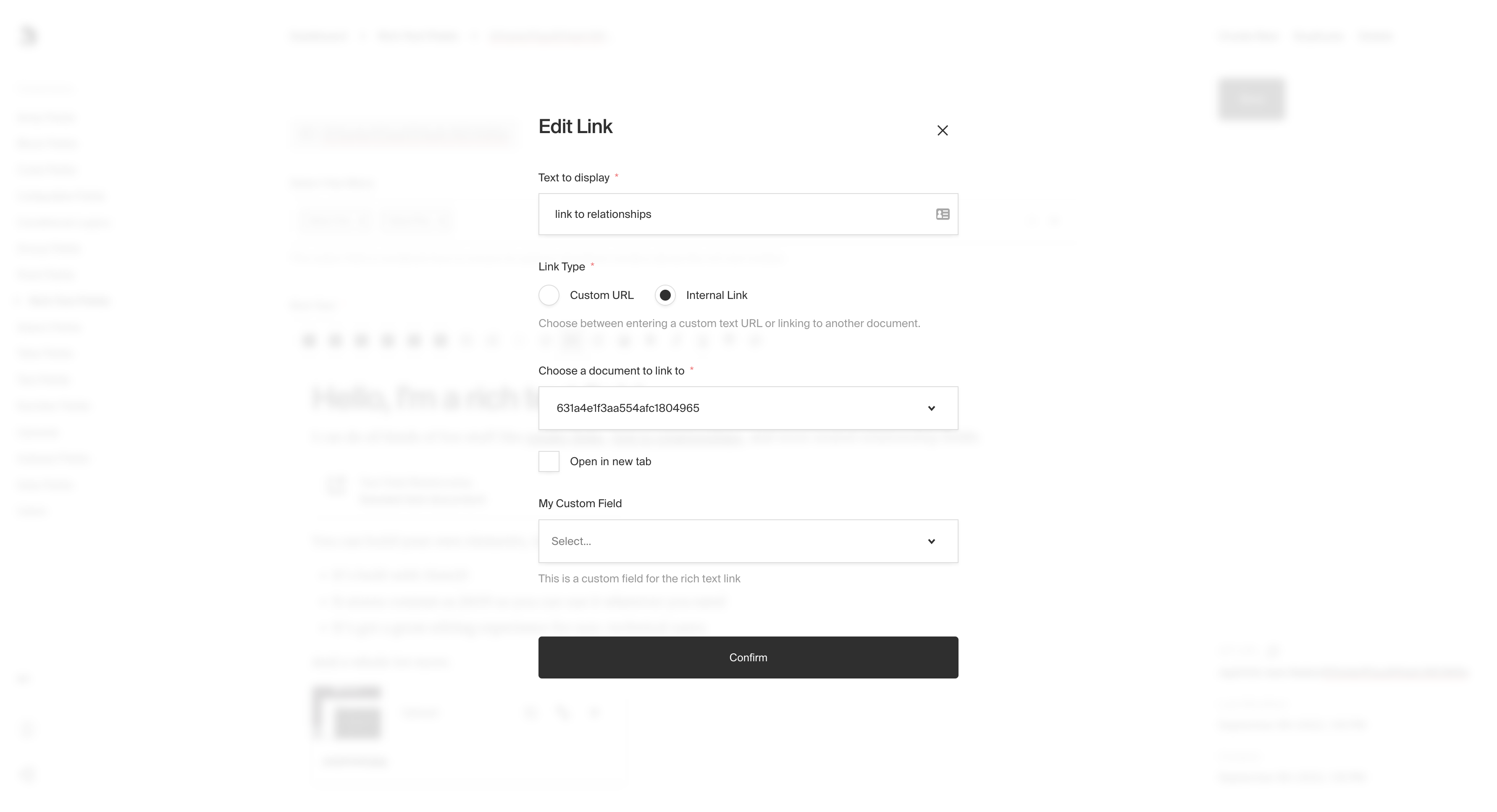
|
|
*RichText link with custom fields*
|
|
|
|
**`upload.collections[collection-name].fields`**
|
|
|
|
This allows [fields](/docs/fields/overview) to be saved as meta data on an upload field inside the Rich Text Editor. When this is present, the fields will render inside a modal that can be opened by clicking the "edit" button on the upload element.
|
|
|
|
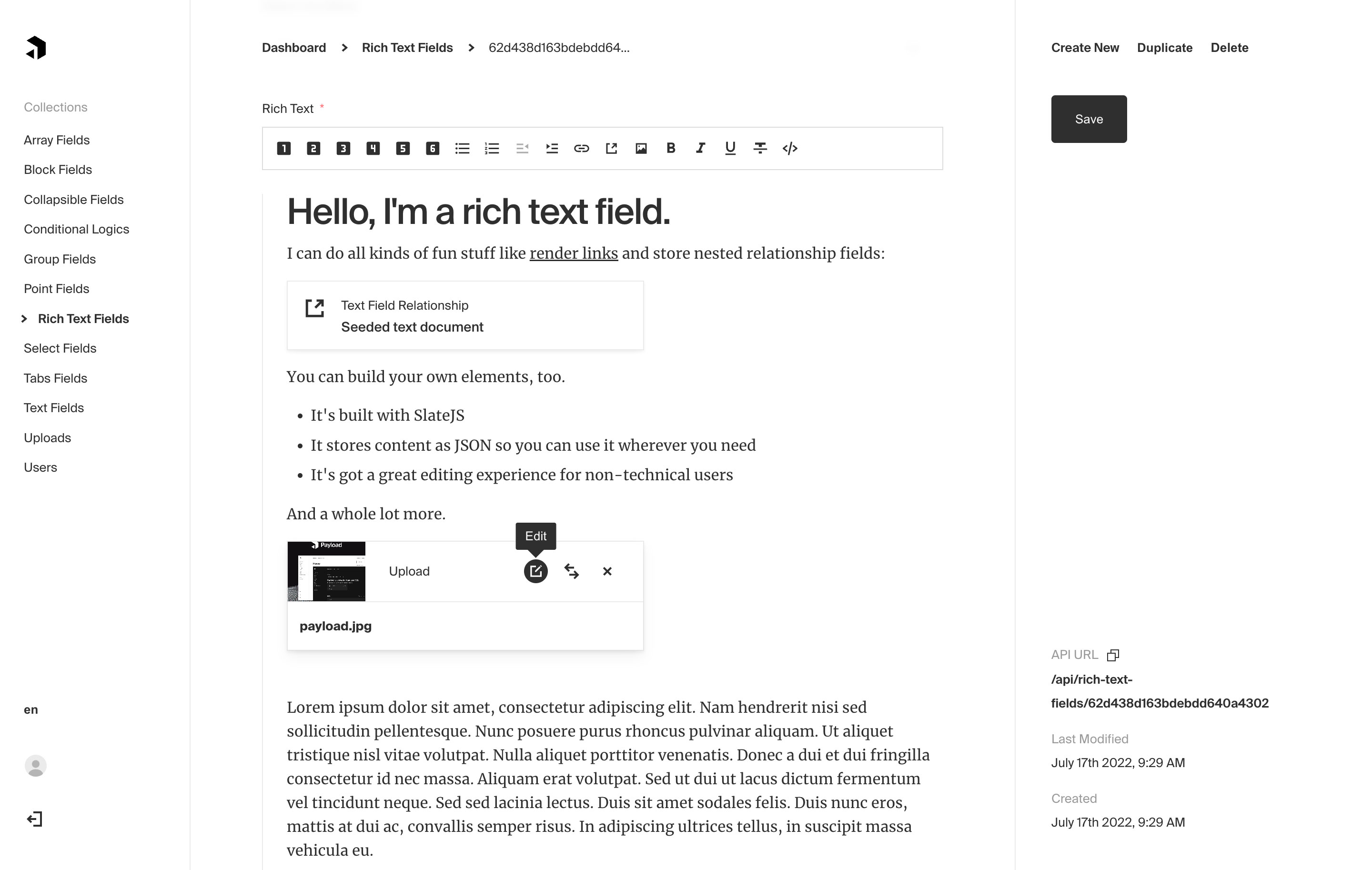
|
|
*RichText field using the upload element*
|
|
|
|
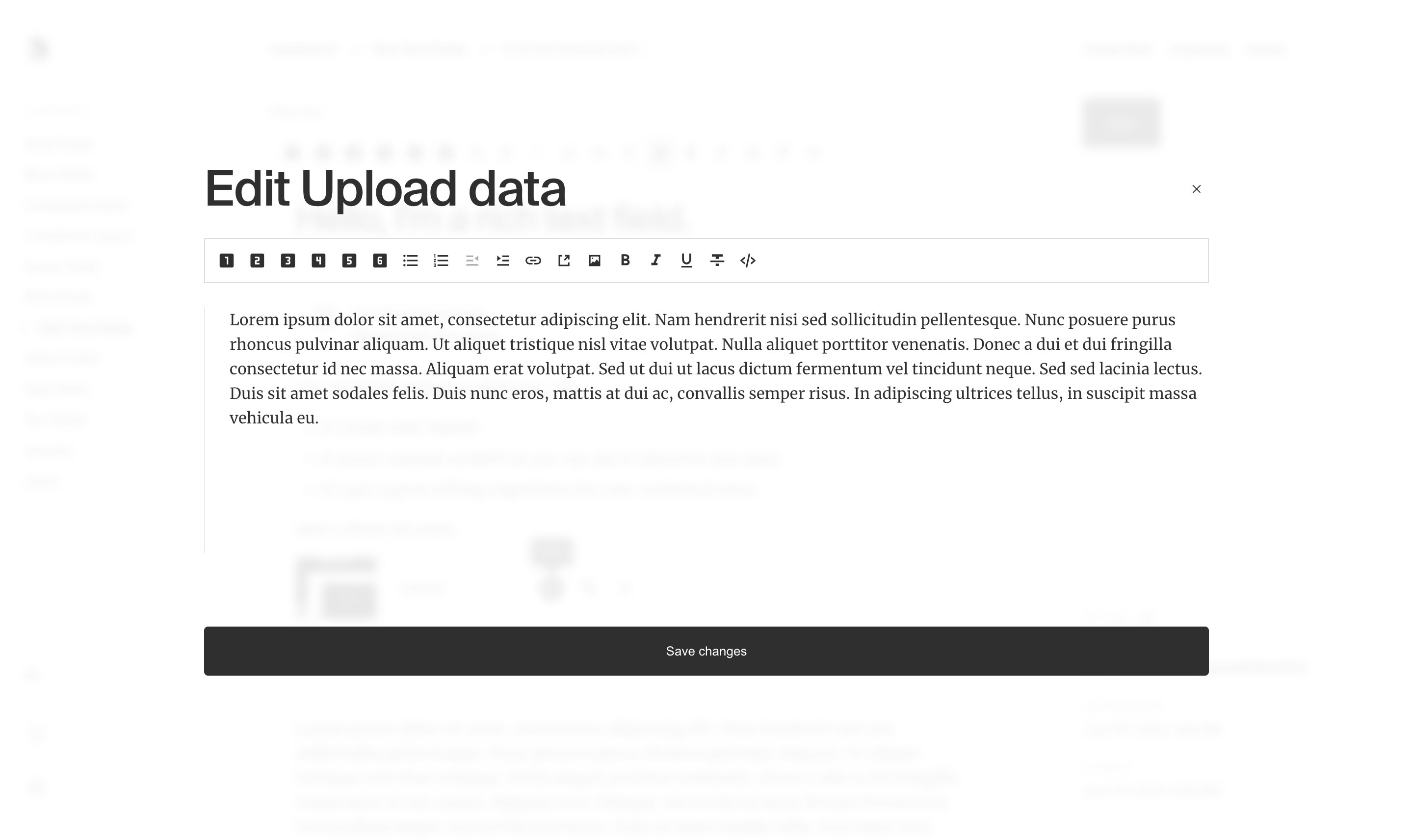
|
|
*RichText upload element modal displaying fields from the config*
|
|
|
|
### Relationship element
|
|
|
|
The built-in `relationship` element is a powerful way to reference other Documents directly within your Rich Text editor.
|
|
|
|
### Upload element
|
|
|
|
Similar to the `relationship` element, the `upload` element is a user-friendly way to reference [Upload-enabled collections](/docs/upload/overview) with a UI specifically designed for media / image-based uploads.
|
|
|
|
<Banner type="success">
|
|
<strong>Tip:</strong><br/>
|
|
Collections are automatically allowed to be selected within the Rich Text relationship and upload elements by default. If you want to disable a collection from being able to be referenced in Rich Text fields, set the collection admin option of <strong>enableRichTextRelationship</strong> to false.
|
|
</Banner>
|
|
|
|
Relationship and Upload elements are populated dynamically into your Rich Text field' content. Within the REST and Local APIs, any present RichText `relationship` or `upload` elements will respect the `depth` option that you pass, and will be populated accordingly. In GraphQL, each `richText` field accepts an argument of `depth` for you to utilize.
|
|
|
|
### Specifying which elements and leaves to allow
|
|
|
|
To specify which default elements or leaves should be allowed to be used for this field, define arrays that contain string names for each element or leaf you wish to enable. To specify a custom element or leaf, pass an object with all corresponding properties as outlined below. View the [example](#example) to reference how this all works.
|
|
|
|
### Building custom elements and leaves
|
|
|
|
You can design and build your own Slate elements and leaves to extend the editor with your own functionality. To do so, first start by reading the [SlateJS documentation](https://docs.slatejs.org/) and looking at the [Slate examples](https://www.slatejs.org/examples/richtext) to familiarize yourself with the SlateJS editor as a whole.
|
|
|
|
Once you're up to speed with the general concepts involved, you can pass in your own elements and leaves to your field's admin config.
|
|
|
|
**Both custom elements and leaves are defined via the following config:**
|
|
|
|
| Property | Description |
|
|
| ---------------- | ----------- |
|
|
| **`name`** * | The name to be used as a `type` for this element. |
|
|
| **`Button`** * | A React component to be rendered in the Rich Text toolbar. |
|
|
| **`plugins`** | An array of plugins to provide to the Rich Text editor. |
|
|
|
|
Custom `Element`s also require the `Element` property set to a React component to be rendered as the `Element` within the rich text editor itself.
|
|
|
|
Custom `Leaf` objects follow a similar pattern but require you to define the `Leaf` property instead.
|
|
|
|
### Example
|
|
|
|
`collections/ExampleCollection.ts`
|
|
```ts
|
|
import { CollectionConfig } from 'payload/types';
|
|
|
|
const ExampleCollection: CollectionConfig = {
|
|
slug: 'example-collection',
|
|
fields: [
|
|
{
|
|
name: 'content', // required
|
|
type: 'richText', // required
|
|
defaultValue: [{
|
|
children: [{ text: 'Here is some default content for this field' }],
|
|
}],
|
|
required: true,
|
|
admin: {
|
|
elements: [
|
|
'h2',
|
|
'h3',
|
|
'h4',
|
|
'link',
|
|
{
|
|
name: 'cta',
|
|
Button: CustomCallToActionButton,
|
|
Element: CustomCallToActionElement,
|
|
plugins: [
|
|
// any plugins that are required by this element go here
|
|
]
|
|
}
|
|
],
|
|
leaves: [
|
|
'bold',
|
|
'italic',
|
|
{
|
|
name: 'highlight',
|
|
Button: CustomHighlightButton,
|
|
Leaf: CustomHighlightLeaf,
|
|
plugins: [
|
|
// any plugins that are required by this leaf go here
|
|
]
|
|
}
|
|
],
|
|
link: {
|
|
// Inject your own fields into the Link element
|
|
fields: [
|
|
{
|
|
name: 'rel',
|
|
label: 'Rel Attribute',
|
|
type: 'select',
|
|
hasMany: true,
|
|
options: [
|
|
'noopener', 'noreferrer', 'nofollow',
|
|
],
|
|
},
|
|
],
|
|
},
|
|
upload: {
|
|
collections: {
|
|
media: {
|
|
fields: [
|
|
// any fields that you would like to save
|
|
// on an upload element in the `media` collection
|
|
],
|
|
},
|
|
},
|
|
},
|
|
}
|
|
}
|
|
]
|
|
};
|
|
```
|
|
|
|
For more examples regarding how to define your own elements and leaves, check out the example [`RichText` field](https://github.com/payloadcms/public-demo/blob/master/src/fields/hero.ts) within the Public Demo source code.
|
|
|
|
### Generating HTML
|
|
|
|
As the Rich Text field saves its content in a JSON format, you'll need to render it as HTML yourself. Here is an example for how to generate JSX / HTML from Rich Text content:
|
|
|
|
```ts
|
|
import React, { Fragment } from 'react';
|
|
import escapeHTML from 'escape-html';
|
|
import { Text } from 'slate';
|
|
|
|
const serialize = (children) => children.map((node, i) => {
|
|
if (Text.isText(node)) {
|
|
let text = <span dangerouslySetInnerHTML={{ __html: escapeHTML(node.text) }} />;
|
|
|
|
if (node.bold) {
|
|
text = (
|
|
<strong key={i}>
|
|
{text}
|
|
</strong>
|
|
);
|
|
}
|
|
|
|
if (node.code) {
|
|
text = (
|
|
<code key={i}>
|
|
{text}
|
|
</code>
|
|
);
|
|
}
|
|
|
|
if (node.italic) {
|
|
text = (
|
|
<em key={i}>
|
|
{text}
|
|
</em>
|
|
);
|
|
}
|
|
|
|
// Handle other leaf types here...
|
|
|
|
return (
|
|
<Fragment key={i}>
|
|
{text}
|
|
</Fragment>
|
|
);
|
|
}
|
|
|
|
if (!node) {
|
|
return null;
|
|
}
|
|
|
|
switch (node.type) {
|
|
case 'h1':
|
|
return (
|
|
<h1 key={i}>
|
|
{serialize(node.children)}
|
|
</h1>
|
|
);
|
|
// Iterate through all headings here...
|
|
case 'h6':
|
|
return (
|
|
<h6 key={i}>
|
|
{serialize(node.children)}
|
|
</h6>
|
|
);
|
|
case 'blockquote':
|
|
return (
|
|
<blockquote key={i}>
|
|
{serialize(node.children)}
|
|
</blockquote>
|
|
);
|
|
case 'ul':
|
|
return (
|
|
<ul key={i}>
|
|
{serialize(node.children)}
|
|
</ul>
|
|
);
|
|
case 'ol':
|
|
return (
|
|
<ol key={i}>
|
|
{serialize(node.children)}
|
|
</ol>
|
|
);
|
|
case 'li':
|
|
return (
|
|
<li key={i}>
|
|
{serialize(node.children)}
|
|
</li>
|
|
);
|
|
case 'link':
|
|
return (
|
|
<a
|
|
href={escapeHTML(node.url)}
|
|
key={i}
|
|
>
|
|
{serialize(node.children)}
|
|
</a>
|
|
);
|
|
|
|
default:
|
|
return (
|
|
<p key={i}>
|
|
{serialize(node.children)}
|
|
</p>
|
|
);
|
|
}
|
|
});
|
|
```
|
|
|
|
<Banner>
|
|
<strong>Note:</strong><br/>
|
|
The above example is for how to render to JSX, although for plain HTML the pattern is similar. Just remove the JSX and return HTML strings instead!
|
|
</Banner>
|
|
|
|
### Built-in SlateJS Plugins
|
|
|
|
Payload comes with a few built-in SlateJS plugins which can be extended to make developing your own elements and leaves a bit easier. They will be documented here over time.
|
|
|
|
#### `shouldBreakOutOnEnter`
|
|
|
|
Payload's built-in heading elements all allow a "hard return" to "break out" of the currently active element. For example, if you hit `enter` while typing an `h1`, the `h1` will be "broken out of" and you'll be able to continue writing as the default paragraph element.
|
|
|
|
If you want to utilize this functionality within your own custom elements, you can do so by adding a custom plugin to your `element` like the following "large body" element example:
|
|
|
|
`customLargeBodyElement.js`:
|
|
|
|
```ts
|
|
import Button from './Button';
|
|
import Element from './Element';
|
|
import withLargeBody from './plugin';
|
|
|
|
export default {
|
|
name: 'large-body',
|
|
Button,
|
|
Element,
|
|
plugins: [
|
|
(incomingEditor) => {
|
|
const editor = incomingEditor;
|
|
const { shouldBreakOutOnEnter } = editor;
|
|
|
|
editor.shouldBreakOutOnEnter = (element) => (element.type === 'large-body' ? true : shouldBreakOutOnEnter(element));
|
|
|
|
return editor;
|
|
}
|
|
],
|
|
};
|
|
```
|
|
|
|
Above, you can see that we are creating a custom SlateJS element with a name of `large-body`. This might render a slightly larger body copy on the frontend of your app(s). We pass it a name, button, and element—but additionally, we pass it a `plugins` array containing a single SlateJS plugin.
|
|
|
|
The plugin itself extends Payload's built-in `shouldBreakOutOnEnter` Slate function to add its own element name to the list of elements that should "break out" when the `enter` key is pressed.
|
|
|
|
### TypeScript
|
|
|
|
If you are building your own custom Rich Text elements or leaves, you may benefit from importing the following types:
|
|
|
|
```ts
|
|
import type {
|
|
RichTextCustomElement,
|
|
RichTextCustomLeaf,
|
|
} from 'payload/types';
|
|
|
|
```
|